Chocolate-coated biscuits aren’t a suitable everyday choice for a toddler’s regular snack: the Gesund ins Leben network recommends offering sugar, sweets and snack foods sparingly. If you’re planning an occasional treat, decide on the portion first, then compare the ingredients, allergens, sugar and saturated fat per 100 g on the specific pack.
Who is this decision relevant to?
Parents planning an occasional treat
You’re not looking for a replacement for your toddler’s daily snack, but want to offer a small portion of something sweet now and again. The Gesund ins Leben network recommends offering sweets and snack foods sparingly.
Parents who need to check allergens
You check the specific pack for wheat and other ingredients such as milk, egg or soya, as well as any ‘may contain’ warnings. These details can vary between flavours and recipes.
Parents comparing different varieties
You want to compare similar-looking biscuits by their ingredients and nutritional values per 100 g, rather than choosing based only on the brand, organic label or chocolate content.
What should you look for when buying?
First decide whether you’re looking for a regular snack or an occasional treat. It’s only when you’re choosing a treat that it’s worth comparing individual chocolate biscuits.
| What matters |
What to check when buying |
Who it matters to |
| How often and how much |
Is the biscuit for a planned treat, or is it meant to replace a regular snack? The Verbraucherzentrale suggests no more than one portion of sweets or snacks a day as a guide; this isn’t a recommendation to offer something sweet every day. |
If I regularly need something for my child to eat between meals, I don’t want chocolate biscuits to become a habit. For around 50% of consumers, limiting how often and how much their child has a treat is the main priority. |
| Ingredients and allergens |
Check the ingredients, highlighted allergens and any ‘may contain’ warnings on the current pack; the name ‘chocolate biscuit’ isn’t enough to tell you what’s in it. |
If my child needs to avoid certain ingredients, the labelling for that particular variety is what matters. For around 30% of consumers, checking allergens comes first. |
| Nutritional values and recipe |
Compare sugar and saturated fat per 100 g, as well as the ingredients list; the amount of chocolate or an organic label doesn’t replace this information. |
Once I’ve decided on an occasional treat, I want to compare varieties on a like-for-like basis. For around 20% of consumers, this comparison is the main priority. |
Common misconceptions
-
Planning chocolate biscuits as a regular snack
The Gesund ins Leben network advises that toddlers should have sugar, sweets and snack foods sparingly. A chocolate-coated biscuit therefore has a different place from a snack offered regularly.
Before choosing a variety, decide whether you’re planning a snack or an occasional treat.
-
Using an organic label or high chocolate content as a shortcut when comparing
These details describe certain ingredients or aspects of a recipe; they don’t mean the product is suitable as a regular toddler snack. Nutritional values vary even within the sweets category.
Compare sugar and saturated fat per 100 g, and read the ingredients list rather than relying on the claims on the front of the pack.
-
Checking only for wheat and missing other allergens
Depending on the product, the LEIBNIZ, Alnatura and EDEKA varieties described here may also contain milk, egg or soya, as well as wheat. Some packs also warn that other allergens may be present.
Before every purchase, check the ingredients, highlighted allergens and any ‘may contain’ warnings relevant to your child on the specific pack.
Brands and product ranges to consider
LEIBNIZ
LEIBNIZ Choco Vollmilch is a useful product to compare: a butter biscuit coated in milk chocolate.
- LEIBNIZ lists 41 g of sugar and 16 g of saturated fat per 100 g for Choco Vollmilch.
- According to LEIBNIZ, this variety contains wheat, milk and egg yolk. The brand notes that recipes may change, so always check the pack you buy.
Alnatura
The organic butter biscuits with milk chocolate described by EDEKA24 are butter biscuits coated in chocolate.
- For this 130-g variety, EDEKA24 lists 48% milk chocolate, as well as 35 g of sugar and 15 g of saturated fat per 100 g.
- The variety described contains wheat, milk, egg and soya, and may contain traces of almond, hazelnut and sesame. Its organic label doesn’t make it a suitable everyday snack for toddlers.
EDEKA
The Double Chocolate Cookies described by EDEKA24 are cookies containing chocolate, not classic butter biscuits coated in chocolate.
- For this variety, EDEKA24 lists 50% chocolate, as well as 37,4 g of sugar and 14,8 g of saturated fat per 100 g.
- The variety described contains wheat, milk, soya, oats and egg, among other ingredients; possible traces of nuts are also listed. As it’s a different type of product, it isn’t a direct alternative when comparing chocolate-coated butter biscuits.
Biscuit options at Joybuy
These biscuits are only options for an occasional treat, not for a toddler’s everyday snack. If you specifically want a chocolate coating, check the description and pack for the variety in question; a chocolate flavour alone doesn’t mean the biscuit is coated in chocolate.
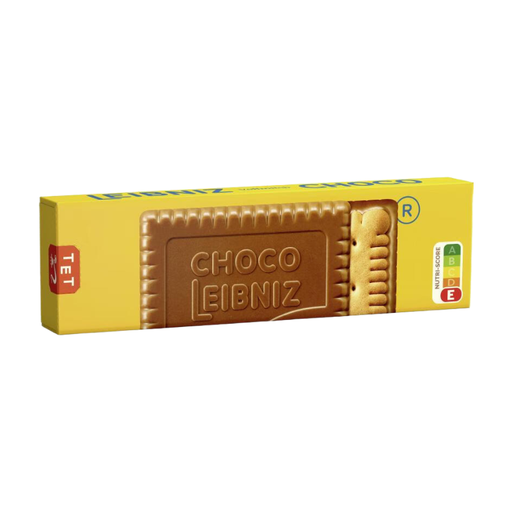 No image available
LEIBNIZ Choco Chunks butter biscuits, 125 g
An option for a planned treat rather than a daily snack.
Before buying, compare the ingredients, allergens and nutritional information on the pack.
View at Joybuy
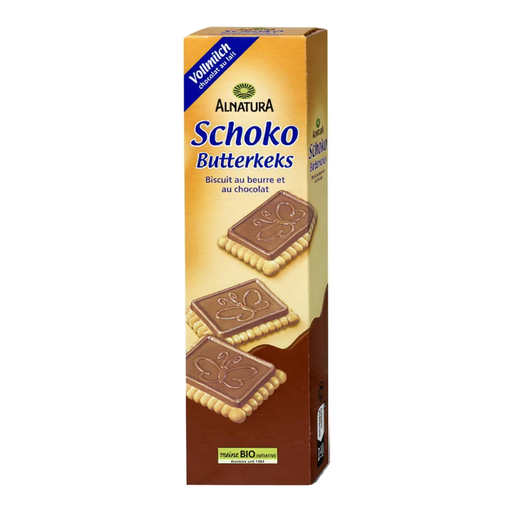 No image available
Alnatura organic butter biscuits with milk chocolate, 130 g
If organic ingredients matter when choosing a variety, remember that this is still an occasional sweet treat.
Check the nutritional values and allergens on this pack rather than relying on information for a similarly named variety.
View at Joybuy
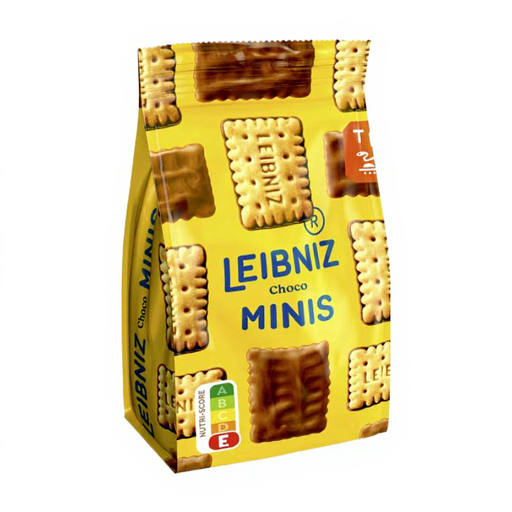 No image available
LEIBNIZ Minis Choco milk chocolate biscuits, 125 g
The mini size doesn’t determine a suitable portion for a toddler; plan the amount independently of the size of the biscuit.
Read the ingredients and allergen information on the pack before offering them.
View at Joybuy
No image available
LEIBNIZ butter biscuits with dark chocolate, 125 g
When occasionally comparing a variety with dark chocolate, the whole recipe still matters.
Check the current pack for sugar, saturated fat and allergen information.
View at Joybuy
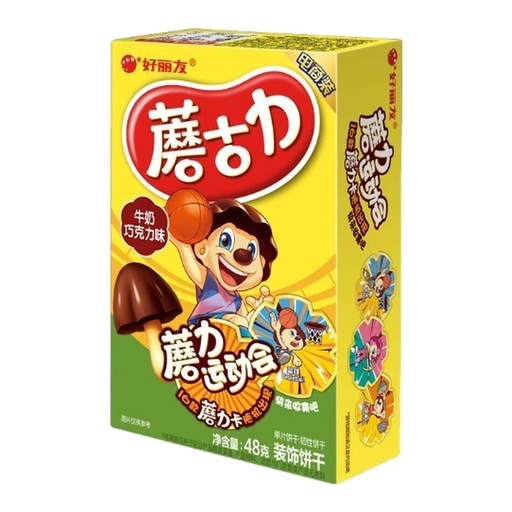 No image available
Orion biscuit with milk chocolate flavour, 48 g
If you’re specifically looking for a chocolate-coated biscuit, first check whether this variety actually has a chocolate coating.
To compare varieties, also check the pack for sugar, saturated fat and allergen information.
View at Joybuy
Frequently asked questions
Are chocolate-coated biscuits an everyday snack for toddlers?
No, not as a regular snack. The Gesund ins Leben network recommends offering sugar, sweets and snack foods to toddlers sparingly; a chocolate biscuit is better kept for an occasional treat.
How should you think about a treat portion?
The Verbraucherzentrale suggests no more than one portion of sweets or snacks a day as a guide, such as a child’s handful. This doesn’t mean toddlers should have something sweet every day; take other sweets into account too, and avoid letting them snack continuously.
Is the name ‘chocolate biscuit’ enough to check for allergens?
No. The varieties described contain wheat and, depending on the product, other ingredients such as milk, egg or soya; ‘may contain’ warnings also vary. Always read the labelling on the pack you’re actually buying, not just the product name.
Is an organic chocolate biscuit a more suitable snack?
An organic label alone doesn’t make a chocolate-coated biscuit a suitable everyday snack for toddlers. For the Alnatura organic chocolate butter biscuit described, EDEKA24 lists 35 g of sugar and 15 g of saturated fat per 100 g. Compare the ingredients and nutritional values of the specific variety separately from its organic label.


