What to look for when buying
When choosing chocolate for your coffee break, first decide what matters most: staying within the sugar limit, enjoying a familiar sweetness or avoiding sweeteners. You can then compare the ingredients and nutritional information for the specific variety.
| What you’re looking for |
What to check |
Who it matters to |
| Genuinely sugar-free |
Check the ‘of which sugars’ figure per 100 g. Under EU Regulation (EC) No 1924/2006, a product can only be labelled ‘sugar-free’ if it contains no more than 0.5 g of sugar per 100 g. |
If I specifically want sugar-free chocolate with my coffee, ‘no added sugar’ isn’t enough for me. Around 45% of consumers prioritise the strict sugar limit. |
| Familiar sweetness |
Compare milk and dark chocolate varieties, sweeteners, and sugar and energy per 100 g. If you have allergies, check the label on the specific pack. |
For my coffee break, I want a milky or not-too-bitter chocolate, even if it still contains sugar despite having no added sugar. Around 33% of consumers prioritise this taste. |
| No sweeteners |
Check the ingredients list for maltitol and other sweeteners. For 100% cocoa products, check the sugar content per 100 g separately if ‘sugar-free’ is important to you. |
I enjoy very bitter cocoa and want to avoid sweeteners in my chocolate. Around 22% of consumers prioritise this. |
Chocolate for your coffee break on Joybuy
These bars and crunchy chocolate varieties are labelled ‘no added sugar’. If you’re specifically looking for ‘sugar-free’ chocolate, check the sugar content per 100 g for each variety too.
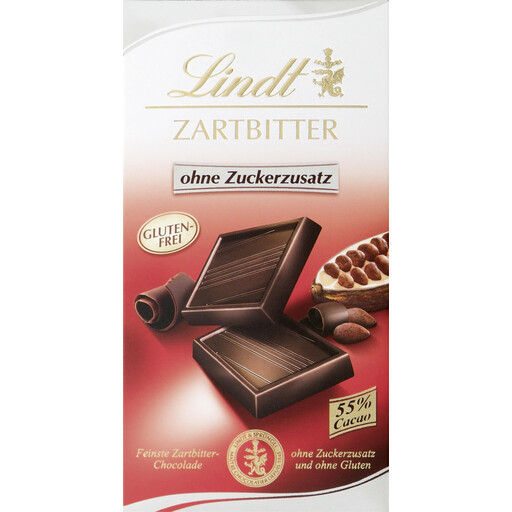 Image unavailable
Lindt dark chocolate with no added sugar, 100 g
An option for your coffee break if you’re looking for dark chocolate with no added sugar. Lindt lists at least 55% cocoa, maltitol as a sweetener and 1 g of sugar per 100 g, so the bar is above the limit for ‘sugar-free’. If you have allergies or questions about how well you’ll tolerate it, check the ingredients and warnings on the pack.
View on Joybuy
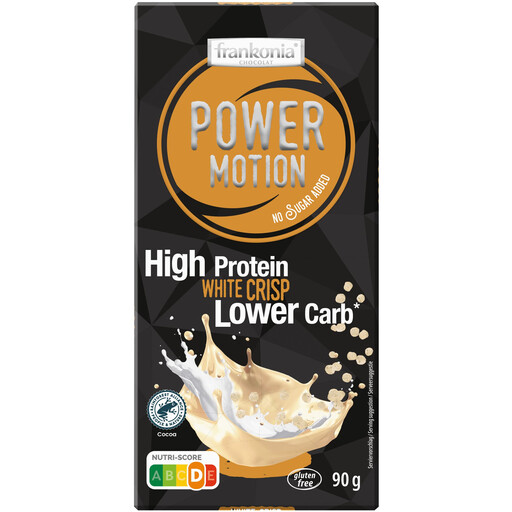 Image unavailable
Frankonia CHOCOLAT POWER MOTION White Crisp with no added sugar, 90 g
For a coffee break with crunchy white chocolate rather than a classic bar. The 90 g variety is labelled ‘no added sugar’. If you need a ‘sugar-free’ product, check the sugar content per 100 g on the pack. If you have a milk or soya allergy, or questions about maltitol, check the ingredients and warnings.
View on Joybuy
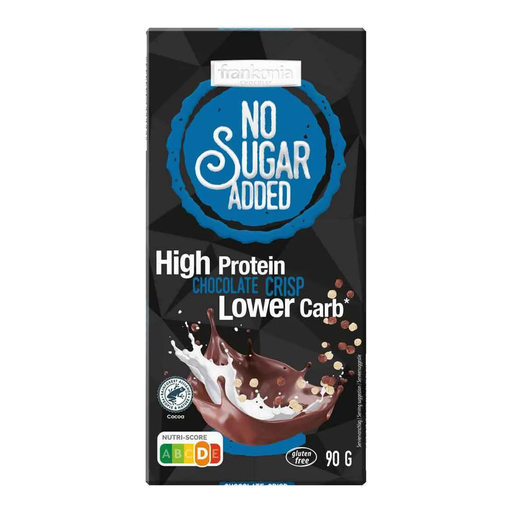 Image unavailable
Frankonia CHOCOLAT POWER MOTION Chocolate Crisp with no added sugar, 90 g
A crunchy chocolate option for anyone who’d rather not have a classic bar with their coffee. The 90 g variety is labelled ‘no added sugar’. If you’re choosing according to the stricter ‘sugar-free’ definition, the sugar content per 100 g on the pack is what matters. Check the ingredients, maltitol warnings and allergen information.
View on Joybuy
Frequently asked questions
Does ‘no added sugar’ mean the same as ‘sugar-free’?
No. Under EU Regulation (EC) No 1924/2006, which applies in Germany, a product can only be labelled ‘sugar-free’ if it contains no more than 0.5 g of sugar per 100 g. ‘No added sugar’ doesn’t rule out naturally occurring sugars. For example, Lindt lists 9 g of sugar per 100 g in its milk chocolate bar with no added sugar.
Which chocolate goes well with milky coffee if I don’t like anything too bitter?
Milk chocolate with no added sugar may be a better choice if you prefer a mild, familiar sweetness; dark chocolate gives you a stronger cocoa flavour. Lindt lists at least 35% cocoa for its milk chocolate bar and 55% for its dark chocolate bar. Both varieties contain maltitol, and ‘no added sugar’ doesn’t automatically mean ‘sugar-free’ for either of them.
What should I bear in mind with chocolate sweetened with maltitol?
Maltitol may have a laxative effect if eaten in excess. This warning appears on product information from Lindt and Frankonia, among others. Check the ingredients list and information on the pack when choosing. They won’t tell you what portion size will be suitable for everyone.
Is chocolate with no added sugar automatically low in calories?
No. Lindt lists 510 kcal per 100 g for its milk chocolate bar with no added sugar, compared with 544 kcal per 100 g for its regular milk chocolate bar. If energy content matters to you too, compare the nutritional information per 100 g for each variety.
What should I check if I have a chocolate allergy?
The ingredients and ‘may contain’ information on the specific pack are what matter. According to Lindt, the varieties mentioned here with no added sugar contain milk and soya. Frankonia products have different ingredients depending on the variety, and the nougat variety mentioned contains hazelnuts.


