Wholegrains first
You want a chocolatey taste, but you also want to know which cereal ingredients are actually wholegrain. You compare the sugar content separately from the wholegrain content.


If wholegrains are a priority for a quick chocolate breakfast, compare the stated wholegrain ingredients and sugar per 100 g rather than relying on the front of the pack alone. EDEKA lists 40% wholegrain wheat flakes and 33% wholegrain oat flakes in its organic chocolate muesli, as well as 10.5 g of sugar per 100 g. For breakfast on the go, also consider the portion you want, a suitable container and, if relevant, the allergen information.
You want a chocolatey taste, but you also want to know which cereal ingredients are actually wholegrain. You compare the sugar content separately from the wholegrain content.
You want to enjoy muesli without cooking, with milk, a plant-based drink or yoghurt. Whether you eat at home or take a portion with you will determine the packaging and container you need.
You may need to check for cereals containing gluten, milk, nuts or precautionary allergen statements. An organic or wholegrain label isn’t a substitute for checking the specific pack.
Start with the wholegrain ingredients and sugar per 100 g. Then think about how you’ll take your muesli with you and which ingredients you want to avoid.
| Criteria | What to check when buying | Who it matters to |
|---|---|---|
| Wholegrain content | Which cereal ingredients are specifically labelled as wholegrain, and what percentages are listed? If relevant, compare fibre per 100 g too. | I want to know how much wholegrain is in my chocolate breakfast. This is a priority for around 36% of consumers. |
| Sugar | Compare the ‘of which sugars’ figure per 100 g, then consider the portion you actually eat separately. | I enjoy a chocolatey taste, but I don’t want to lose sight of the sugar content. For around 29% of consumers, this comparison comes first. |
| Taking it with you | Check the pack size and whether it can be resealed. Plan a suitable portion and container for taking it with you. | I’m short on time in the morning and want to eat breakfast later. This is the main reason for buying for around 21% of consumers. |
| Allergens and labelling | Read the ingredients and precautionary allergen statements on the current pack. Check any ‘free from’ claims for the specific product only. | I need to avoid certain ingredients, so I can’t rely on product images or an organic label. This check is a priority for around 14% of consumers. |
These are two separate details: EDEKA lists 10.5 g of sugar per 100 g for its organic chocolate muesli, compared with 16.6 g per 100 g for its GUT&GÜNSTIG chocolate muesli.
Compare both the wholegrain ingredients and the ‘of which sugars’ figure using the same basis.
A large pack of muesli isn’t the same as a portion ready to take with you. If you’re eating later, you may need a suitable container and possibly cutlery, depending on how you prepare it.
Before you buy, think about where you’ll add the liquid. To keep it crunchy, you can keep the dry portion separate from the milk, yoghurt or plant-based drink until you’re ready to eat.
The mueslis discussed here differ in their ingredients and possible traces. REWE, for example, offers a chocolate muesli specifically labelled gluten-free and lactose-free. Those claims don’t automatically apply to other products from the same brand.
For each product, check the ingredients, highlighted allergens and precautionary allergen statements on the current pack.
EDEKA’s organic chocolate muesli gives you specific figures to compare for wholegrain ingredients and sugar content.
This chocolate muesli is an option if you’re looking for an oat-based mix with milk chocolate pieces.
REWE stocks a range of chocolate mueslis, including options with specific dietary claims.
The CINI MINIS options described here are useful mainly for distinguishing wholegrain cereals from the chocolate varieties you’re looking for.
According to Lidl, Crownfield is a cereal brand. When looking for chocolate wholegrain options, the specific product is what counts.
This selection includes chocolate mueslis for a quick, easy-to-prepare breakfast. If wholegrains are your priority, compare the ingredients and nutritional information on each pack. The pack sizes listed aren’t individual portions for taking with you.
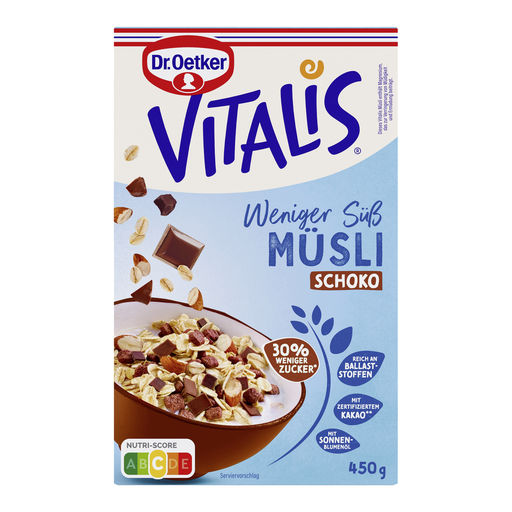 No image available
A chocolate crunchy muesli you can portion yourself for breakfast; the pack contains 450 g. If you’re taking it with you, check the packaging and plan to use a suitable container.
If you have allergies, check the ingredients and precautionary allergen statements on the current pack.
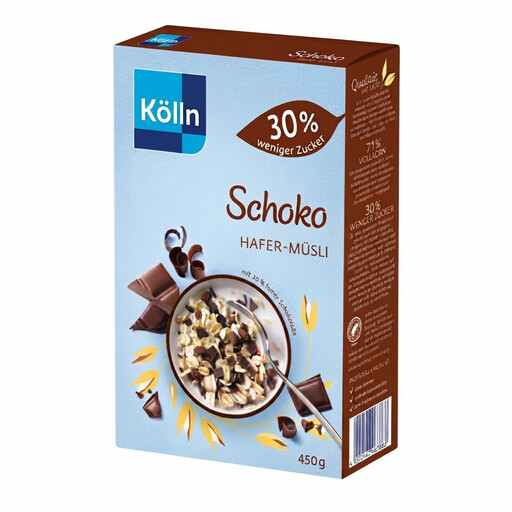 No image available
For anyone who wants to portion out their own chocolate oat muesli; the pack contains 450 g. Compare the sugar content using the nutritional information per 100 g rather than relying on the variant name alone.
If needed, check the ingredients and precautionary allergen statements on the current pack.
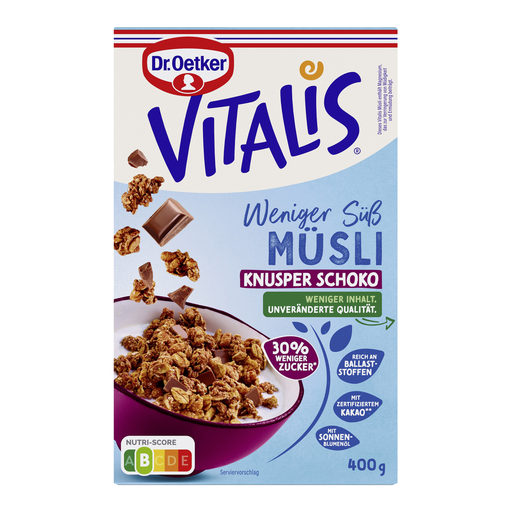 No image available
A 400 g pack of chocolate crunchy muesli for a breakfast you can portion yourself. When comparing it with other varieties, check the wholegrain ingredients and sugar content on the specific pack.
Check the allergen and precautionary allergen information before buying.
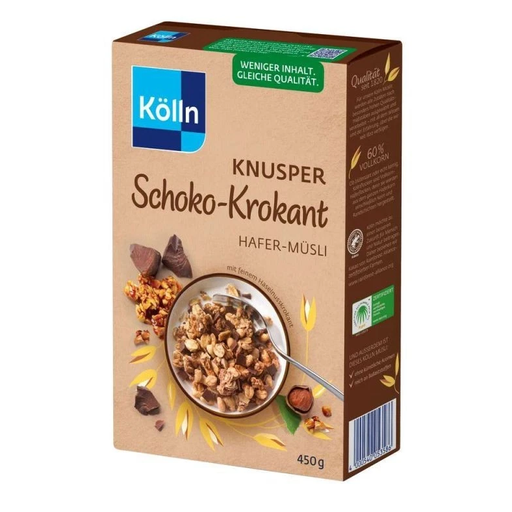 No image available
For anyone who enjoys chocolate and caramel in an oat-based crunchy muesli; the pack contains 450 g. If wholegrains are your main priority, check the individual cereal ingredients as well as ‘of which sugars’ per 100 g.
If you have allergies, read the current ingredients list and precautionary allergen statements.
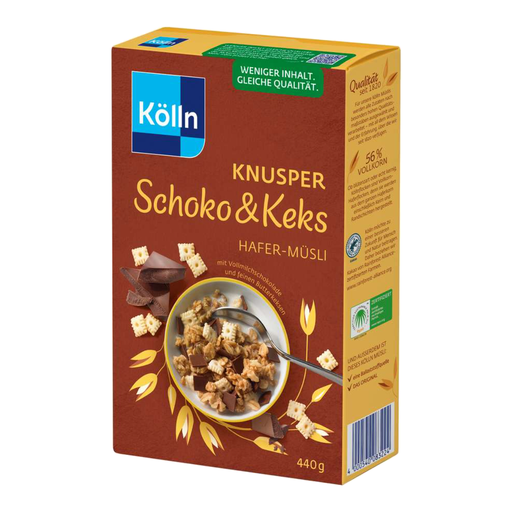 No image available
For anyone who wants to portion out their own chocolate biscuit oat muesli; the pack contains 440 g. Compare the wholegrain ingredients and sugar per 100 g before choosing this variety.
If you have specific dietary requirements, check the ingredients and any precautionary allergen statements on the current pack.
Read the ingredients list and look for ingredients specifically labelled as wholegrain, along with their percentages. The Lebensmittelverband Deutschland explains that ingredients are listed in descending order by weight. For example, EDEKA lists 40% wholegrain wheat flakes and 33% wholegrain oat flakes in its organic chocolate muesli.
First compare ‘of which sugars’ per 100 g, then consider the portion you actually eat. EDEKA lists 10.5 g of sugar per 100 g for its organic chocolate muesli and 16.6 g per 100 g for its GUT&GÜNSTIG chocolate muesli. Milk, yoghurt or a plant-based drink will also affect the nutritional values of your prepared breakfast.
Check the nutritional information, ingredients and precautionary allergen statements on the current pack of the specific muesli. If you need to avoid certain ingredients, a claim about the brand or an organic label isn’t enough.
The classic CINI MINIS and CINI MINIS Churros considered here are cinnamon cereals, so they aren’t a direct alternative to chocolate muesli. Nestlé lists wholegrain wheat flour in both varieties. If you’re looking for a chocolate flavour, check the ingredients and nutritional information for a specific chocolate variety instead.