
Lieferung heute & morgen

Qualitätsgarantie

Willkommens-Angebote freischalten: KOSTENLOSE Lieferung | Bis zu 80 % RABATT | Kostenlose 30-Tage-JoyPlus-Testphase
App herunterladen
Chocolate muesli combines oats, cocoa and chocolate to create a quick breakfast or snack. The range includes classic chocolate muesli, chocolate crunchy muesli, organic varieties and oat muesli with reduced sugar content. However, product names and packaging images do not always reveal what is actually inside the pack.
If you want to buy chocolate muesli, you should avoid three common pitfalls in particular:
For classic chocolate oat muesli, oats or wholegrain oats are the most important base ingredient. A high wholegrain content may be relevant for shoppers who prefer a fibre-rich breakfast. Check the ingredients list: ingredients are listed in descending order by weight.
Examples from the selection:
Chocolate crunchy muesli often contains oil, syrup or sugar to make the baked ingredients crisp. This explains why crunchy products usually differ from unbaked oat mixes.
Always compare the nutritional information per 100 grams. This makes it easier to compare pack sizes from 330 to 750 grams fairly. In this selection, the stated sugar values range from 12 g to 23 g per 100 g, for example.
You should distinguish between three figures:
A muesli with less sugar is therefore not necessarily low in calories. Oil, chocolate pieces and nuts also affect the energy content. If you prefer a less sweet taste, look out for terms such as “Less Sweet” and check the specific product declaration.
Most of the products featured contain gluten-containing cereals and milk ingredients. Depending on the variety, soya, almonds, hazelnuts or other nuts may also be listed as ingredients or possible traces. If you have allergies, always refer to the current labelling on the packaging.
The pack size should match your consumption:
After opening, store the pack in a cool, dry place and keep it tightly sealed. This is particularly important for crunchy muesli, as moisture can alter its texture.
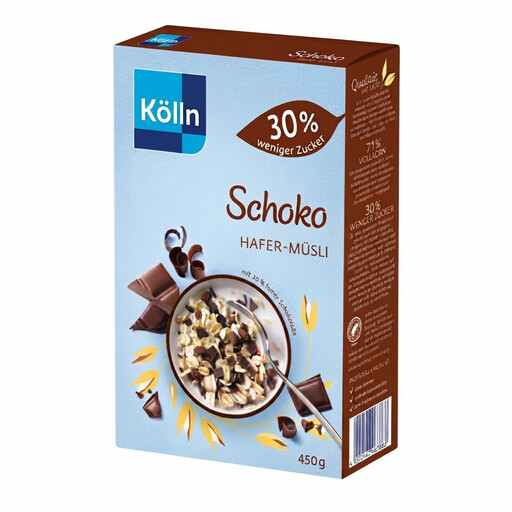
Why this product suits this profile: The 450-g pack is a manageable size for getting started. According to the product information, the muesli contains 66% wholegrain oats and 13 g of sugar per 100 g.
The reduced-sugar claim is accompanied by the specific value per 100 g. This makes it easier to compare the sweetness with other varieties.
66% wholegrain oats, 13 g of sugar per 100 g and no artificial sweeteners according to the product description.
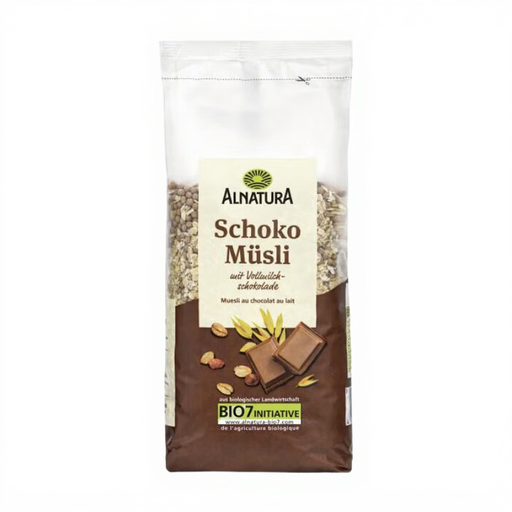
Why this product suits this profile: The large pack is aimed at households with regular consumption. According to the product description, the ingredients come from organic farming.
The organic claim is not equated with a low sugar value: the stated figures are 12 g of sugar per 100 g and 8.4 g of fibre.
750 g pack size, wholegrain oat and wheat flakes, and 395 kcal per 100 g according to the declaration.
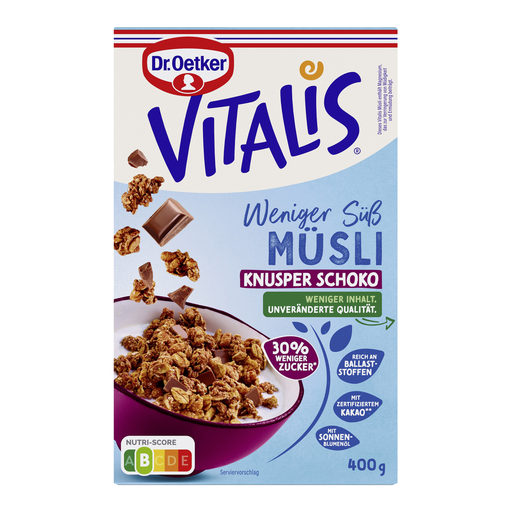
Why this product suits this profile: This variety combines a crunchy texture with a stated “Less Sweet” profile, making it suitable for breakfast or a snack.
With 13 g of sugar per 100 g, the “less sweet” description can be assessed using the nutrition table.
56% wholegrain oats, 14 g of fibre and 11 g of protein per 100 g according to the product data.
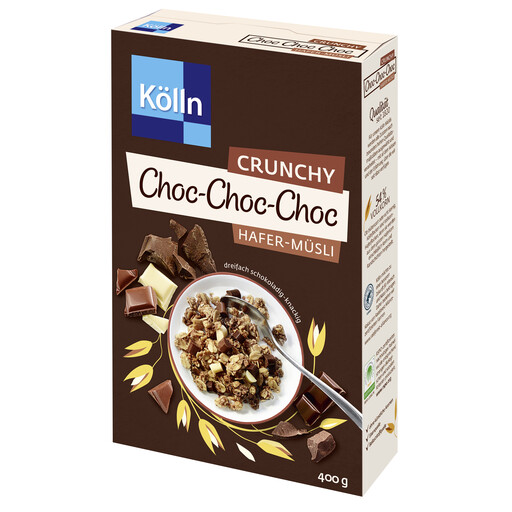
Why this product suits this profile: The mix contains milk, dark and white chocolate and is aimed at households that enjoy crunchy textures.
The product name is supported by verifiable information: 54% wholegrain content and 23 g of sugar per 100 g.
15% chocolate pieces according to the product description and 5 g of fibre per 100 g.
We have put together a complete, regularly updated list of products that fully meet these strict selection criteria and the safety regulations applicable in the EU.
There is no fixed portion size that suits everyone. As a practical guide, use the manufacturer’s recommended serving on the packaging and adjust the amount to suit your appetite and whether you are adding milk, yoghurt or other ingredients. For a fair comparison, the nutritional values per 100 g remain the key figures.
Store the pack in a dry place at room temperature, away from heat. After opening, the bag should be sealed completely. For larger packs, an airtight storage container can help reduce moisture absorption. The best-before date and the relevant manufacturer’s instructions remain decisive.
No. Organic chocolate muesli meets requirements for the organic production of the relevant ingredients, but this does not automatically indicate anything about its sugar or energy content. Therefore, compare the “of which sugars”, fat and energy values per 100 g, as well as the proportion of wholegrain flakes.