Shoppers looking for wholegrain
You want a chocolatey weekend breakfast and pay attention to which wholegrain ingredients are actually listed. Percentages can help you compare the specifically declared ingredients in different products.


For a chocolatey weekend breakfast, muesli with explicitly named wholegrain ingredients makes it easier to choose a product for its wholegrain content than cereals whose main ingredient is simply listed as wheat flour. Check sugar separately from wholegrain content using the nutritional information per 100 g. If you have allergies, always rely on the current packaging information.
You want a chocolatey weekend breakfast and pay attention to which wholegrain ingredients are actually listed. Percentages can help you compare the specifically declared ingredients in different products.
You want chocolate muesli, but you also compare the sugar content. A claim such as ‘less sugar’ refers to a specific product used for comparison. For other packs, the sugar value per 100 g is a more useful guide.
If you’re shopping for several people, milk, wheat or nuts may limit your choice. Check the ingredients and allergen information on the specific pack, even if you already know the brand.
First decide whether you want oat muesli or shaped chocolate cereals. Then compare wholegrain ingredients and sugar separately, and check for allergens if needed.
| Criteria | What to check when buying | Who is it important to? |
|---|---|---|
| Wholegrain ingredients | Look for ingredients explicitly labelled as wholegrain and, where provided, check their proportions in the ingredients list. | If I want to choose wholegrain, the ingredients list should make it clear why I’ve picked that product. Around 40% of shoppers put this first. |
| Sugar | Compare sugar per 100 g and check what a claim such as ‘less sugar’ is referring to. | I care about the chocolate flavour, but I want to compare the sweetness of different packs carefully. For around 30% of shoppers, sugar content comes first. |
| Breakfast style | Choose between oat muesli and shaped cereals based on the texture you prefer at breakfast. | It makes a difference to my breakfast bowl whether I want muesli or small chocolate cereals. Around 20% of shoppers prioritise shape and flavour. |
| Allergens and dietary requirements | Read the current ingredients list, highlighted allergens and any ‘may contain’ information for the specific variety. | If I’m shopping for someone with particular ingredient requirements, the specific pack needs to meet them. For around 10% of shoppers, this check comes first. |
Wholegrain content and sugar levels describe different things. REWE lists both 49.5% wholegrain wheat and 22.2 g of sugar per 100 g for Nestlé NESQUIK Duo.
Check the ingredients list and nutritional information per 100 g separately before choosing a breakfast style.
Kölln’s ‘30% less sugar’ claim refers to the manufacturer’s standard chocolate muesli. On its own, it doesn’t tell you how the product compares with a different one.
Check what product is being used for comparison. If you’re choosing between brands, compare the sugar values per 100 g on the current packs.
Ingredients vary between products. For Kölln Knusper Schoko Feinherb, EDEKA24 lists milk and wheat, as well as possible traces of several nuts. REWE lists milk ingredients and wheat for NESQUIK Duo.
Check the ingredients list and allergen information on the specific pack, particularly if you’re switching varieties.
Kölln offers chocolate oat mueslis whose individual wholegrain ingredients can be checked against the product information.
NESQUIK Duo is a shaped chocolate cereal for shoppers who want this style of breakfast with a stated wholegrain wheat content.
Kellogg's Choco Krispies Chocos are a useful comparison for chocolate-flavoured wheat cereals if you care more about this style than a stated wholegrain content.
REWE stocks cereals and mueslis from various brands, as well as its own-label products. What matters is the information on each individual product, not which range it belongs to.
This selection includes chocolate mueslis for a breakfast where you can weigh up wholegrain ingredients, muesli style and, where relevant, sugar and allergen information. The varieties differ, so check the details on the relevant pack before buying.
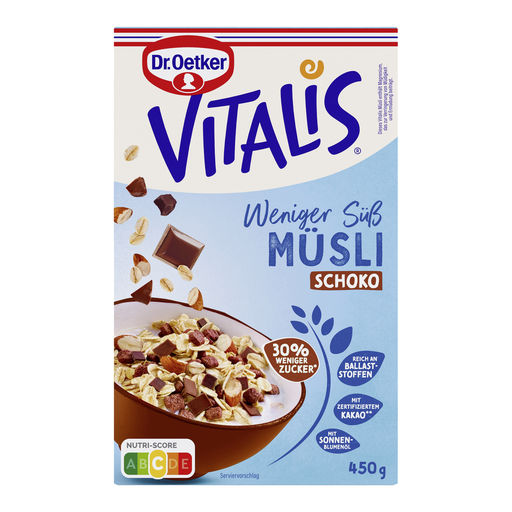 Image unavailable
A chocolate crunchy muesli option if you prefer muesli to shaped cereals for your weekend breakfast.
If you have a milk or almond allergy, or because the product may contain traces of cashews, check the current packaging information. Compare sugar content with other products using the nutritional information per 100 g.
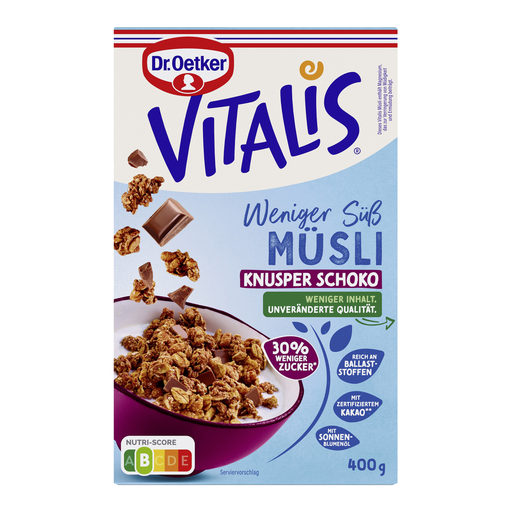 Image unavailable
This 400 g variety could suit you if you’re looking for chocolate crunchy muesli and want to compare its ingredients and nutritional values with other mueslis.
If you have a milk or nut allergy, check the information on the specific pack. The product details mention possible pecans.
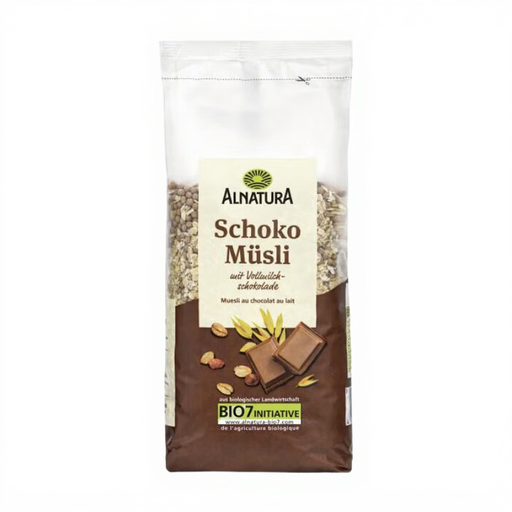 Image unavailable
A chocolate muesli option for shoppers who prefer a larger pack and want to check the wholegrain ingredients in the ingredients list.
If you have allergies, read the current packaging particularly carefully: the available product information on tree nuts and sesame is inconsistent.
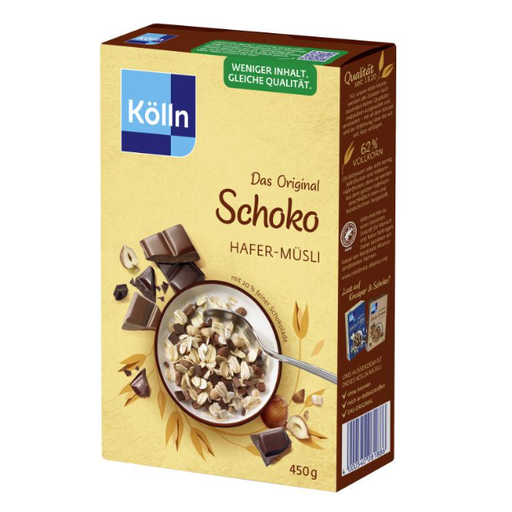 Image unavailable
If you fancy chocolate oat muesli for your weekend breakfast, check the wholegrain ingredients and sugar content on the current pack.
The product information lists milk and gluten, as well as possible traces of peanuts and tree nuts. If you have a relevant allergy, follow the packaging information.
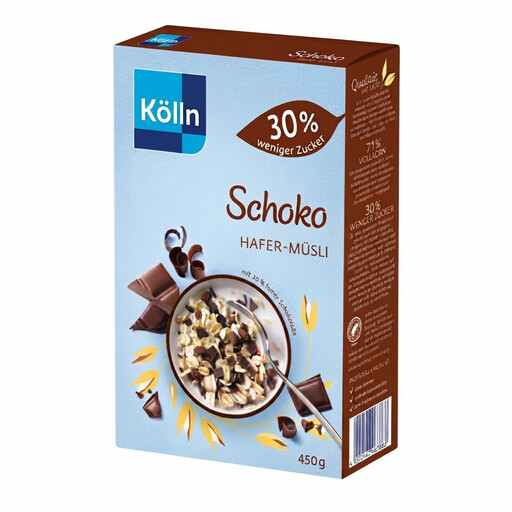 Image unavailable
A chocolate oat muesli for shoppers who pay attention to sugar as well as wholegrain ingredients. Kölln’s ‘30% less sugar’ claim refers to the manufacturer’s standard chocolate muesli.
To compare it with other brands, check the sugar value per 100 g on the current pack. If you have allergies, also check the information on milk, gluten and possible traces of nuts.
Look for ingredients explicitly labelled as wholegrain in the ingredients list, rather than judging by the product’s dark colour. If percentages are provided, you can also check which wholegrain ingredients they refer to.
No. Wholegrain content and sugar levels are listed separately. REWE states that Nestlé NESQUIK Duo contains 49.5% wholegrain wheat and 22.2 g of sugar per 100 g, so compare both values for the products you’re considering.
Reseal the pack securely after opening and follow the storage instructions for the product. For Kölln Knusper Schoko Feinherb, EDEKA24 recommends storing it in a dry place, away from heat.
The ingredients list, allergen labelling and nutritional information help you assess the specific cereal or muesli variety. The Federal Ministry of Agriculture, Food and Regional Identity also lists the best-before date as information required on packaged foods.