Parents with strict sugar-free requirements
You want to look beyond the words ‘no added sugar’ and compare the sugar content per 100 g with the ‘sugar-free’ claim.


Chocolate with sweeteners is not automatically a suitable alternative for a child’s everyday school lunchbox. The German consumer advice centre generally does not consider products with sweeteners or sugar substitutes a suitable alternative for children. If you occasionally pack a small sweet treat, it’s important to distinguish between ‘sugar-free’ and ‘no added sugar’. Check the sugar, sweetener and allergen information on the specific pack. The German Nutrition Society recommends a packed lunch as the main meal during the school day.
You want to look beyond the words ‘no added sugar’ and compare the sugar content per 100 g with the ‘sugar-free’ claim.
If you’re packing a sweet treat occasionally, you’ll want to decide on the amount before putting it in the lunchbox. A individually portioned cereal bar and a chocolate bar that can be broken into pieces call for different approaches to portion planning.
The sweeteners, ingredients and allergen information for the specific variety matter. For products containing sugar substitutes, it’s also worth checking for warnings about a laxative effect if eaten in excess.
If you’re packing a sweet treat occasionally, first decide what sugar claim you’re looking for. Then check the portion size, sweeteners and allergens on the specific pack.
| Criteria | What to check when buying | Who should pay particular attention? |
|---|---|---|
| Sugar content | Compare the sugar content per 100 g with the exact wording on the pack. Lebensmittelklarheit defines ‘sugar-free’ as no more than 0.5 g of sugar per 100 g; ‘no added sugar’ does not mean the same thing. | If I’m specifically looking for a sugar-free product, ‘no added sugar’ isn’t enough for me. This distinction is a top priority for around 36% of consumers. |
| Portion size | Check the weight per item and the pack format; if it’s a bar, portion it before packing if necessary. | If I’m packing a treat occasionally, I want to decide on the amount in advance. This is the main concern for around 29% of consumers. |
| Sweeteners | Read the ingredients list and any information about sugar substitutes, particularly warnings about a possible laxative effect if eaten in excess. | I wouldn’t want to pack a product containing unfamiliar sweeteners for the first time on a school day. Around 21% of consumers prioritise this aspect of tolerance. |
| Allergens and dietary requirements | Check the ingredients, highlighted allergens, ‘may contain’ warnings and any dietary suitability information for the specific variety. | If certain ingredients need to be avoided, the labelling on that particular variety is what matters to me. This need takes priority for around 14% of consumers. |
The terms are not interchangeable. Lindt lists 9.0 g of sugar per 100 g for its milk chocolate bar with no added sugar; Lebensmittelklarheit defines ‘sugar-free’ as no more than 0.5 g per 100 g.
Before choosing a product, compare the exact wording and sugar content per 100 g on the pack.
The German consumer advice centre generally does not consider products with sweeteners or sugar substitutes a suitable alternative for children. Sugar substitutes can have a laxative effect if eaten in excess.
Don’t make these snacks part of the everyday lunchbox routine. If you choose one occasionally, check the ingredients and information on the pack.
With a bar that can be broken into pieces, it’s not clear how much will actually go into the lunchbox. An individually wrapped bar sets the portion size for you, but that doesn’t automatically make it a better choice in terms of ingredients or nutritional values.
Decide on a small portion before packing, and check the weight per bar for individually wrapped options.
Information varies by product. Lindt lists milk and soya for the milk chocolate bar featured here; the REWE page for No Sugarsugar dark chocolate warns that it may contain traces of cereals containing gluten, nuts and peanuts.
If you have allergies, check the ingredients and allergen information for the specific variety you’re buying, not just the brand.
A relevant example of a milk chocolate bar with no added sugar. The details below refer to the 100 g variety, not the full range.
Corny Free Chocolate is a cereal bar with chocolate, not a plain chocolate bar.
The dark chocolate listed by REWE may be of interest to families specifically looking for a ‘lactose-free’ claim.
This information refers to the No Sugar Added Chocolate Crisp variety listed by REWE, not other Frankonia bars.
This selection includes two chocolate bars and a portion-sized chocolate cereal bar for an occasional sweet treat. Check the current labelling on the specific pack to see whether it meets your requirements for sugar content or ingredients.
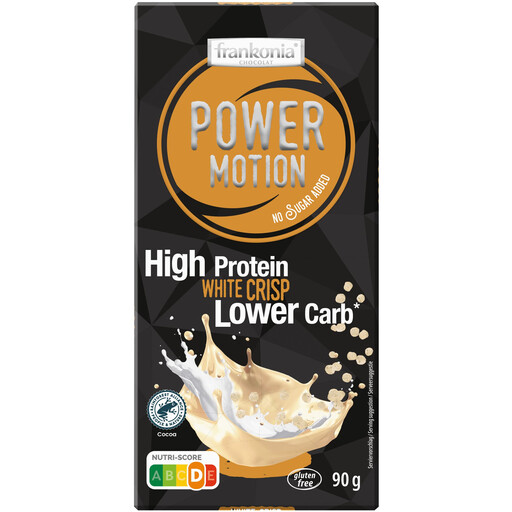 No image available
A white chocolate bar for anyone who wants to portion out a small treat themselves.
Pack size: 90 g. Check the labelling on the variety available before buying for its sugar content, sweeteners and allergens.
 No image available
A chocolate cereal bar for when you’d prefer an individual portion rather than a bar you need to break into pieces for an occasional treat.
Six 20 g bars. ‘No added sugar’ does not mean ‘sugar-free’; check the sugar content, sweeteners and allergens on the specific pack.
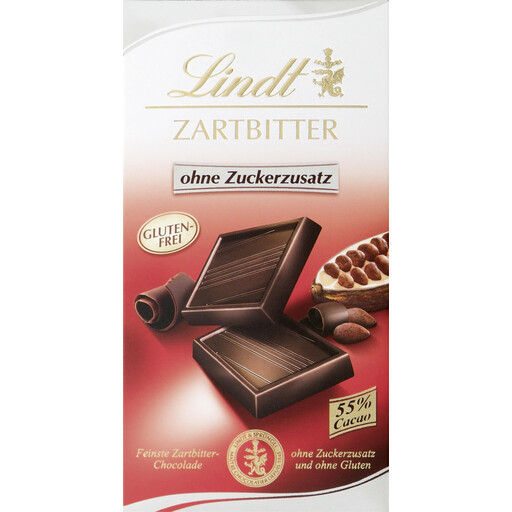 No image available
A dark chocolate bar for an occasional treat in a portion size you decide on yourself.
Pack size: 100 g. The information about Lindt’s milk chocolate bar does not apply to this dark variety. Check the sugar content, sweeteners and allergens on its own pack.
No, the terms mean different things. Lebensmittelklarheit explains that ‘no added sugar’ means no sugars or other ingredients used for sweetening have been added, although sweeteners may be used. For a ‘sugar-free’ claim, it sets a limit of no more than 0.5 g of sugar per 100 g.
No, a chocolate bar is not a replacement for a main meal. The German consumer advice centre generally does not consider products with sweeteners or sugar substitutes a suitable alternative for children. The German Nutrition Society recommends a packed lunch for school.
It refers to a possible effect if you eat too much, not to every portion. The German consumer advice centre notes that sugar substitutes can have a laxative effect in larger quantities. The REWE page for No Sugarsugar dark chocolate carries a similar warning.
No, the sugar claim doesn’t tell you which allergens a variety contains. Lindt lists milk and soya for its milk chocolate bar with no added sugar; the No Sugarsugar dark chocolate listed by REWE may contain traces of other ingredients. Always check the labelling on the specific pack you’re buying.