What should you consider when buying?
Freestanding countertop oven
A good fit if: You want to bake a single tart and don’t want to use a built-in oven space.
Things to consider: The available worktop space, ventilation and the fit of the complete tin all need to suit the specific appliance.
Built-in oven
A good fit if: You’re already looking for an oven for your kitchen and have a suitable space for installation.
Things to consider: The space and connection need to be suitable. Extra programmes aren’t necessarily needed for baking a single tart.
| What matters |
What to check when buying |
Who should consider this? |
| Will the tart tin fit? |
Check the complete tin, including its rim, against the maximum tin size listed for the model and the usable interior space. |
If I want to use a tin I already own, it needs to fit inside completely. Around 36% of consumers put fit first. |
| Will the oven fit in my kitchen? |
Check the external or built-in dimensions, as well as the model-specific guidance on positioning, ventilation and connection. |
If space is limited or I’m planning to install a built-in oven, the space required and type of appliance matter. Around 29% of consumers prioritise kitchen space or appliance type. |
| Does the heating method suit the recipe? |
Check the heating method and temperature specified in your chosen recipe against the model’s functions and temperature range. |
If my recipe specifies a particular heating method, I want to be able to select it on the oven. Around 21% of consumers look first at the recipe’s heating method. |
| What will the running costs and features be? |
Check that the oven has the features you need. For household ovens covered by energy labelling, also check the energy figures per standard cycle; consider installation and the price separately. |
If I plan to use the oven regularly, the features I need and the running costs matter to me. Around 14% of consumers prioritise cost and energy use. |
Manufacturer specifications show why you should check the tin diameter and heating method separately. Severin lists tins up to 30 cm for the TO 2067, while Rommelsbacher lists tins up to 29 cm for the BGE 1580/E and up to 31.5 cm for the BG 1805/E. All three appliances are listed with top and bottom heat; according to the manufacturer, the Severin TO 2067 doesn’t have a fan-assisted function. Capacity in litres alone doesn’t confirm that your tin will fit.
Recipes don’t all call for the same heating method, either. Dr. Oetker recommends around 180 °C with top and bottom heat, or around 160 °C with a fan oven, for its recipe. Choose your recipe first, then check that the specific oven has a suitable function and temperature setting.
For household ovens covered by energy labelling, the German Environment Agency explains that the energy label shows figures per standard cycle and the oven’s capacity. The European Commission lists small ovens as an exception within the scope shown. Standard-cycle figures aren’t a measure of the energy used to bake this particular tart.
Joybuy products for your tart
This selection includes built-in ovens and freestanding countertop ovens for shoppers comparing recipes and tart tins with the space available for installation or on the worktop.
 No image available
Comfee built-in oven, 60 cm, 70 l
For shoppers looking for a built-in oven to suit their kitchen; check the installation dimensions and connection requirements.
60 cm, 70 l and 3 kW according to the product title; the description lists a fan oven function, ten functions and baking.
View at Joybuy
 No image available
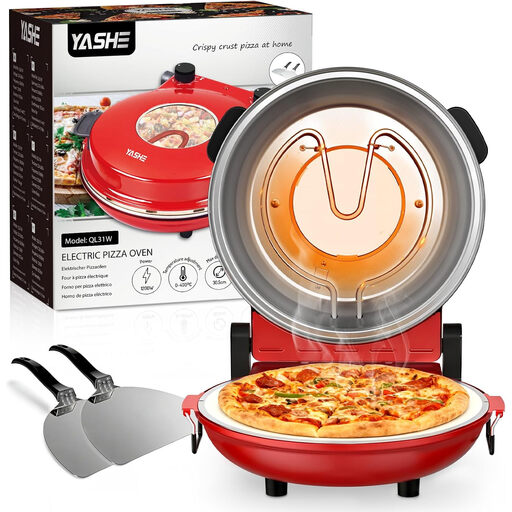
YASHE QL31W pizza oven
For shoppers considering a compact appliance with top and bottom heat; check that your tin and intended baking method are suitable for the specific appliance.
1200 W, a 30 cm ceramic plate and an integrated timer according to the product title. The plate size doesn’t indicate the maximum tart tin diameter.
View at Joybuy
 No image available
WOLTU BF12sz mini oven, 32 l
For shoppers who want to bake without a built-in oven space; check whether the complete tart tin will fit inside.
32 l, 1600 W and 100–250 °C according to the product title. The description lists external dimensions of 52.3 × 36 × 32.2 cm.
View at Joybuy
 No image available
WOLTU mini oven, 10 l
For shoppers short on worktop space, provided the appliance suits the tin and recipe; check the internal dimensions against your tart tin.
10 l and 100–230 °C according to the product title. The description lists top and bottom heat, a 60-minute timer and external dimensions of 37 × 26.5 × 21 cm.
View at Joybuy
 No image available
WOLTU mini convection oven, 28 l
For shoppers who want to choose top heat, bottom heat or a combination to suit the recipe; check that the tin fits inside.
28 l; the description lists a temperature range of 100–230 °C, three shelf positions and a 60-minute timer.
View at Joybuy
Frequently asked questions
Does the chocolate filling need to go in the oven too?
It depends on the recipe. In the WDR recipe, you bake the base, then add ganache and chill it. Dr. Oetker’s recipe calls for a filled tart that is baked. Choose the oven function to suit the recipe you’re actually using.
How should I transport a tart with a cream filling to a picnic?
Chill the tart according to the recipe and plan how you’ll transport perishable food. The German Federal Institute for Risk Assessment highlights the potential risks of inadequate temperatures during transport and storage. In warm weather, a cool bag with chilled ice packs can help. You can’t use this to establish a general safe period for leaving every chocolate tart unrefrigerated.
What should I bear in mind when positioning and cleaning a countertop oven?
Follow the instructions for the specific model. Severin requires the TO 2067 to be plugged into a properly installed earthed socket and warns that its surfaces can get hot. Unplug the appliance and let it cool before cleaning. These model-specific instructions don’t establish standard clearance measurements for all ovens.
What’s the difference between statutory rights and a manufacturer’s guarantee?
If a product is faulty, your statutory rights apply against the seller. A manufacturer’s guarantee is an additional voluntary promise subject to its own terms. The German consumer advice centre distinguishes between these legal rights and voluntary guarantee terms. The rules that apply to a specific purchase depend on the relevant legislation and the circumstances of the contract.
Does every countertop oven need an EU energy label?
No, the requirement doesn’t apply automatically to every small oven. The European Commission lists small ovens as an exception within the scope shown. For household ovens covered by energy labelling, the German Environment Agency explains details including energy class, oven capacity and consumption per standard cycle. Check whether the requirement applies to the specific model.


