What should you look for when buying?
First, decide whether you’ll be baking the tart on its own or alongside other things. This will determine which type of oven is right for you and how much space you’ll need.
| Priority |
What to check before buying |
Who is this especially important to? |
| Tart tin and oven space |
Check the diameter, rim and height of your tin against the usable internal dimensions or the maximum tin size explicitly stated by the manufacturer. |
If I want to be sure my tart tin will fit for our baking get-together, I don’t just look at the oven’s capacity in litres. Around 26% of consumers prioritise finding the right tin size for this task. |
| Heating function and tart base |
Compare convection or hot air, along with the other heating functions actually available, with the recipe you’ve chosen. |
For a chocolate tart, I want to choose a heating function that suits the recipe and make sure the base bakes properly. Around 26% of consumers focus mainly on the heating function and how well they can control the base. |
| Placement and connection |
For a mini oven, check the space it needs, the instructions and the required clearances; for a built-in oven, check the niche dimensions and connection type for the exact model. |
If I want to set up a freestanding appliance or replace an oven, it needs to fit the space and connection available. Around 21% of consumers prioritise these placement and installation considerations. |
| Baking several things at once |
Check the shelf levels and the manufacturer’s specific guidance on using several levels; different dishes may need different cooking times. |
When baking with several tins, I want to know whether they’ll all fit in the oven at the same time. Around 16% of consumers focus particularly on space for baking several things at once. |
| Energy use and cleaning |
For household ovens covered by energy labelling, compare kWh per standard cycle and check the cleaning method listed for the specific model. |
If you use your oven regularly, you’ll want to consider energy use and cleaning as well as how it bakes. Around 11% of consumers make these their main buying considerations. |
Joybuy products
Joybuy picks to help you decide whether a compact appliance or a built-in oven is right for your tart-baking get-together.
 No image available
Bosch HBA571BB4 Series 2 built-in oven
A good option for baking with a built-in oven; before buying, check that the niche and connection are suitable for this specific model.
71 l, 3D Hot Air, pyrolytic self-cleaning, AutoPilot 10 and LED touch controls.
View at Joybuy
 No image available
Bosch Series 6 HBG578ES3 built-in oven
Designed for kitchens with a dedicated space for a built-in oven; check the installation dimensions against your kitchen.
60 cm wide, with AirFry, 3D Hot Air and a steel finish.
View at Joybuy
 No image available
WOLTU 28 l mini convection oven
The convection setting makes this compact appliance worth considering for recipes that call for this heating function; check that your tart tin will actually fit.
28 l, temperature control and timer.
View at Joybuy
 No image available
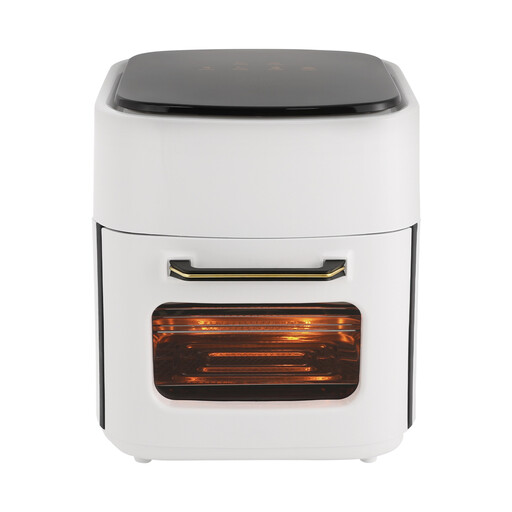
15 l air fryer with 360° Surround Heating Oven
Described as a compact appliance with an oven function. Before buying, check that this specific model has the convection or hot air function your recipe calls for.
15 l, 1400 W, temperature range of 80–200 °C, timer from 5–65 minutes and viewing window.
View at Joybuy
 No image available
ROUNY Blaze S Air Fryer Oven, 6.5 l
Described as a compact appliance with an oven function; check that your chosen tart tin will fit and that the appliance has the heating function you need.
6.5 l, metal casing, stainless steel basket, inner container and rack, viewing window and rotary controls.
View at Joybuy
Frequently asked questions
Which oven setting should I use for a chocolate tart?
Follow the recipe you’re using. Einfach Backen recommends 180 °C with top/bottom heat or 160 °C with convection, and bakes the filling too. Backen macht glücklich blind-bakes the base, then leaves the ganache to set in the fridge.
What do I need to check before setting up or installing an oven?
For a freestanding mini oven, follow the minimum clearance requirements in its instruction manual. For a built-in oven, check the niche dimensions and connection type for the specific model. If it’s supplied without a plug and needs to be wired in, you can’t simply assume it’s a case of plugging it in.
How can I check energy use and potential extra costs?
The EU energy label for household ovens within its scope shows details including oven capacity and kWh per standard cycle. The European Commission excludes small and portable ovens from the scope described here; energy label figures also don’t show the measured energy used to bake your tart.
Is a manufacturer’s guarantee the same as your statutory rights?
No. Statutory rights are set out by law and apply to the seller; a guarantee is an additional, voluntary offer. The Verbraucherzentrale recommends checking the relevant guarantee terms separately.
Which labels and documents should I look for when buying in Germany?
Within its remit, the Bundesnetzagentur lists checks including correct CE marking, manufacturer details and German-language instructions with safety warnings. CE marking isn’t an independent quality award. Energy labelling is separate and, for ovens, depends on which products fall within the legal scope.


