What to consider when buying
First, check that your tin will fit and that you have enough space. Then make sure the heating options and features suit your recipe and how you plan to use the oven regularly.
| What you need |
What to look for |
Who should pay particular attention |
| Will the tart tin fit? |
Compare the tin’s diameter and rim height with the usable oven cavity and shelf positions. WDR specifies a tin measuring 26 cm in diameter for one chocolate tart recipe; Rommelsbacher states that the BG 1805/E can accommodate tins up to 31.5 cm. This diameter specification doesn’t automatically confirm that a tin will fit in terms of height. |
If I want to use a particular tin for a family-sized tart, I check its dimensions and the clearance from the heating elements. Around 40% of consumers prioritise finding an oven that fits their tin. |
| Space and positioning |
For a countertop appliance, allow for the required worktop space and clearances specified in the manual. For a built-in oven, check the housing unit dimensions and connection requirements for the exact model. Rommelsbacher gives the BG 1805/E’s external dimensions as 54,50 × 43,00 × 36,00 cm (W × D × H); additional clearance is required. |
If my kitchen doesn’t have a suitable built-in housing unit or has limited worktop space, I need to choose an appliance that suits the space available. Around 33% of consumers prioritise where and how the appliance will be positioned. |
| Heating options to suit the recipe |
Check that the specific appliance offers the heating option you need, and follow the temperature specified in your chosen recipe. For its recipe, WDR specifies 160 °C conventional heat for the pastry case; Dr. Oetker gives around 180 °C conventional heat or around 160 °C fan-assisted cooking for another recipe. |
If I want to follow a particular tart recipe, I need to be able to set the required heating option and temperature on the oven. Around 17% of consumers prioritise having the right heating option for their recipe. |
| Energy and cleaning |
For appliances covered by energy labelling requirements, check the energy label and consumption per standard cycle. According to the European Commission, small and portable ovens aren’t automatically covered by the energy labelling rules for domestic ovens. NDR points out that pyrolytic cleaning uses electricity. |
If I bake frequently or plan to use the cleaning functions regularly, I factor energy consumption and maintenance into my choice. Around 10% of consumers pay particular attention to running costs and cleaning. |
Suitable appliances at Joybuy
This selection includes countertop and built-in ovens for different kitchens and ways of cooking. For built-in models, check the housing unit and connection. For countertop appliances, check that your tin fits and that you can maintain the required clearances.
 No image available
Bosch HBA571BB4 Series 2 built-in oven, 71 l, 3D hot air and pyrolytic cleaning
A built-in oven for kitchens with a suitable housing unit and connection.
The product name specifies a 71 l capacity, 3D hot air and pyrolytic cleaning.
View at Joybuy
 No image available
Comfee built-in oven, 60 cm, 70 l, 3 kW, AquaClean
A built-in appliance for a kitchen with a suitable housing unit and connection.
The product name specifies 60 cm, 70 l, 3 kW and AquaClean cleaning.
View at Joybuy
 No image available
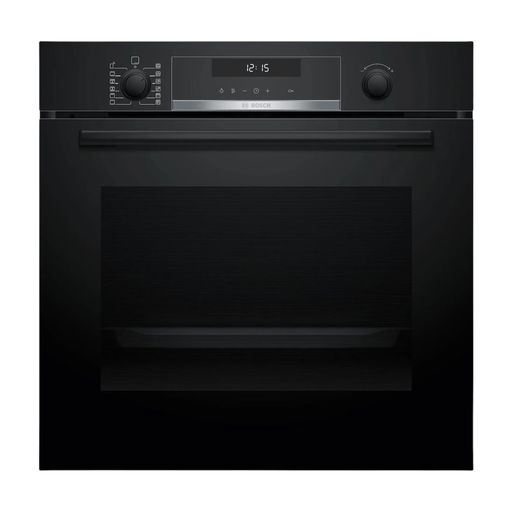
Bosch Series 6 HBG578EB7 built-in oven, 60 cm, pyrolytic cleaning and AirFry
A multifunction built-in oven for kitchens with a suitable housing unit.
The product name specifies 60 cm, pyrolytic cleaning, Home Connect and AirFry.
View at Joybuy
 No image available
Bosch Series 6 HBG578ES3 built-in oven, 60 cm, 3D hot air and AirFry
A built-in oven for anyone looking for an appliance for tarts and other baking tasks, with a suitable housing unit.
The product name specifies 60 cm, 3D hot air and AirFry.
View at Joybuy
 No image available
Woltu BF12sz mini oven, 32 l, 1,600 W, with timer
A countertop appliance for a kitchen without a suitable built-in housing unit. Before buying, check that your tin will fit and that you can maintain the required clearances.
The product name specifies 32 l, 1,600 W, a timer and a temperature range of 100 to 250 °C.
View at Joybuy
Frequently asked questions
Does the chocolate filling need to be baked?
It depends on the recipe. In the WDR recipe, the pastry case is baked, then filled with ganache and chilled. In the Dr. Oetker recipe, the chocolate filling goes into the tin before baking. So choose your oven settings to suit the recipe you’re following.
What’s the right temperature for a chocolate tart?
There’s no single temperature that works for every chocolate tart. WDR specifies 160 °C conventional heat for the pastry case in its recipe; Dr. Oetker gives around 180 °C conventional heat or around 160 °C fan-assisted cooking for another recipe. Follow the temperature and cooking time given in your chosen recipe.
Can a countertop oven go directly underneath a wall cupboard?
Don’t decide based on the appliance’s dimensions alone. Rommelsbacher warns that the rear of the BG 1805/E gets hot and refers users to the safety clearances in the instruction manual. Always follow the positioning requirements for the model you’re planning to buy.
Does every mini oven have an EU energy label?
No. According to the European Commission, small and portable ovens aren’t covered by the energy labelling rules for domestic ovens. Check the classification of the specific appliance; the absence of a label alone doesn’t tell you whether its energy consumption is low or high.
Who should I contact if there’s a fault?
Your statutory rights are generally against the seller; any voluntary guarantee is subject to the guarantor’s terms. The Verbraucherzentrale explains that, if a product is faulty, you’re initially entitled to have the issue remedied. Keep your proof of purchase and the model details.


