If you already have a tart tin
If you want to use your own tin, compare its outer dimensions, including the rim, with the oven’s specifications. The LECKER recipe uses a tart tin measuring 24 cm across the top and 20 cm across the base.


A countertop oven is all you need for a chocolate tart, as long as your tin fits, the recipe can be baked using one of the available heating functions and you can position the appliance safely. A built-in oven may be a better option if you have a suitable space for one or want to use it for larger baking projects too. If your tart has a perishable cream filling, you’ll also need to plan how to keep it chilled during storage and transport.
If you want to use your own tin, compare its outer dimensions, including the rim, with the oven’s specifications. The LECKER recipe uses a tart tin measuring 24 cm across the top and 20 cm across the base.
If you’re planning to use a countertop appliance, check not only its external dimensions but also the clearance and ventilation instructions in the manual for the specific model. For example, Steba requires the KB M19 to be placed 10 cm from the wall.
If you bake several times a week, compare the oven capacity, suitable heating functions and energy consumption figures on a like-for-like basis. The Verbraucherzentrale explains that oven consumption figures are based on standardised baking cycles.
For a chocolate tart to take away, the key considerations are whether your tin fits, the recipe requirements, where you’ll put the oven and how you plan to use it. The percentages offer a general guide to the priorities that may matter when making your choice.
A good fit if: You’re baking a smaller tart, don’t have a built-in space and your tin and available worktop space suit the model.
The trade-off: The appliance takes up worktop space, and its capacity in litres alone won’t confirm that your tin fits.
A good fit if: You want to use a larger tin and have enough space for the appliance. Rommelsbacher specifies baking tins up to 31.5 cm in diameter for the BG 1805/E.
The trade-off: A larger capacity for tins doesn’t automatically mean lower energy consumption or more shelves you can use at the same time.
A good fit if: You have a suitable space for a built-in oven and want to use it for other dishes or larger batches of baking too.
The trade-off: The dimensions and electrical connection must suit your kitchen. Extra programmes aren’t necessarily needed for a single tart.
| Priority | What to check before buying | Who is it important to? |
|---|---|---|
| Tin and batch size | Compare the tin’s outer diameter, including the rim, and its height with the oven’s stated maximum tin size. | If you want to keep using your existing tin and stick to the recipe quantity, the actual fit matters most. Around 33% of consumers put this first. |
| Heating function for the recipe | Check that the oven has the heating function specified in your chosen recipe. The temperature and baking time apply to that particular recipe. | If you want to follow the steps in your recipe, you’ll need to be able to select its heating function and temperature. Around 27% of consumers prioritise this. |
| Space and positioning | Check the appliance’s external dimensions, the space needed to open the door, and the clearance and ventilation instructions in the manual. | If you have limited worktop space, you’ll need to be able to position the appliance there in accordance with its instructions. Around 20% of consumers prioritise where it will go. |
| Usage and energy consumption | For ovens with the relevant information, compare kWh per standard cycle and oven capacity. Consider the recipe and keeping the filling chilled separately. | If you bake regularly, you may want to factor in ongoing use without assuming that the standard figure is the same as the energy used to bake your individual tart. Around 20% of consumers put usage and cost first. |
A LECKER recipe calls for 200 °C using conventional top and bottom heat or 175 °C using fan-assisted heat for the tart case. Rommelsbacher lists top and bottom heat, with optional fan assistance, for the BGE 1580/E; other recipes may call for different settings. The Verbraucherzentrale bases its consumption figures on standardised baking cycles. According to the European Commission, small and portable ovens are exempt from the energy labelling requirements for domestic ovens.
The capacity in litres alone won’t tell you whether your particular tart tin will fit. The maximum permitted tin size varies between countertop oven models.
Measure your tin, including the outer rim, and compare it with the appliance specifications. If it doesn’t fit, you may need a smaller tin or to adjust the recipe quantity.
A figure for a standardised baking cycle doesn’t automatically reflect the energy used by your particular recipe.
Only compare energy figures when they’re based on the same method of measurement, and don’t assume they mean a set saving for baking a single tart.
A perishable filling needs to be kept chilled while you’re out and about. The German Federal Institute for Risk Assessment recommends keeping perishable foods in the fridge at 2 °C to no more than 7 °C.
Check the storage instructions for your recipe and plan how to keep the tart suitably chilled during storage and transport.
Countertop ovens with maximum tin sizes specified for individual models.
Compact countertop ovens, including the KB M19 with a 19 l capacity.
Countertop ovens for smaller baking projects, including the TO 2078 with a 20 l capacity.
Built-in ovens for kitchens with a suitable layout; the HBG578BB3 has a 71 l capacity.
Built-in ovens, including the HR776G1B1 with a 71 l capacity and steam support.
Joybuy ovens for your baking projects: before choosing, compare the recipe requirements and your tin with the specifications for each appliance, and check that you have the space needed to install or position it.
 No image available
This model could work for baking a tart if you have a suitable space for a built-in oven and its settings meet the recipe requirements.
The product name specifies a 70 l capacity, 60 cm width, 3 kW, ten functions, a timer, ECO mode and energy class A.
 No image available
This model could be a good countertop option if your tin fits and you can position the appliance safely.
The product name specifies a 32 l capacity, 1,600 W, a temperature range of 100–250 °C, a timer and a crumb tray.
 No image available
This countertop oven could suit a smaller baking project, as long as your tin and recipe are right for the model.
The specifications for this model include a 10 l capacity, a temperature range of 100–230 °C, top and bottom heat and a pizza function.
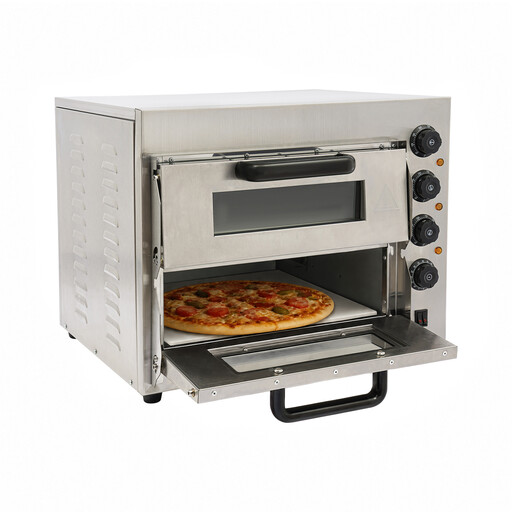 No image available
The product description also mentions baking pastries. Before making a tart, check that your tin fits inside.
The specifications include two 20 l compartments, separately adjustable heating elements, 3,000 W and a temperature range of 50–350 °C.
Not necessarily. What matters is the heating function your recipe calls for and whether your oven has it. The LECKER recipe gives settings for both top and bottom heat and fan-assisted heat for the tart case. Don’t automatically apply its temperature and baking time to other recipes.
Follow the instructions for your specific appliance. Steba requires the KB M19 to be placed 10 cm from the wall at the back, and its ventilation slots must not be covered. This isn’t a general requirement for all countertop ovens.
Keep perishable fillings chilled during storage and transport. The German Federal Institute for Risk Assessment recommends keeping perishable foods in the fridge at 2 °C to no more than 7 °C. The LECKER recipe also calls for its cream and chocolate filling to be chilled for at least four hours.
The label shows energy consumption per standardised baking cycle, so it won’t necessarily reflect the energy used by your particular recipe. The Verbraucherzentrale explains how standardised cycle figures work. According to the European Commission, small and portable ovens are outside the scope of energy labelling for domestic ovens.
No. The European Commission explains that the CE marking is the manufacturer’s declaration that a product meets the relevant EU requirements; there’s no central EU body that awards a general certificate. Check the information for the specific appliance rather than treating the mark as an independent product test.