Choir directors making quick rehearsal recordings
If you want an easy way to record a rehearsal for later review, a recorder with built-in stereo microphones can simplify the setup. Zoom and Tascam offer suitable recorder models.


If you want to record a choir rehearsal with minimal setup, a recorder with built-in stereo microphones is a natural place to start. A separate pair of microphones is a better option if you want to position them independently of the recording device and have more control over the stereo arrangement – provided you have two suitable inputs and the required phantom power. In either case, listen back to test recordings made in the room itself: positioning, choir balance and the amount of reverberation all depend on the room and how everything is set up.
If you want an easy way to record a rehearsal for later review, a recorder with built-in stereo microphones can simplify the setup. Zoom and Tascam offer suitable recorder models.
If you want to influence the balance between voice groups through microphone positioning and the stereo arrangement, a separately positionable pair could be a good choice. RØDE and LEWITT offer small-diaphragm cardioid pairs; you’ll need a suitable signal chain to use them.
If the room is clearly audible in your recordings, try different microphone positions before you buy. Shure recommends listening to recordings from different positions and assessing the tonal balance and amount of room sound. Changing the microphone alone won’t fix poor room acoustics.
A good fit if: you want to record rehearsals with just a few components, without setting up a separate pair of microphones.
The trade-off: You can’t position the microphones around the room independently of the recorder; you’ll need to position the whole device.
A good fit if: you want to position the microphones independently or try a particular stereo arrangement, and can provide suitable inputs.
The trade-off: You’ll need a suitable signal chain as well as the pair. The RØDE M5 requires P24 or P48 phantom power.
| Priority | What to check when buying | Who is this important to? |
|---|---|---|
| Choir balance and stereo image | Whether a fixed X/Y arrangement will do, or whether you need to position the microphones independently. | I want the voice groups to sound balanced as an ensemble; around 33% of consumers put choir balance first. |
| Quick setup | Whether built-in stereo microphones and positioning the whole recorder will work in your room. | If I want to record rehearsals regularly with just a few steps, a simple setup matters; around 25% of consumers prioritise quick setup. |
| Reverberation and room sound | Whether you can compare several microphone positions using short test recordings. | I want to record the choir clearly in the room I have and assess how much room sound is picked up; around 25% of consumers focus first on room sound. |
| Connections and expandability | Whether there are two suitable inputs and the required phantom power; remember to allow for cables and a mount. | If I want to connect external microphones later, the signal chain needs to support them; around 17% of consumers put expandability first. |
The RØDE M5 requires P24 or P48 phantom power. You’ll also need to be able to connect both microphones to suitable inputs.
Before you buy, check the requirements of the specific pair against your recorder or interface.
The recording format won’t correct excessive room sound or prevent the microphone capsule from being overloaded. Distortion can occur before the signal reaches the recorder.
Test your planned setup with the choir, then listen back for reverberation, balance and any audible distortion.
Tascam lists the DR-40X as discontinued. Information about this older model doesn’t confirm the features of the DR-40XP.
When buying, check the full model name and the specifications of the version on offer.
The H1essential records using built-in X/Y microphones, while the H4essential adds two XLR/TRS inputs.
The DR-40XP has built-in stereo microphones that can be switched between X/Y and A/B arrangements, according to Tascam.
RØDE offers the M5 as a matched pair of small-diaphragm cardioid microphones and lists choirs as one possible application.
The LCT 040 MATCH stereo pair is a separate pair of small-diaphragm cardioid microphones.
The products below are options for recording speech or vocals. They aren’t automatically a substitute for a stereo recorder or a matched pair of microphones that can be positioned independently for a choir.
 No image available
The product description mentions voice recording in group settings. For a choir rehearsal, check whether the microphone arrangement will give you the stereo image you want.
The product title lists a 3-microphone array, 64 GB and 20H Recording.
 No image available
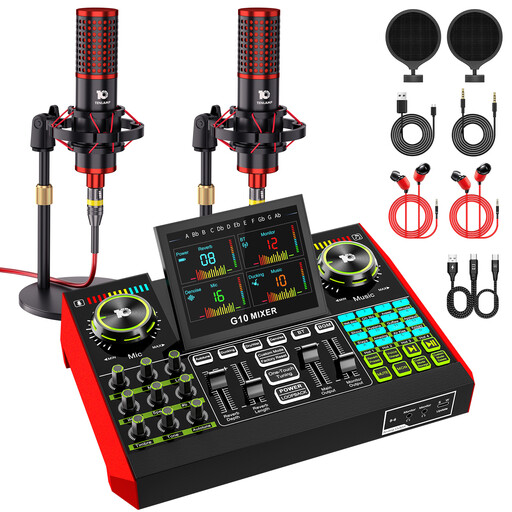
The kit is supplied with two microphones and an audio mixer. Before using it to record a choir rehearsal, check that the connections and microphone arrangement suit your recording needs.
The product title lists two 3.5 mm condenser microphones and desktop stands.
 No image available
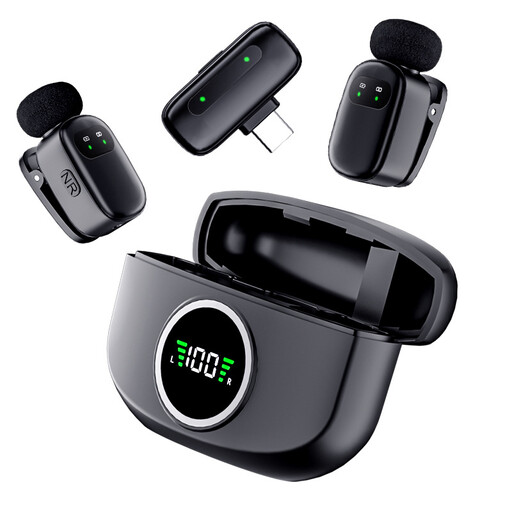
This dual lavalier microphone is described as suitable for recording and interviews. It isn’t the same as a stereo pair that you can position independently for a choir.
The product title lists a Type-C interface.
Position the recorder or stereo pair so it captures the choir as a whole, then listen to short recordings made from different positions. Compare the balance between voice groups, clarity and amount of room sound. There’s no single position that works for every choir and room.
Both RØDE M5 microphones need suitable inputs or preamps, as well as P24 or P48 phantom power. A suitably equipped interface or recorder can provide these; before buying, check that it has two available inputs and can supply the required power.
No. The recording format won’t change poor room acoustics or the microphone capsule’s handling limit. If the maximum sound pressure level is exceeded, distortion can occur before the sound is recorded.
If you bought the device as a consumer, your statutory rights apply to your contract with the seller. According to Your Europe, the EU minimum guarantee period is generally two years from the date you receive the goods. Any additional manufacturer’s guarantee doesn’t replace these rights.
Recording at home isn’t automatically permitted. Section 201 of the German Criminal Code (StGB) protects, in particular, privately spoken words from being recorded and shared without authorisation. So, agree with everyone involved in advance on what will be recorded and who it will be shared with. Public use of protected music may also require usage rights, as GEMA explains.