
Lieferung heute & morgen

Qualitätsgarantie

Willkommens-Angebote freischalten: KOSTENLOSE Lieferung | Bis zu 80 % RABATT | Kostenlose 30-Tage-JoyPlus-Testphase
App herunterladen
Educational toys for children should do more than entertain. They should suit your child’s stage of development, the time you have available and the way your family likes to play. Children’s jigsaws, wooden baby puzzles, construction toys and educational games for children can vary considerably in how they’re used, how much space they take up and the age range they’re designed for.
However, the label ‘educationally valuable’ isn’t a reliable way to choose on its own. Look instead for verifiable details such as the recommended age, piece size, material, how the game works and safety information.
A jigsaw recommended for ages 4+ may still be challenging for a child with little experience of puzzles. Conversely, a very simple shape-sorting game may quickly lose its appeal for older children. So, consider the age recommendation alongside the number of pieces, the size of the elements and the complexity of the task.
For babies and toddlers, large, easy-to-grip pieces are more suitable than small connectors. For a jigsaw recommended for ages 7+, the picture, number of pieces and the child’s ability to concentrate for longer all play a greater role.
Phrases such as ‘supports development’ or ‘creative educational toy’ reveal little about what children will actually do when they play. A better question is: does the child need to match shapes, connect building blocks, follow rules or solve puzzles together?
For a children’s jigsaw, for example, you can compare the number of pieces, format, picture and recommended age. With LEGO for children, the pieces included, building instructions and warnings are also relevant.
Small parts can pose a choking risk for children under three. With wooden toys, parents should also check before every play session that knobs are firmly attached and that no edges or surfaces are damaged. A practical storage box helps prevent pieces from going missing and makes the toy easier to use day to day.
Look for the CE marking, manufacturer or importer details and safety warnings. The European toy safety standards series EN 71 covers, among other things, requirements for mechanical and physical properties, flammability and certain chemical properties. A safety marking does not replace supervision.
For children from around 12 months, choose peg and grip puzzles with large handles. A wooden baby puzzle should have a sturdy baseboard, easy-to-grip pieces and rounded edges. The manufacturer’s specific age recommendation remains the most important guide.
For children aged 4+, several smaller puzzles with different numbers of pieces can be a good choice. A set with 2 × 26 and 2 × 48 pieces allows the difficulty to increase gradually. A 150- or 200-piece jigsaw recommended for ages 7+ is better suited to children who can already stick with a task for longer.
For wooden toys, check the material details, surface finish and how the handles are attached. FSC-certified wood indicates that it comes from appropriately certified forests, but on its own this doesn’t tell you everything about the finished toy.
For cardboard jigsaws, precise cutting, surface texture and storage are useful points of comparison. A matt or linen-textured surface can reduce reflections; whether that helps in a particular room depends on the lighting.
Construction toys are a good choice for families who want to build freely and adapt their models. By contrast, rule-based board games for children encourage them to follow a sequence and play together. For short play sessions on the go, compact logic games are more practical than large construction sets.
Choose a type of play that suits your child: free-form creating, matching, puzzling, building or solving puzzles together. That way, you can judge whether a toy offers creative play by how it’s actually used, not just by what the packaging promises.
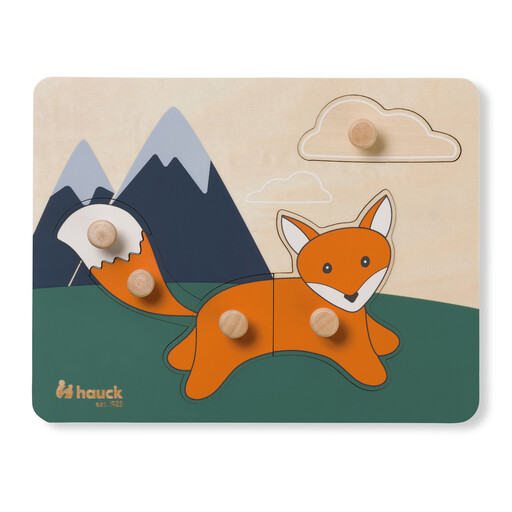
Why this product suits this profile: This peg puzzle is designed for children aged 12 months and over. It has large wooden handles and a 22 × 17 × 2 cm baseboard, making it suitable for simple matching activities at home.
The recommended age, shape of the pieces and handle design are all clearly specified. This makes it easier to assess whether it’s suitable than relying on a vague marketing claim.
Wooden construction, large handles and simple shape matching; the product description also states that it has rounded edges.
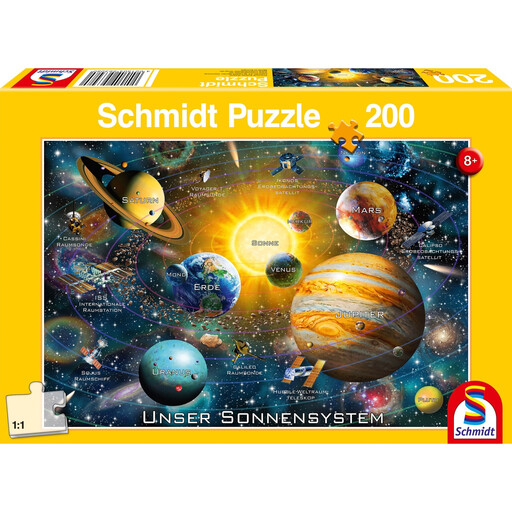
Why this product suits this profile: The picture features the Sun and planets, and the jigsaw is designed for children aged 7+. The product description specifies a matt, linen-textured surface and a poster with piece outlines.
The number of pieces and age recommendation are clearly stated. The poster can help children get started without reducing the activity to simply looking at a picture.
200 pieces, a space theme, a matt textured surface and a poster with guide lines.
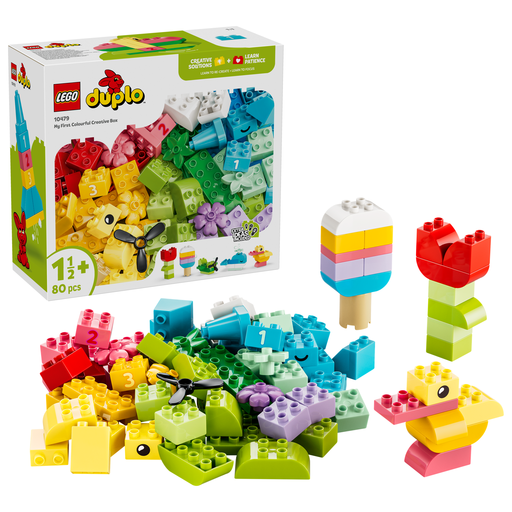
Why this product suits this profile: The box contains 80 building blocks and is designed for children aged 18 months and over. It’s made for building, taking apart and creating freely again and again as part of family life.
As well as suggested models, it offers the freedom to build whatever you like. Play doesn’t have to end once a model is completed.
80 pieces, colourful building blocks, inspiration guides and number blocks featuring ‘1’, ‘2’ and ‘3’.
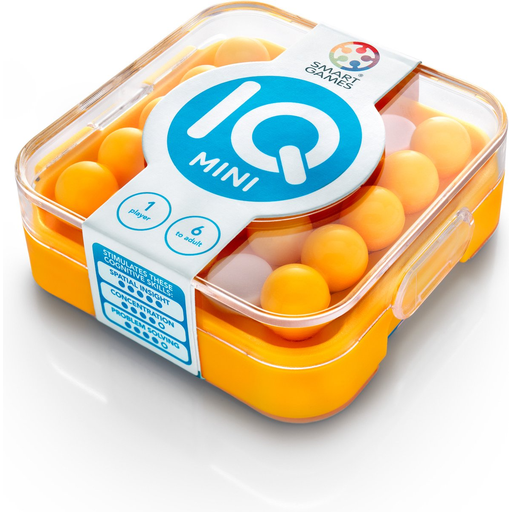
Why this product suits this profile: According to the product details, this compact logic game is suitable for ages 6+ and can be used on the go. The colour is selected at random when you order.
Its compact design makes it clear what the game is intended for. Remember that the colour is selected at random before you buy.
Pocket-sized, with movable blockers and extra clues or solutions available via a QR code.
We’ve put together a complete, regularly updated list of products that meet these strict selection criteria and fully comply with the safety regulations in force in the EU.
Large peg and grip puzzles with just a few pieces, a sturdy baseboard and firmly attached handles are suitable options. Check the recommended age, warnings and condition before each use. Children of this age should be supervised while playing.
It depends on the child’s age and experience. For beginners aged 4+, 26 to 48 pieces may be suitable. For a jigsaw recommended for ages 7+, 150 to 200 pieces can be a useful guide, provided the child already enjoys puzzling for longer periods. The picture and piece size also affect the difficulty.
Open-ended play systems such as building blocks can be used again and again to make new models and create your own designs. With jigsaws, how long they stay interesting depends more on the picture and the child’s individual interests. Look for durable materials, complete sets and storage that protects the pieces from damp and loss.