What should you look for when buying?
First, work out how much room you need for fresh shopping and leftovers you’ll eat soon. Then consider whether you regularly freeze portions. Once you’ve found appliances of a suitable size, compare their annual energy consumption and check the dimensions against the space available.
Since 1 March 2021, new household refrigeration appliances in the EU have used the A to G energy label scale. The European Commission says the label includes details such as annual energy consumption, fridge and freezer capacity, and noise emissions.
| Buying priority |
What to check |
Who is it important to? |
| Usable fridge space |
Fridge capacity, shelves and crisper drawers; allow space for your own containers. |
If you want to fit shallow containers of soup alongside your weekly shop, well-organised fridge space is essential. Around 33% of consumers prioritise fridge space for fresh shopping and leftovers they’ll eat soon. |
| Freezer space for portions |
Check the freezer capacity and drawer dimensions against the containers you use for portions. |
If you regularly cook more than you’ll eat over the next few days, make sure the portions you freeze will fit comfortably in the drawers. Around 27% of consumers prioritise freezer space for food they want to keep in stock. |
| Fit for your space |
Check the exact model’s height, width and depth, as well as the direction in which the door opens. |
If space is limited in your kitchen, the appliance and its door opening need to suit the available space. Around 20% of consumers focus primarily on whether an appliance will fit. |
| Energy consumption |
Compare annual consumption in kWh on the EU label for appliances with a similar usable capacity. |
If keeping running costs down matters as much as finding the right size, the stated annual consumption can help you compare models. Around 20% of consumers put energy consumption first. |
Fridge-freezers at Joybuy
The models below are fridge-freezers for households looking to store fresh shopping and frozen portions. For each one, check the stated capacities and dimensions, and make sure it’s suitable for the intended installation.
 No image available
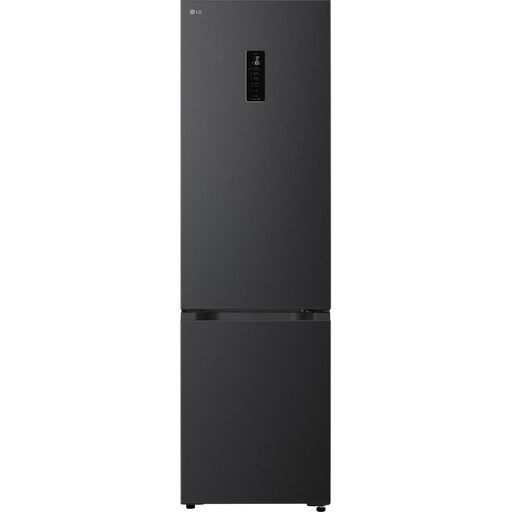
LG GBBS727AEV Fit&Max
For households looking for a freestanding fridge-freezer with a stated energy class A. The product name gives a total capacity of 375 l; make sure the stated width of 91,3 cm and depth of 73,5 cm will fit the space available.
Joybuy
 No image available
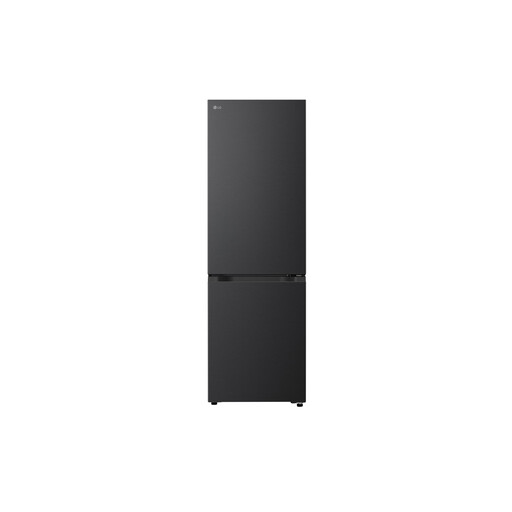
LG GBBS716AEV
The fully integrated design is suitable for a compatible fitted kitchen; check the required niche dimensions in advance. The product name gives a total capacity of 333 l, energy class A and 29 dB.
Joybuy
 No image available
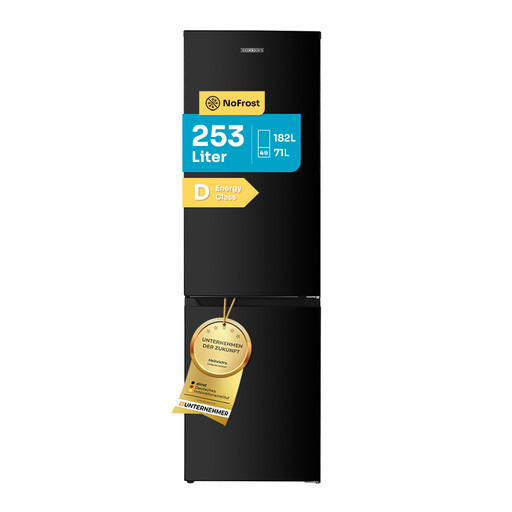
Heinrich’s fridge-freezer, 253 l
For households looking to compare the stated fridge and freezer capacities with their shopping and containers. The specifications list 182 l of fridge capacity, 71 l of freezer capacity, No Frost and 39 dB.
Joybuy
 No image available
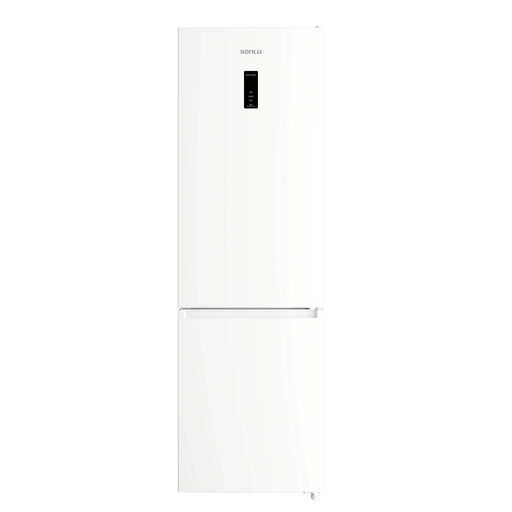
Sonlu CD-400RW
A freestanding fridge-freezer with a reversible door; check that the door can open in the right direction for your space. The product name gives a fridge capacity of 252 l and a freezer capacity of 103 l, a width of 60 cm and energy class E.
Joybuy
 No image available
CHiQ JR263LGE
For a narrower space, the product name gives a width of 54 cm and a height of 176 cm. The listed total capacity is 262 l, split 70/30, with Low Frost; according to the description, manual defrosting is required around once or twice a year.
Joybuy
Frequently asked questions
Can I put a large pan of hot soup straight into the fridge-freezer?
For larger quantities, the German Federal Institute for Risk Assessment recommends dividing the soup between several shallow dishes to cool. The leftovers should be cooled to below +7 °C within a few hours and then refrigerated.
How long can I keep soup in the fridge?
The German Federal Institute for Risk Assessment recommends eating refrigerated leftovers within two to three days. If you’re cooking ahead for later, suitable portions can be frozen rather than planning to keep them in the fridge for a whole week.
What label should a new appliance have in Germany?
New household refrigeration appliances carry the EU energy label, which uses a scale from A to G. The European Commission says it includes details such as annual energy consumption, fridge and freezer capacity, and noise emissions. The scale has applied to this product group since 1 March 2021.
What should I do with my old fridge-freezer?
As the German Environment Agency explains, electrical waste must be collected separately and must not go in household rubbish. Before buying, check the return or collection options available from the retailer you choose and for your delivery method. Local recycling centres are another option.


