What should you look for when buying?
Fridge without a freezer compartment
A good fit if: You mainly chill yoghurt, fresh ingredients and prepared meals, and don’t need a separate freezer for storing food.
The trade-off: There’s no dedicated freezer space for frozen food.
Fridge-freezer
A good fit if: Your plans for cooking together regularly include frozen portions or other frozen food.
The trade-off: The freezer takes up some of the appliance’s capacity, so make sure the fridge and freezer compartments suit your needs individually.
The Verbraucherzentrale recommends storing yoghurt on the middle shelf of the fridge at 5 to 7 °C. So first consider the usable layout of the fridge compartment, and only add freezer space if you need it for storing frozen food.
| Priority |
What to check when buying |
Who is it most relevant to? |
| Keeping yoghurt properly chilled and easy to reach |
Check the space on the middle shelf, adjustable temperature settings and room for covered food. |
If I share my fridge with other people, I want to store yoghurt pots where they’re easy to reach and kept at the right temperature. Around 36% of consumers prioritise suitable storage for yoghurt. |
| Space for food you share |
Consider fridge and freezer capacity separately, and check that your own containers will fit between the shelves. |
For ingredients and portions we plan to use together, I need practical shelves, not just a large total capacity in litres. Around 29% of consumers prioritise space for food they share. |
| Energy use and overall costs |
Once you’ve found an appliance of a suitable size, compare its annual energy consumption in kWh and use your own electricity tariff to estimate costs. |
If running costs matter to me, I compare suitable appliances by their stated energy consumption. Around 21% of consumers prioritise energy use. |
| Fitting your kitchen |
Check the height, width, depth and door hinge against the space available or the installation requirements. |
In a small or already-fitted kitchen, the appliance needs to fit its designated space and have room for the door to open. Around 14% of consumers prioritise how well an appliance fits their kitchen. |
Fridges at Joybuy
The selection includes fridge-freezers for keeping chilled and frozen food separately, as well as a fridge without a freezer compartment for households that don’t plan to store frozen food.
 No image available
LG GBBSJ1CCPY fridge-freezer, 333 l
For storing fresh food and frozen food together, this model lists separate fridge and freezer capacities.
220 l fridge capacity and 113 l freezer capacity; 3 glass shelves; FRESHConverter+ zone; annual energy consumption of 169 kWh; dimensions: 597 × 1860 × 674 mm; reversible door.
View at Joybuy
 No image available
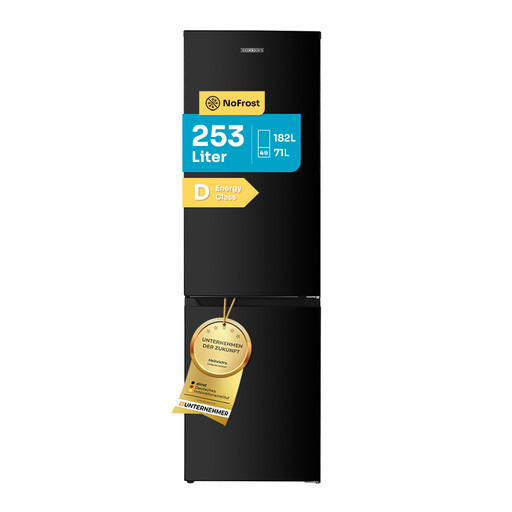
Heinrich´s fridge-freezer, 253 l
The stated fridge and freezer capacities make it easier to assess space for fresh and frozen food separately.
182 l fridge capacity and 71 l freezer capacity; 181 cm high; reversible door; 39 dB; No Frost.
View at Joybuy
 No image available
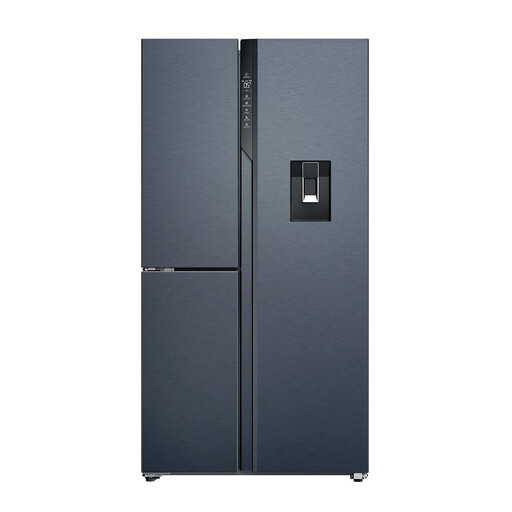
Haier HSPR79F18EWMB S+ 7 side-by-side
The separate fridge and freezer compartments suit households that plan for both types of storage together.
384 l fridge capacity and 189 l freezer capacity; dimensions: 905 × 1775 × 707 mm; approximately 302 kWh annual energy consumption; energy rating E.
View at Joybuy
 No image available
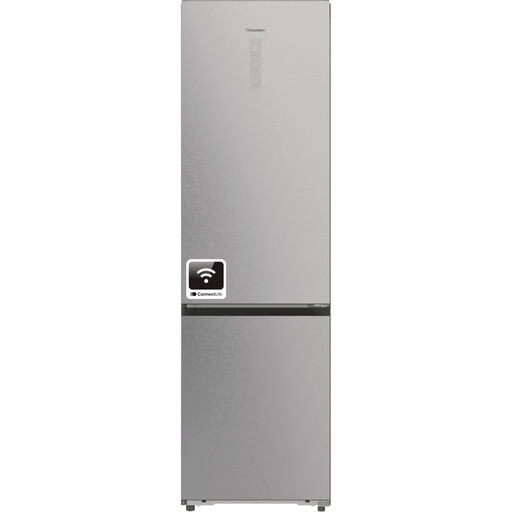
Hisense RB5P410SACC fridge-freezer
The separately stated capacities make it easier to compare the appliance with your planned need for fridge and freezer space.
283 l fridge capacity and 130 l freezer capacity; energy rating C; reversible door hinges; 90° door opening.
View at Joybuy
 No image available
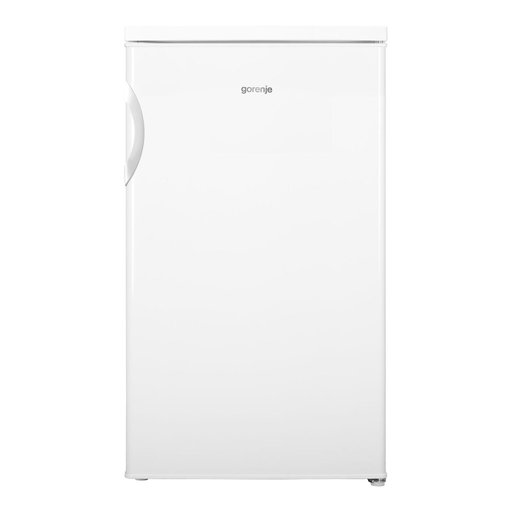
Gorenje G200 R49DPW fridge without a freezer compartment, 133 l
If you don’t plan to store frozen food, the full stated usable capacity of 133 l is dedicated to the fridge compartment.
5 shelves; dimensions: 56 × 57,90 × 84,50 cm; energy rating D; annual energy consumption of 72 kWh; reversible door. No freezer compartment.
View at Joybuy
Frequently asked questions
Which shelf should fresh yoghurt go on?
The Verbraucherzentrale recommends the middle shelf of the fridge at 5 to 7 °C. Also follow the storage instructions on the packaging; for highly perishable food in general, the German Federal Institute for Risk Assessment recommends fridge temperatures of 2 to no more than 7 °C.
Can I keep opened yoghurt until its best-before date?
The best-before date isn’t a blanket guarantee of how long yoghurt will keep after opening. Follow the storage instructions on the packaging, use clean utensils to serve it, keep it chilled and eat it soon after opening.
What should I check before installing a built-in fridge?
Check the appliance dimensions and door hinge against your kitchen, and follow the installation and ventilation requirements for the specific model. The external width alone isn’t enough to confirm that it will fit.
How do I compare purchase and electricity costs?
First choose an appliance of a suitable size, then compare the stated annual energy consumption in kWh. Multiply the difference in consumption between two appliances by your own electricity price per kWh to estimate the difference in annual running costs.
What energy labelling applies when buying a fridge online?
EU energy labelling rules apply to new fridges and freezers covered by the regulations; the energy label must also be clearly visible in online shops. Appliances in this category use the A to G scale. The labelling requirement applies to suppliers.


