
Lieferung heute & morgen

Qualitätsgarantie

Willkommens-Angebote freischalten: KOSTENLOSE Lieferung | Bis zu 80 % RABATT | Kostenlose 30-Tage-JoyPlus-Testphase
App herunterladen
A portafilter espresso machine lets you make espresso, cappuccino or latte macchiato just the way you like it. It does require more attention than a pod machine or bean-to-cup coffee machine, though: you need to measure and tamp the coffee grounds, care for the brew group and clean milk systems thoroughly.
Three common marketing traps can lead to the wrong choice:
A 15-bar espresso machine or a model with a 20-bar pump will generally state the pump’s maximum pressure. When choosing a machine, you should also consider its heating system and how it works in practice.
A thermoblock can help the machine reach operating temperature quickly. According to the product details, the De'Longhi Dedica Duo EC890.GR is ready to use in around 40 seconds and has a 1450 W power rating, a 1.1-litre water tank and 15 bar pump pressure. A single-boiler machine such as the Ariete Vintage has one boiler, 900 watts and a heat-up time of around two minutes, according to its specifications.
A simpler heating system is often enough if you only make espresso now and then. If you regularly switch between espresso and frothed milk, check that the machine’s operating sequence suits your daily routine.
A portafilter machine with a milk frother can have either a manual or an automatic system:
The De'Longhi Dedica Duo and La Specialista Arte Evo models feature the My-Latte-Art system with a steam wand. The Grundig KSM 6430, by contrast, has an integrated milk container with a capacity of around 0.3 litres. These details describe the features, but don’t guarantee a particular taste.
A compact portafilter espresso machine can be a good choice for a small kitchen. According to the manufacturer, the Dedica Duo is only around 14.9 centimetres wide. Before buying, though, check its depth, the clearance beneath your wall cabinets and the space you’ll need for the portafilter.
A machine with a built-in grinder means fewer appliances on your worktop. The De'Longhi La Specialista Arte Evo EC9255.T and the Ariete Moderna both have an integrated grinder. The La Specialista Arte Evo has eight grind settings and a 250-gram bean hopper, according to the product details. If you already own a separate espresso grinder, a machine without one gives you more flexibility.
Accessories vary by model and may include a tamper, milk jug, filter baskets or a dosing tool. A tamper supplied with the machine doesn’t necessarily mean its diameter and filter basket will suit the way you want to make coffee, so it’s worth checking.
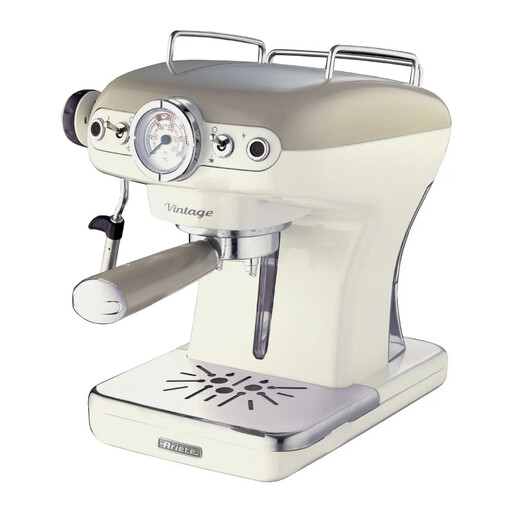
Why it suits this profile: This machine works with ground coffee and E.S.E. pods. It has a removable 0.9-litre water tank and a steam wand for milk drinks.
The product details cover more than just pump pressure: they also specify the heating system, heat-up time and compatible types of coffee. This makes it easier to gauge how much effort the machine will take to use.
15 bar pump pressure, a two-cup function, temperature control and support for both ground coffee and E.S.E. pods.
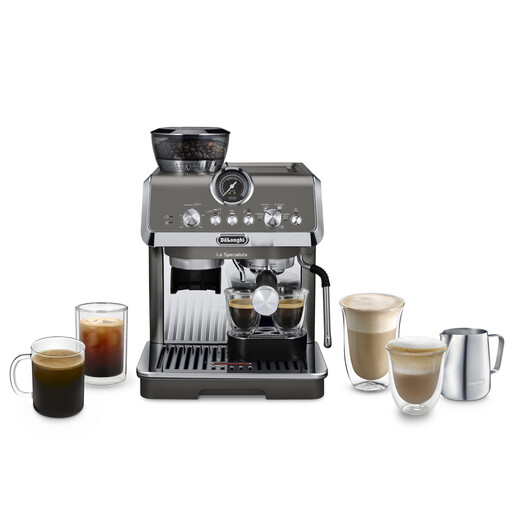
Why it suits this profile: This model combines an integrated grinder with eight grind settings, barista accessories and a manual steam wand.
The grind settings and accessories are clearly listed. That makes it easier to assess what you’re getting, rather than relying solely on general claims such as ‘barista quality’.
Cold-Extraction technology, according to the product description, a 1.7-litre water tank, a 250-gram bean hopper and a stainless-steel body.
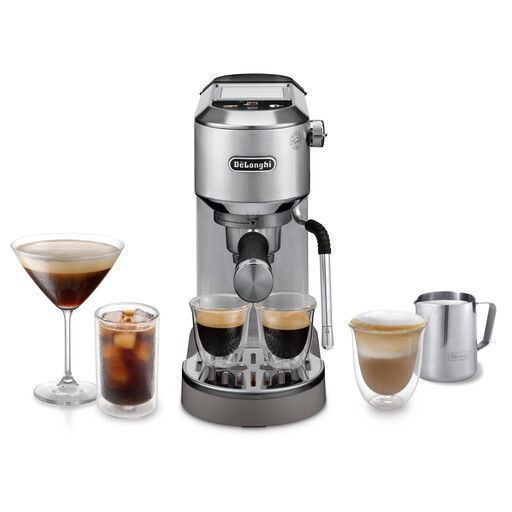
Why it suits this profile: According to the product description, three pre-set drink options – espresso, double espresso and cold brew – make it easy to choose your drink, while the slim design saves space.
This machine doesn’t have an integrated grinder. So, if you already use ground coffee or own a separate grinder, you won’t be paying for duplicate grinding features.
Around 15 centimetres wide, a thermoblock heating system, 15 bar pump pressure, a My-Latte-Art steam wand and an adjustable drip tray.
Before buying an espresso machine for home, think about your daily routine:
Depending on the machine, a cold brew function may use a special cold-water extraction method. This isn’t the same as traditional cold brew, which is steeped for many hours. So check which method you actually prefer.
We’ve put together a complete, regularly updated list of products that meet these strict selection criteria and fully comply with the safety regulations in force in the EU.
After each use, empty and rinse the portafilter. Clean the steam wand straight after frothing milk. You’ll also need to descale the machine regularly and clean any removable parts. How often you need to do this depends on your water hardness, how frequently you use the machine and the manufacturer’s instructions.
It can be a good choice if space is limited and you want to grind beans just before making your coffee. Check the grind settings, bean hopper and how easy it is to access the grinder for cleaning. If you already have a suitable grinder, a separate portafilter machine may give you more flexibility.
As well as the purchase price, you’ll need to budget for coffee beans or ground coffee, water filters, descaler and, where necessary, cleaning products. Milk systems may also need extra care. So, a simple cost-per-drink comparison should take into account not just electricity use, but also the type of coffee, the amount you use and maintenance.