
Lieferung heute & morgen

Qualitätsgarantie

Willkommens-Angebote freischalten: KOSTENLOSE Lieferung | Bis zu 80 % RABATT | Kostenlose 30-Tage-JoyPlus-Testphase
App herunterladen
Long hours sitting in a home or corporate office often lead to tension and back pain. An ergonomic office chair is marketed as the solution, but the market is overwhelming. Many products carry the "ergonomic" label without meeting the crucial criteria. The result: an investment that does more harm than good.
As a Joybuy Product Recommendation Officer, I analyze product data daily to provide you with objective, practical guidance. This guide will show you which pitfalls to watch out for and which technical features truly matter, enabling you to make an informed decision.
Before we dive into the key features, let's expose the typical marketing promises and design flaws that often lead to disappointment.
To avoid these traps, focus on verifiable, technical specifications. These three parameters are crucial for a truly functional, ergonomic chair.
The heart of a good swivel chair is its mechanism. A synchronous mechanism is the standard here. It ensures that the seat and backrest tilt in a coordinated ratio. This promotes "dynamic sitting," which keeps the body in motion, relieves pressure on the spinal discs, and improves circulation. Look for the following adjustment options:
The materials determine not only the durability but also the comfort.
Adjusting an ergonomic desk chair goes far beyond the backrest.
Based on these objective criteria, we have selected a few models from our range that are suitable for different needs and budgets.
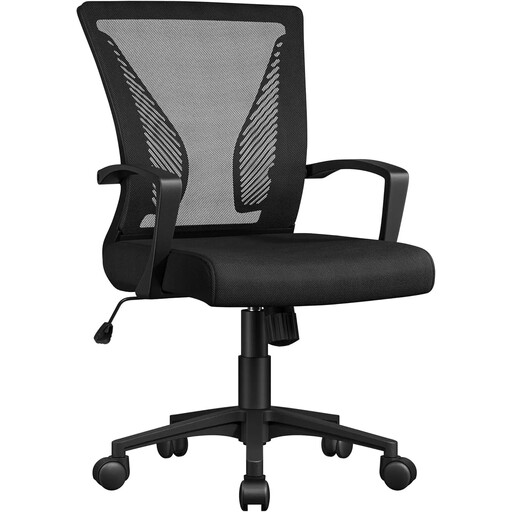
Why This Fits Their Persona: Ideal for students or a first home office. This chair provides the necessary basic ergonomic functions without breaking the budget. It focuses on the essentials: a supportive backrest and height adjustability.
It doesn't promise over-the-top features but delivers a solid foundation. The breathable mesh back avoids the trap of cheap, non-breathable upholstery, and its 136 kg weight capacity is solid for this price range.
Excellent value for money. With its height-adjustable seat, rocking function, and ergonomically shaped backrest, it offers the key features for occasional to regular work.
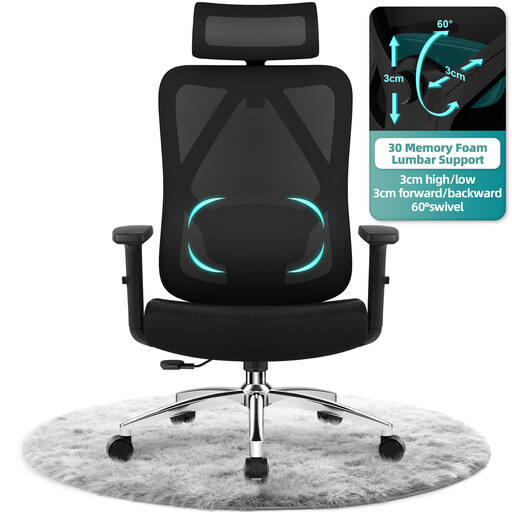
Why This Fits Their Persona: For professionals who sit for many hours daily or users with a higher body weight. This chair is designed for maximum load capacity and individual adjustment, making it a durable work tool.
It avoids the "one-size-fits-all" support trap with a 3D-adjustable lumbar support made of memory foam. The high weight capacity of 200 kg and the aluminum alloy base directly address the issue of poor material quality.
Exceptionally high weight capacity and a precisely adjustable lumbar support. The multi-level locking backrest (up to 135°) supports both focused work and short breaks.
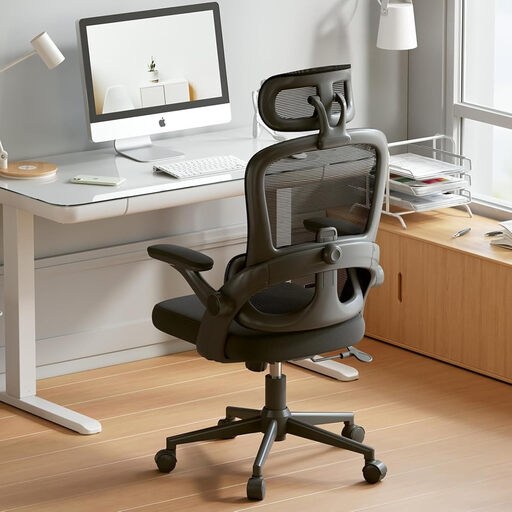
Why This Fits Their Persona: Perfect for workspaces with limited room. The flip-up armrests allow the chair to be pushed completely under the desk, saving valuable space without sacrificing full ergonomic support.
This chair solves the often-overlooked problem of bulky office chairs in a living space. It bypasses the trap of rigid armrests with a flip-up and adjustable 3D design that is both ergonomic and practical.
The flip-up armrests are the standout feature for saving space. At the same time, the chair offers comprehensive ergonomics with an adjustable lumbar support and headrest.
We have compiled a complete, up-to-date list of products that fully meet these strict selection criteria and relevant safety standards.
The lifespan heavily depends on material quality, frequency of use, and maintenance. A high-quality chair with a metal base, a certified gas lift, and durable upholstery can last 7 to 10 years with daily use. Regular maintenance, such as tightening screws and cleaning the mechanism, can significantly extend its lifespan.
Neither option is universally better; it's a matter of personal preference and environmental conditions. A mesh office chair is unbeatable for breathability and is ideal for people who tend to sweat or for offices without air conditioning. A well-upholstered chair can offer a softer, more pressure-distributing feel. However, it's crucial to pay attention to the quality of the foam to ensure it doesn't lose its shape after a short time.
Most office chairs are delivered for self-assembly. Manufacturers typically include all the necessary tools (usually an Allen key) and an illustrated step-by-step manual. Assembly is usually straightforward and can be completed by one person in 20 to 40 minutes.