If you batch-cook onions for several lunches
If you slowly brown onions for several meals, look for low settings that are easy to use during a longer cooking time. Good Food recommends slow cooking and stirring occasionally.


Choose your hob based first on whether your pan’s base and size suit the heating technology and cooking zone. For slowly browned onions, easy-to-use low heat settings and the occasional stir matter more than high maximum power: Good Food recommends low heat and a cooking time of around 30–40 minutes for an onion recipe. Induction requires compatible cookware; a radiant ceramic glass or cast-iron hotplate can be an alternative, but each has its own requirements for the cooking zone, available space and handling residual heat.
If you slowly brown onions for several meals, look for low settings that are easy to use during a longer cooking time. Good Food recommends slow cooking and stirring occasionally.
Your pan may determine which heating technology is right for you: Rommelsbacher requires a ferromagnetic base for its CT 2010/IN induction model, while the CT 2203/TC heats its cooking zone using radiant heat.
A single portable hotplate may be a good fit if your pan is compatible with the cooking zone and there’s enough space where you plan to use it. Also consider how you’ll let the hotplate cool down after cooking and where you’ll store it.
First compare your pan’s base with the cooking zone. Then check how easily you can adjust the heat for longer cooking and how much space you have available.
| Buying criterion | What to check | Who it matters to |
|---|---|---|
| Low heat | Check how easy it is to use low settings and whether there’s a shut-off timer; having lots of settings doesn’t guarantee an even pan temperature. | If I’m browning onions for longer, I want to set the heat appropriately while still remembering to stir occasionally. Around 36% of consumers rank low heat as their top buying priority. |
| Pan compatibility | Compare the base material, flatness and diameter with the hob’s requirements. | If I want to keep using my pan, I’ll choose a hob to suit its base and the heating technology. Around 29% of consumers prioritise being able to keep using their existing pan. |
| Pan and portion size | Check your pan’s base diameter and decide how many cooking zones you need at once. | If I’m preparing onions for several lunches, my pan needs to suit the cooking zone; I may also need a second pan or pot alongside it. Around 21% of consumers prioritise portion or cooking zone size. |
| Space and cooling | Check the appliance dimensions and setup instructions against your worktop; don’t assume residual heat means it will cool down straight away. | If I want to put the portable hotplate away after batch cooking, I need a suitable place to use it and must take the hot surface into account. Around 14% of consumers prioritise available space and safe cooling. |
A test that measures how quickly water heats up doesn’t show how a pan performs when browning onions for longer.
Check how easy it is to use low settings on the specific model. Stir the onions occasionally and adjust the heat if needed.
A ceramic glass surface alone doesn’t tell you how a hob heats. The Rommelsbacher CT 2010/IN uses induction, while the CT 2203/TC uses HiLight radiant heat.
Compare the heating technology and pan requirements rather than looking only at the surface material. For induction, you’ll need a pan with a suitable ferromagnetic base.
If your pan isn’t suitable for induction, you may need to buy a compatible pan for an induction hob.
The other ingredients in your prepared meal also affect how it should be stored and transported.
The German Federal Institute for Risk Assessment recommends cooling hot food quickly to below 7 °C for longer storage. Perishable foods should be stored at 2 °C to no more than 7 °C and kept cool while you’re out and about.
The CT 2010/IN and CT 2203/TC models offer different heating technologies and have different requirements for pans.
The KP 1092 and KP 1032 models show two different designs of portable single hotplates.
The ProMenu 2100 is a portable single induction hob for compatible cookware.
The SIKP 2200 B1 portable induction hob is a useful point of comparison for a single cooking zone.
The selection below includes portable single hotplates and induction hobs with one or two cooking zones.
 No image available
A single cast-iron hotplate may be suitable if you want to use a pan that isn’t compatible with induction.
The product description lists continuous temperature control, 1,500 W and an 18 cm diameter heating ring. The cooking surface gets very hot during use and must cool completely before cleaning.
 No image available
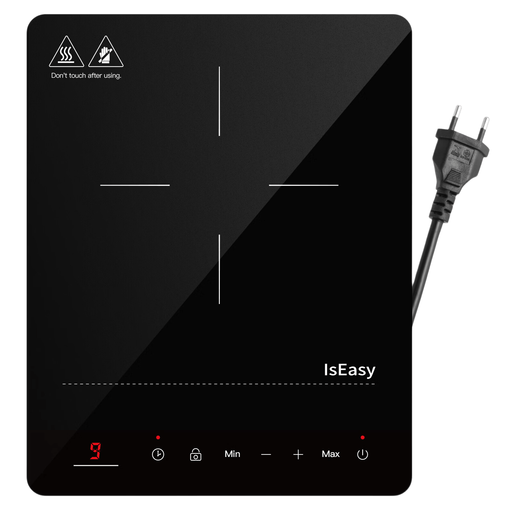
A portable single hob with adjustable heat may be a good fit if your pan is suitable for induction.
The product title lists a 28 cm cooking surface, nine heat settings, a Max/Min function, a child lock and a timer of up to eight hours. Use induction-compatible cookware only.
 No image available
Two cooking zones may be useful if you want to heat another pan or pot at the same time as cooking your onions.
The product title lists five temperature settings and slow cooking on low heat. Suitable cookware is required for induction.
 No image available
A single portable hob may be a good option if one cooking zone is enough and your pan is suitable for induction.
The product title lists five power levels and 1,000 W. Suitable induction cookware is required.
 No image available
This portable induction hob may be an option if your pan is suitable for induction and you want to choose from several temperature settings.
The product description lists ten temperature settings, a timer and automatic shut-off if compatible cookware isn’t detected. Use induction-compatible cookware.
Cook them over low heat and stir occasionally. Good Food recommends around 30–40 minutes for an onion recipe; if the onions start to stick, the recipe suggests adding a splash of water. This is a cooking tip, not evidence of how well a particular hob performs.
No, the pan must be suitable for induction. For the Rommelsbacher CT 2010/IN, the manufacturer specifies a ferromagnetic base and a cooking zone of 120–230 mm. The German Federal Office for Radiation Protection recommends cookware made from a suitable material, in the right size and with a flat base.
Take the whole meal and its ingredients into account. The German Federal Institute for Risk Assessment recommends cooling hot food quickly to below 7 °C for longer storage, storing perishable foods at 2 °C to no more than 7 °C, and keeping them cool while you’re out and about.
Ask your doctor to assess your individual circumstances in advance. The German Federal Office for Radiation Protection notes that electric and magnetic fields can affect electronic implants; your treating doctor should assess your personal risk.