For long, gentle simmers
If you leave a pan to simmer for a while after bringing it to the boil, look for low-power settings, easy controls and a timer with a suitable run time.


For a stockpot that needs to simmer for a while after coming to the boil, a portable single induction hob is an obvious choice, provided the base of your pan is ferromagnetic and its size falls within the appliance’s specified pan range. If your cookware is not induction-compatible, consider a radiant ceramic-glass or traditional electric hob. If you want to cook stock and noodles at the same time, a double hob is the better option. Power settings and timers make it easier to adjust the heat, but they do not guarantee an even, low simmer in your particular pan.
If you leave a pan to simmer for a while after bringing it to the boil, look for low-power settings, easy controls and a timer with a suitable run time.
Check the material and diameter of your pan’s base: both affect whether it will work with the hob.
You’ll need two cooking zones to use two pans at once. Make sure you also have enough worktop space and a suitable power connection.
A good fit if: your pan has an induction-compatible base and you usually use just one pan at a time.
Consider: you won’t be able to keep using a pan you already own if it isn’t suitable for induction.
A good fit if: you regularly want to cook stock and noodles, or other ingredients, at the same time.
Consider: the appliance takes up more worktop space; check the power connection and how power is shared between the zones.
A good fit if: you want a smooth cooking surface without having to choose pans based on whether they work with induction.
Consider: the cooking zone itself heats up and stays hot after you switch it off.
A good fit if: you need an extra cooking spot for cookware that isn’t induction-compatible.
Consider: the hob gets hot; keep an eye on the pan and check that the setting you choose is right for your stock.
The percentages refer to consumers for whom each stated need is the top priority when buying a hob for this stock-cooking routine.
| Priority | What to check when buying | Who it matters most to |
|---|---|---|
| Gentle simmering | Check the low-power settings, controls and timer. Steba lists a power range of 300–2,000 W and a timer of up to 180 minutes for the IK 65 SLIM; CASO lists ten power settings and a timer of up to 240 minutes for the ProSlim 2000. These manufacturer specifications do not show how evenly stock will simmer in your own pan. | If I want to leave stock to simmer for a while after bringing it to the boil, I want to be able to reduce the power appropriately and set a timer. Around 31% of consumers say controlled simmering is their main priority. |
| Pan compatibility | Compare the base of your pan and its diameter with the specifications for the particular appliance. Rommelsbacher specifies a ferromagnetic base and a size range of 120–230 mm for the CT 2010/IN; CASO specifies a pan diameter of 12–22 cm for the ProSlim 2000. | If I want to keep using my existing soup pan, its base needs to be compatible with the heating technology. Around 25% of consumers say pan compatibility is their main priority. |
| Number of cooking zones | Check whether you need one or two zones, and compare the appliance dimensions and power requirements. Severin lists two cooking zones and a width of 59 cm for the DK 1031. | If I want to cook noodles or other ingredients while the stock stays on the hob, I need room for a second pan. Around 19% of consumers prioritise cooking two things at once. |
| Worktop space and storage | Measure the width and depth of the space you have in mind, and check the cable length and clearances specified in the instructions. CASO lists dimensions of 290 × 30 × 390 mm for the ProSlim 2000; according to the manufacturer, the Severin DK 1031 measures 59 × 35.5 cm. | If I also need space on my worktop for ingredients and a chopping board, the size of the hob matters. Around 13% of consumers say space is their main priority. |
| Running costs and servicing | The wattage alone does not tell you how much electricity it takes to cook stock from start to finish. To work out the cost, you need the energy used in kWh under your cooking conditions and your electricity price per kWh. The Verbraucherzentrale notes that hobs do not carry an EU energy label like ovens do. | If I’m thinking about electricity use and support in case of a future repair, I want to check the actual energy use and service information for the specific model. Around 12% of consumers say costs and servicing are their main priorities. |
For the Rommelsbacher CT 2010/IN, the manufacturer specifies a ferromagnetic pan base and a particular pan size range. So check the base and diameter of your pan first, then compare both with the specifications of the model you’re considering.
If your pan isn’t compatible, you’ll need a different type of hob or a suitable pan.
A single hob has just one cooking zone. If you want to cook stock and noodles at the same time, a double hob with two zones is one possible solution; Severin describes the DK 1031 as a double induction hob.
Before buying, decide whether you’ll use the pans one after the other or at the same time, and check the space and power requirements.
A display or adjustable power settings do not prove that the stock in your own pan will stay at a particular temperature.
For long, gentle simmering, check the low-power settings and read the instructions. Keep an eye on how it cooks the first time you use it.
The CT 2010/IN is a portable single induction hob; the CT 1800/E has a radiant ceramic-glass cooking zone.
The ProSlim 2000 is a portable single induction hob for one compatible pan and smaller worktops.
The KP 1071 is a single induction hob, while the DK 1031 is a double induction hob.
The EKP 3582 is a traditional electric single hob if your existing pan isn’t suitable for induction.
The IK 65 SLIM is a portable single induction hob for use with a suitable pan.
The selection below includes portable single induction hobs for one pan, a portable double induction hob for cooking two things at once, and a traditional electric single hob.
 No image available
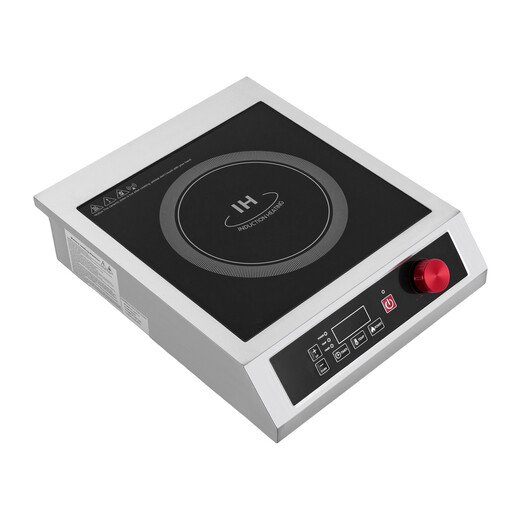
This portable single hob could be a good option for a stockpot you can move around.
The product name lists 10 temperature settings. You’ll need magnetic cookware that’s suitable for induction.
 No image available
This induction hob is an option if you need to use one pan on your worktop.
The product description specifies a flat pan base and a diameter of up to 9.84 inches. Check whether your pan meets these requirements.
 No image available
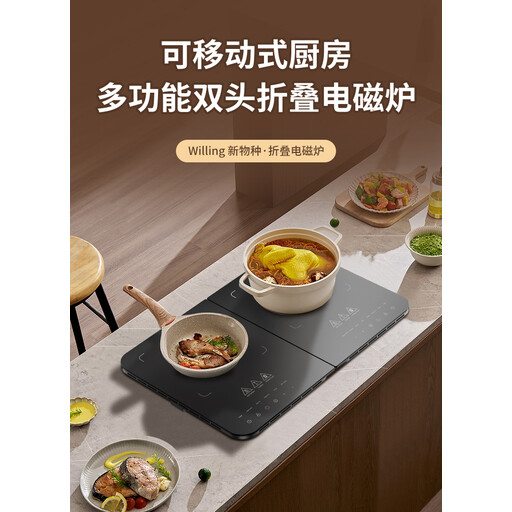
If you want to cook stock and noodles at the same time, the two independently controlled cooking zones give you space for two pans.
According to the product information, the hob folds flat for storage. The surface stays hot for a while after you switch it off, so let it cool before cleaning or putting it away.
 No image available
This model could work as a portable single hob for one stockpot.
The product name lists 10 power settings. According to the product information, you’ll need magnetic cookware.
 No image available
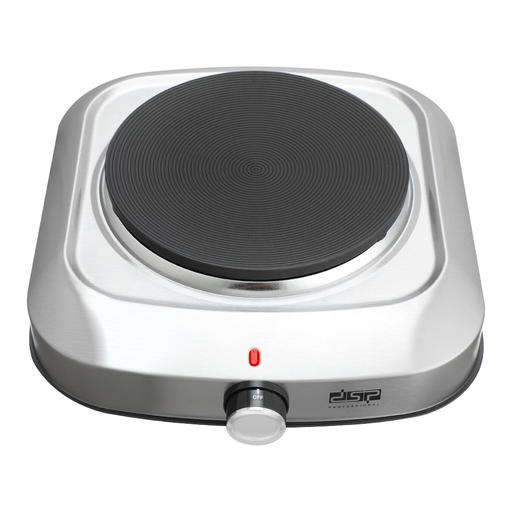
If your pan isn’t suitable for induction, a traditional electric single hob could give you an extra cooking spot.
The product name lists an adjustable temperature. A slight smell or some smoke may occur the first time you use it; make sure the room is well ventilated.
Check whether the base of your pan is ferromagnetic, then compare its diameter with the size range for the specific appliance. Rommelsbacher specifies 120–230 mm for the CT 2010/IN, while CASO lists 12–22 cm for the ProSlim 2000. These specifications don’t apply to all models.
No. Adjustable power settings or a temperature display don’t prove that the stock in your own pan will stay at a particular temperature. Check the lower settings and keep an eye on how it cooks the first time you use it.
A double hob could be useful if you want to cook stock and noodles, or other ingredients, in two pans at the same time. Also check that you have enough worktop space and that the power requirements and how power is shared between the zones suit the way you plan to use it.
Wait until the hob has cooled down and follow the instructions. The Clatronic instructions warn that the surface of the EKP 3582 gets hot; Rommelsbacher lists a residual heat indicator for the CT 1800/E.
Not from the wattage alone. To work out the cost, you need the energy used in kWh for your cooking routine and your electricity price per kWh. The Verbraucherzentrale notes that the EU energy label for a combined cooker applies to the oven, not the hob.