Patch menders
You want to attach an iron-on patch and need to compare its application instructions with the garment’s care label. aufnaeher.de provides instructions for specific patches, while GINETEX Germany explains the ironing symbols.


First, check that the patch instructions and the garment care label allow the same temperature and pressing method. The instructions from aufnaeher.de apply to the patches described there, while GINETEX indicates the permitted ironing temperature for the fabric. An adjustable mini iron may suit small, hard-to-reach areas; a dry iron is an option for dry pressing, while a steam iron could be useful for other laundry, provided it can be adjusted appropriately. In a shared house, a safe resting place and supervision are still important, even if the appliance has an automatic shut-off.
You want to attach an iron-on patch and need to compare its application instructions with the garment’s care label. aufnaeher.de provides instructions for specific patches, while GINETEX Germany explains the ironing symbols.
You work on small or hard-to-reach areas, so you’re looking for a suitable soleplate shape and adjustable heat. Prym and Clover offer mini irons for sewing and patchwork.
You want to use the iron for everyday laundry too, and care about having a safe place to rest it and using it responsibly in a shared space. Braun Household lists an automatic safety shut-off for the TexStyle 3 SI 3055 BK, but the iron still needs to be supervised.
A good fit if: you’ll mainly be working on small patches, seams or hard-to-reach areas.
Consider: the small soleplate is less practical for large areas. Check that the temperature and pressure suit the patch instructions.
A good fit if: the instructions call for dry pressing and you don’t need a steam function for other laundry.
Consider: you won’t have steam for other ironing tasks. Check the temperature controls and ironing surface of the specific appliance.
A good fit if: you’ll also use it for everyday laundry and can iron the patch dry.
Consider: the water tank and steam function involve extra steps. An automatic shut-off does not replace supervision.
A good fit if: the fabric must not be ironed, or its permitted temperature doesn’t match the patch instructions.
Consider: sewing takes time and requires a needle and thread, but avoids trying to force an unsuitable adhesive bond by applying more heat.
Choose what matters most for your project: a secure bond, protecting the fabric, safe use in a shared space or precise work where space is limited.
| Priority | What to check when buying | Who it matters to |
|---|---|---|
| Patch stays in place | Compare the patch instructions with the care label; check whether dry pressing and the required temperature are possible. | If I want to attach the patch securely, I’ll compare the application instructions with the care label first. Around 36% of consumers put having the right pressing option first. |
| Protect the fabric | Check the ironing symbol; don’t exceed the fabric’s permitted temperature just to follow general patch instructions. | If my fabric is delicate, I don’t want to risk damaging it for the sake of the adhesive. Around 29% of consumers put protecting the fabric underneath first. |
| Safe use in a shared house | Plan for a stable, heat-resistant resting place; check whether the specific model has an automatic shut-off, but don’t rely on it instead of supervision. | If other people use the work surface too, I need a safe place for the hot appliance and want to keep an eye on it. Around 21% of consumers prioritise safe use in a shared space. |
| Precision and limited storage | Compare the soleplate size and handle; consider whether the appliance will also be used on larger areas of laundry. | If I mainly work on small areas and have little space, a compact working surface is important. Around 14% of consumers put precision and a small footprint first. |
Patch adhesives and fabrics can have different temperature requirements. The wrong setting could damage the fabric or stop the patch from sticking properly.
Check the instructions for your specific patch alongside the care label. If they don’t match, consider another way of attaching it.
An unsuitable attempt could damage the fabric or leave you with a patch that doesn’t stick properly.
The instructions from aufnaeher.de call for dry pressing for the patches described there. A steam function alone doesn’t mean an iron is better suited to a particular patch.
Choose a steam function as an extra feature only if you’d also use it for other suitable laundry. The German Environment Agency recommends ironing without steam when it isn’t needed.
Even an iron with an automatic shut-off needs a safe place to rest while its soleplate is hot, and time to cool down.
In a shared space, set aside a heat-resistant resting place, supervise the plugged-in appliance and unplug it if you leave the room.
Prym offers sewing and patchwork supplies, including the Mini Steam Iron Set 611961 for detailed work.
The Mini Iron II “The Adapter”, EU version 8003EU, is designed for small areas in sewing and patchwork projects.
According to Tefal, the Easygliss FS4030E0 is a dry iron with a Durilium soleplate.
The TexStyle 3 SI 3055 BK is a steam iron for households that also need to iron everyday laundry.
The 3000 Series DST3041/30 is a steam iron for additional laundry care.
The models below include adjustable steam irons for additional laundry and compact appliances for smaller textile projects.
 No image available
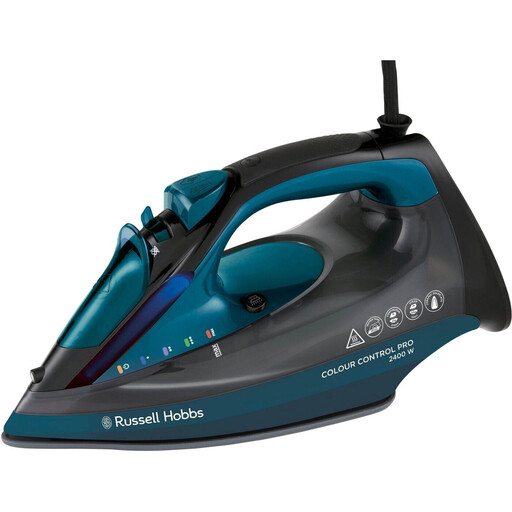
An option if you’d also like to use the iron for everyday household laundry.
The product description lists a temperature display, settings for different fabrics, automatic shut-off and a self-cleaning function.
 No image available
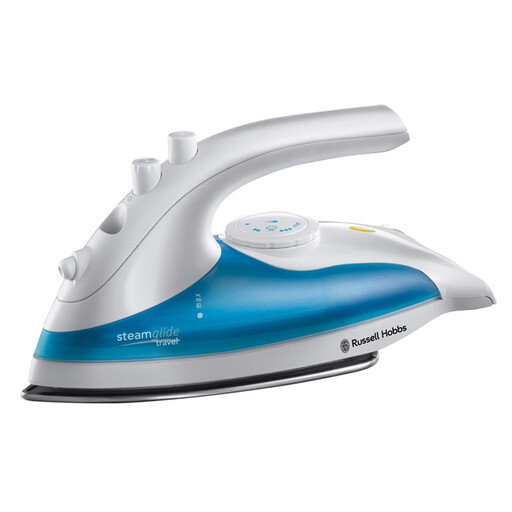
This compact travel iron may suit you if storage space is limited and dry pressing matches the instructions for your specific patch.
The description lists a dry-iron option and temperature settings by fabric type. The product name specifies dual voltage and a 1.5 m cable.
 No image available
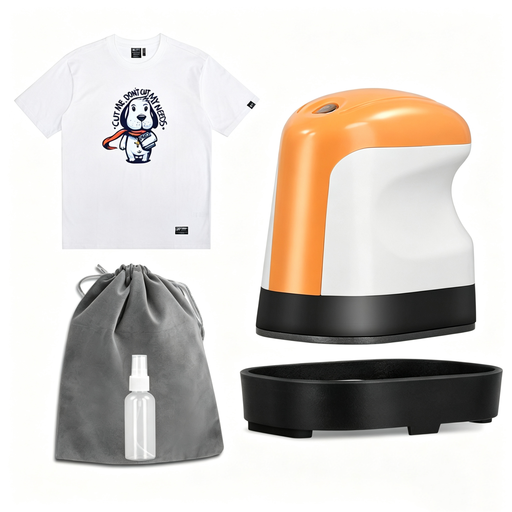
A compact option for small patch or sewing projects, as long as one of the available temperatures matches the instructions.
The product description lists three temperature settings: 120 °C, 150 °C and 180 °C. A heat-resistant stand is also included.
 No image available
Worth considering if you’re looking for a steam iron for laundry and its stated dry-iron option matches the patch instructions.
The description lists five temperature settings, a dry-iron option, a spray function and self-cleaning.
 No image available
An option for everyday ironing too. For patches, make sure the specific instructions still match the pressing method available.
The product name lists 40 g/min continuous steam, a 160 g/min steam boost, an Eco function and an anti-drip system. The description lists a stainless steel soleplate and a 2 m cable.
No. Check the instructions for the specific patch against the fabric’s ironing symbol. GINETEX Germany indicates maximum soleplate temperatures of 110, 150 or 200 °C, among other things, as well as the “Do not iron” symbol. General patch instructions don’t replace this check.
Use a suitable resting place, keep an eye on the plugged-in appliance and let it cool before putting it away. An automatic shut-off is an additional feature of the specific model, not permission to leave it unattended.
Not just for the patch: the instructions from aufnaeher.de call for dry pressing for the patches described there. If you’ll also use the iron for other laundry, check that you can use the steam function appropriately and bear in mind the extra steps involved in handling the water tank.