Smoothing linen scarves
You want to smooth individual scarves that can be ironed, adjusting the temperature and steam according to the care label. GINETEX recommends choosing the permitted temperature based on the label, not just the fibre content.


For individual linen scarves that the care label says can be ironed, an adjustable steam iron is a sensible place to start. If you regularly iron larger loads of ironable laundry, a steam generator iron may be more practical, provided you have enough space. Remove mud first using a method suitable for the material, and check the care label and coating on each outdoor item to see whether heat or steam is allowed – more steam is not a universal solution.
You want to smooth individual scarves that can be ironed, adjusting the temperature and steam according to the care label. GINETEX recommends choosing the permitted temperature based on the label, not just the fibre content.
You care for both scarves and dirty outdoor layers, treating cleaning and heat separately. GINETEX recommends pre-treating heavy soiling appropriately; Patagonia notes that steam can affect the DWR finish on its waterproof jackets.
You regularly iron larger loads of ironable fabrics, so continuous steam, tank capacity and available storage space matter to you. Philips lists a 300-ml tank for the DST7040/80, while Tefal specifies a removable 1.8-l tank for the SV9202 steam generator.
Best for: If you mainly iron individual scarves and smaller loads that the care label says can be ironed, you can adjust the temperature and steam to suit each fabric.
Things to consider: A handheld iron takes up less space than a steam generator, but has a smaller tank and is more likely to need refilling during longer ironing sessions. Philips lists 50 g/min continuous steam and a 300-ml tank for the DST7040/80.
Best for: If you regularly iron larger loads of ironable laundry and have room for the base, the larger tank can be handy. Tefal lists a removable 1.8-l tank and 130 g/min continuous steam for the SV9202.
Things to consider: The base and hose need extra room for use and storage; an automatic temperature setting does not override a care label’s warning against ironing or steaming.
Best for: With an outdoor layer, only use the heat treatment allowed by its care instructions. Patagonia recommends treating the DWR finish on its waterproof jackets with a low-temperature, dry iron and a cloth between the iron and garment if a tumble dryer is not available.
Things to consider: This advice does not automatically apply to other outdoor items; Patagonia notes that steam can affect the DWR finish.
Choosing an iron for linen scarves as well as muddy outdoor clothing involves several different priorities.
| Buying priority | What to look for | Who it matters most to |
|---|---|---|
| Smoothing linen scarves | Check the temperature and steam controls, as well as the ironing symbols on the specific scarf. | If I want to smooth individual linen scarves, I follow the care label for temperature and steam rather than relying on the fibre alone. This is the main priority for around 33% of shoppers. |
| Protecting outdoor fabrics | Clean each item according to its care instructions first, then check the ironing and steam guidance for that particular layer. | If I’m caring for muddy outdoor clothing, I want to clean it first and then check whether the material can be exposed to heat or steam. Protecting the material is the main priority for around 27% of shoppers. |
| Type of appliance and size of load | Compare continuous steam in g/min and tank capacity; allow for the space a steam generator needs. | For regularly ironing larger loads, I look at continuous steam, tank capacity and the space needed for the appliance. The size of the load is the main priority for around 20% of shoppers. |
| Care and handling | Check the descaling and cleaning instructions, and whether the specific model has an automatic shut-off. | If easy-to-plan maintenance and careful handling matter to me, I check the care features and see automatic shut-off as an extra feature only. This is the main priority for around 20% of shoppers. |
Ironing is no substitute for removing dirt in a way that’s suitable for the material. Heavy soiling should be pre-treated appropriately before washing; for outdoor clothing, the care instructions are also essential.
Plan cleaning separately from any heat treatment you may carry out afterwards. Depending on the care instructions, you may need to reproof the item after cleaning.
Cleaning and, if needed, reproofing can involve extra steps.
Fibres, coatings and other components can all call for different care. GINETEX says the maximum permitted temperature should be based on the care label, not just the fibre description.
Check the ironing and steam guidance before treating each new type of fabric. An automatic setting does not override a warning against ironing.
A short burst of steam is not the same as the continuous steam output. Tank capacity and continuous steam are separate specifications that matter during longer ironing sessions.
Compare each figure in its stated units and consider the size of your usual ironing load.
Philips offers the DST7040/80 steam iron with variable steam settings, 50 g/min continuous steam and a 300-ml tank.
Braun lists an automatic iCare setting and 60 g/min continuous steam for the TexStyle 9 SI9682DB.
Tefal lists a removable 1.8-l tank and 130 g/min continuous steam for the Express Protect SV9202 steam generator.
Rowenta lists three electronic settings, a 1.3-l tank and up to 150 g/min continuous steam for the Steam Pro DG9642 steam generator.
Russell Hobbs lists a choice of dry or steam ironing, a 350-ml tank and a 3-m cable for the Powersteam Ultra 20630-56.
The Joybuy products below are steam irons for individual fabrics that the care label says can be ironed.
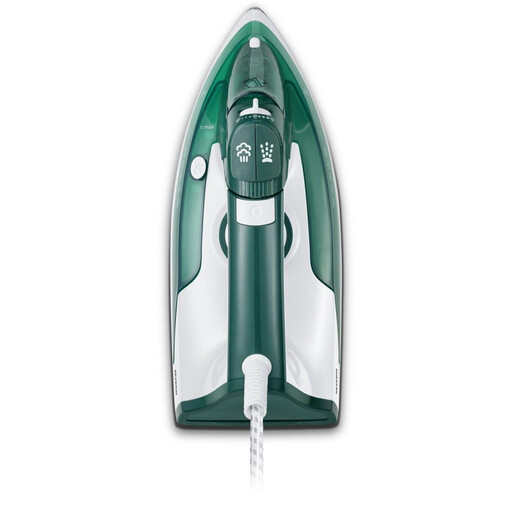 No image available
According to the product description, you can adjust the temperature and steam for individual ironable items; dry ironing is also an option.
 No image available
The product description lists continuous steam for smaller loads of ironable fabrics; the care label still determines which setting is permitted.
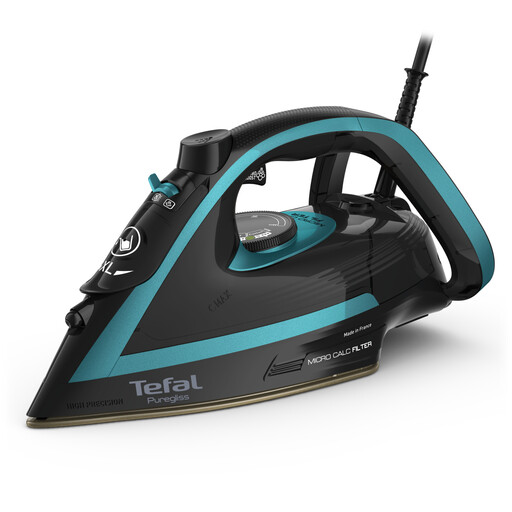 No image available
The instructions recommend choosing a heat and steam setting to suit the fabric; the care label remains the final guide.
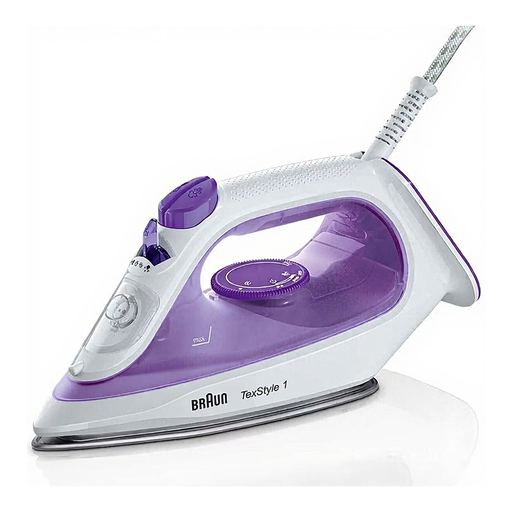 No image available
A temperature control and dry-ironing setting are listed for individual ironable items; always follow the care label for the specific item.
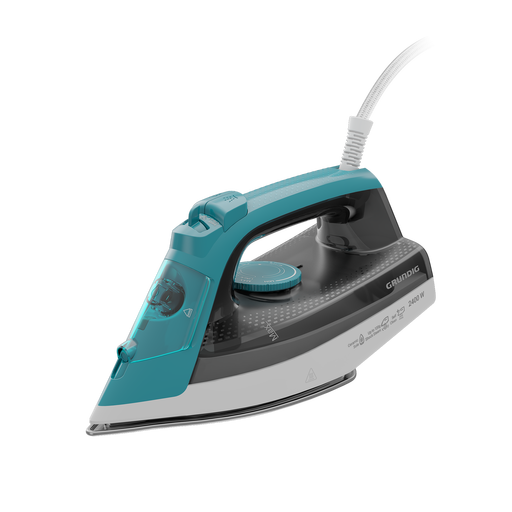 No image available
The product description lists a temperature control for selecting a setting to suit the fabric; the care label determines the maximum permitted temperature.
No. Ironing is no substitute for removing dirt in a way that’s suitable for the material. Treat the soiled areas according to the care instructions first, then check whether the specific item can be exposed to heat or steam. Patagonia specifically recommends treating the DWR finish on its waterproof jackets without steam.
No. GINETEX recommends choosing the maximum permitted temperature based on the care label, not just the fibre content; finishes and other components can also make a difference.
Follow the cleaning and descaling instructions for the specific model. Philips recommends unplugging the appliance and letting it cool before cleaning.
For a consumer contract made online, you generally have a 14-day right to cancel from the day you receive the goods, as explained by Verbraucherzentrale on 13 August 2026. This is separate from your statutory rights if goods are faulty: Verbraucherzentrale explains that retailers are responsible for ensuring goods were free from defects when supplied for two years.
Yes, if the appliance is covered by the relevant harmonised EU rules. For the Low Voltage Directive, the European Commission includes electrical equipment rated at 50–1,000 V AC; products within its scope must carry CE marking. Check the information on the specific appliance: marking does not replace safe use in accordance with the instructions.