Precision around collars and button plackets
If you often iron collar points, seams and button plackets, a narrow tip can help you guide the iron with precision.


For collar points and button plackets, a lightweight steam iron with a narrow tip and suitable temperature settings is a sensible place to start. A high steam output alone tells you little about how easily you can reach awkward areas. If you have lots of laundry to get through, a steam generator iron with a larger tank may be more practical. A dry iron is only suitable if you don’t need built-in steam. Check the care label and the safety information for the specific model.
If you often iron collar points, seams and button plackets, a narrow tip can help you guide the iron with precision.
If your shirts have different care labels, it’s important to have suitable temperature and steam settings.
If you iron several garments in one go, it’s worth weighing up tank capacity, refilling and the space you’ll need.
A good choice if: you regularly iron collars, button plackets and whole shirts with a single appliance.
Things to consider: The water tank is built into the iron, so you may need to refill it during longer ironing sessions. Safety features vary by model.
A good choice if: your household often has lots of shirts and other laundry to iron in one go; Philips states that the PerfectCare Compact GC7844/20 has a 1.5-litre tank.
Things to consider: The base unit and hose need more room to use and store. A large tank doesn’t mean you’ll be able to iron collar points more precisely.
A good choice if: you occasionally iron smaller, flat areas and don’t need built-in steam.
Things to consider: There’s no built-in steam to help with dry or stubborn creases.
When comparing irons for shirt collars in a family household, these four points are worth checking:
| What matters to you | What to look for | Who is it most relevant to? |
|---|---|---|
| Precision around collars and button plackets | Check the shape of the tip and the button groove on the specific model; Bosch Home Appliances recommends ironing the collar from the points towards the centre. | If I want to reach collar points and button plackets precisely, I look for an iron with an easy-to-guide soleplate. Around 31% of consumers would make precision their top buying consideration. |
| Different shirt fabrics | Check the temperature and steam settings, and match them to the care label on each shirt. | When dealing with different fabrics, I want to be able to adjust the settings to suit each care label. Around 25% of consumers would prioritise suitability for different fabrics. |
| Safe storage between uses | Check whether the specific model has an automatic shut-off; place the hot iron somewhere safe and out of reach of children. | In a family household, I want to know what safety features the specific appliance offers and where it can cool down safely. Around 25% of consumers would prioritise safe storage and model-specific features. |
| Refilling and maintenance | Balance tank capacity against the space the appliance needs; follow the instructions for the specific appliance on water use and descaling. | If I have several shirts to iron in one go, I want to take refilling and maintenance into account. Around 19% of consumers would say longer ironing sessions and the maintenance they involve are their top consideration. |
A steam output figure doesn’t tell you whether the soleplate can reach collar points and button plackets easily.
Also check the tip shape, temperature settings and the space between the buttons.
This feature varies by model. Rowenta states that the Pro Master DW8210 does not have an automatic shut-off.
Check the specifications against the full model name, and always put a hot iron down safely.
A large tank can be useful for longer ironing sessions, but it says nothing about precision around collar points.
Weigh up how much laundry you actually have against the space needed for the base unit and hose.
The base unit and hose take up extra room when in use and in storage.
Philips lists limescale build-up and unsuitable perfumed water, among other things, as possible causes of water leaking from its appliances.
Follow the water-use and descaling instructions for the exact model.
The FreeStyle 3 FI3194BK is a steam iron with a designated precision tip and manual temperature control.
The range includes steam irons, steam generator irons and a dry iron.
The Pro Master DW8210 is a steam iron with a tip that the manufacturer says is designed for narrow edges, seams and collars.
The Ultimate Pure FV9851 is a steam iron with a designated precision tip and automatic shut-off.
The BA 3210 is a steam iron for everyday laundry care.
This selection includes steam irons for different fabrics and steam generator irons for longer ironing sessions at home.
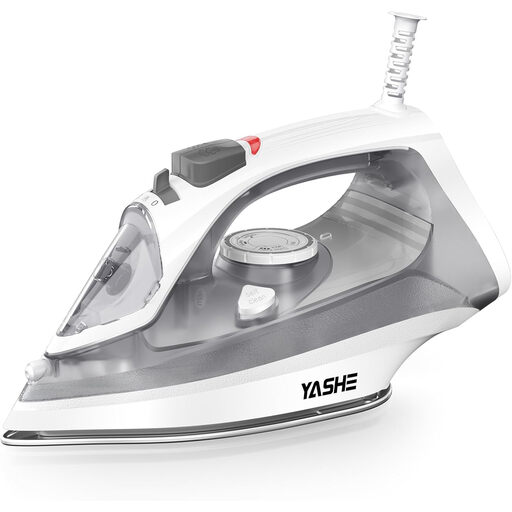 No product image available
If you iron shirts with different care labels, check which temperature settings the model offers for your fabrics.
2300 W; 300 ml tank; 150 g/min steam boost; non-stick soleplate; self-cleaning; anti-drip protection.
 No product image available
If you switch between different shirt fabrics, check the temperature settings for the specific model before buying.
2400 W; non-stick soleplate; automatic cleaning function; anti-drip protection.
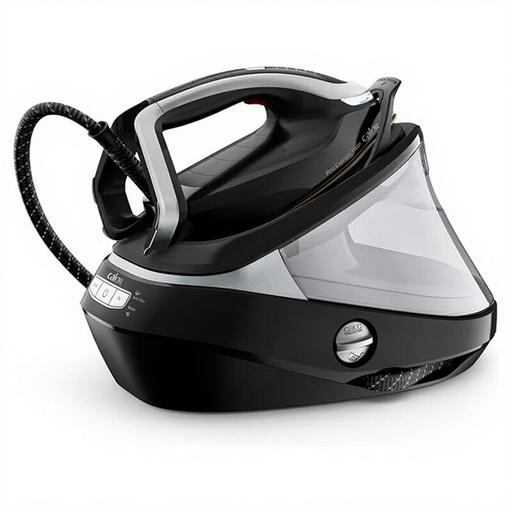 No product image available
If your household has several items to iron in one go, tank capacity may be a factor in your choice; make sure you have room for the base unit too.
3000 W; 1.2-l tank; 180 g/min continuous steam; 800 g/min steam boost.
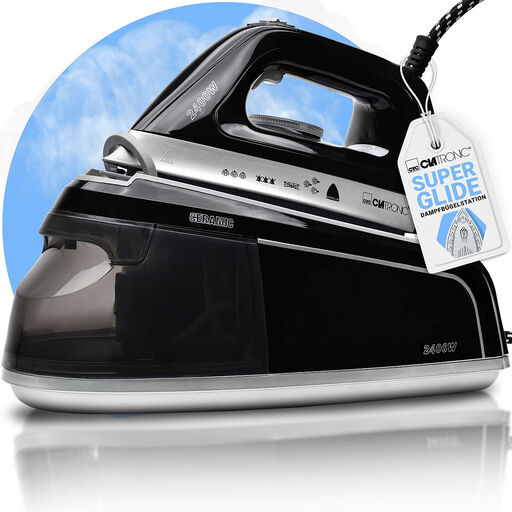 No product image available
If you’re planning longer ironing sessions, check that the tank capacity and stated operating time suit the amount of laundry you have.
2400 W; 1.2-l tank; 3.5 bar; stated operating time of 80 minutes; anti-drip protection.
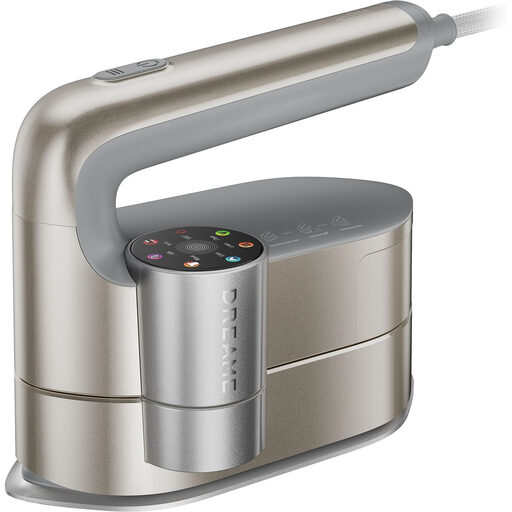 No product image available
If you switch between different fabrics when ironing shirts, check the temperature and steam settings for the specific model.
Check the care label first. Lay the collar flat and iron from both points towards the centre. Then turn it over and repeat on the other side. Don’t leave the hot soleplate in one place for too long.
According to Philips, possible causes on its appliances include limescale build-up, condensation or a temperature setting that’s too low when steam is switched on. Follow the troubleshooting advice for your exact model and take note of Philips’ advice not to use perfumed water.
Electrical appliances covered by the EU Low Voltage Directive must meet its requirements. It applies to equipment rated for 50 to 1,000 V AC. The CE marking is the manufacturer’s declaration that the product complies with relevant EU rules; it is not an independent quality mark. The German Federal Network Agency also lists accurate manufacturer details and German-language instructions with the necessary usage and warning information among the points it checks.
No. If you buy from a trader in the EU, you generally have a statutory right to a minimum two-year legal guarantee from the seller, starting from the date you receive the goods. A voluntary manufacturer’s guarantee is an additional benefit, as explained by Your Europe, the European Union’s consumer portal.