Shoppers focused on fat content
You want to stock up on dried fruit and compare the fat content per 100 g. This is particularly important for mixes, which may contain coconut or nuts as well as fruit.


To stock up on low-fat dried fruit, start by comparing the fat content per 100 g: for solid foods, the term ‘low fat’ means no more than 3 g of fat per 100 g. Check sugar and ingredients separately, as a low fat content tells you nothing about the sugar content or added sulphur dioxide.
You want to stock up on dried fruit and compare the fat content per 100 g. This is particularly important for mixes, which may contain coconut or nuts as well as fruit.
You want to avoid added sulphur dioxide, or you need to check the labelling carefully because you have a known sensitivity. The information on the specific pack is what matters—not just the type or colour of the fruit.
You’re looking for a sweet snack to keep in the cupboard, but want to consider the sugar per 100 g and the size of a snack portion separately from the fat content.
Start with the fat content per 100 g, then check the sugar, ingredients and allergen information. Under the EU regulation provided by the Federal Office of Consumer Protection and Food Safety, solid foods can only be labelled ‘low fat’ if they contain no more than 3 g of fat per 100 g. This says nothing about other nutritional values.
| Criterion | What to check | Who should check? |
|---|---|---|
| Fat content | Compare fat per 100 g; for mixes, check the ingredients list for coconut and nuts too. | If I want to put together a low-fat store cupboard, I need to distinguish between fruit-only products and mixes. Around 38% of shoppers would make fat content their main buying criterion. |
| Sulphur dioxide and sulphites | Check the ingredients and allergen information for sulphur dioxide or sulphites; for loose products, check the labelling. | If I have a known sensitivity to sulphites, I want to be able to see which additives are declared before choosing a product. Around 37% of shoppers would make this their main consideration. |
| Sugar and portion size | Check the sugar per 100 g and take the intended snack portion into account. | As a sweet snack, I don’t want to judge dried fruit by its fat content alone. Around 25% of shoppers would look at sugar and portion size first. |
Removing water concentrates the sugar in dried fruit. The North Rhine-Westphalia Consumer Advice Centre gives 50 to 70% as typical sugar levels; fat content doesn’t tell you anything about this.
Compare both figures separately per 100 g, and think about how much you plan to have as a portion.
Farmer's Snack Mango Pineapple Mix, listed by REWE, contains 15% coconut chips and, according to REWE, 14 g of fat per 100 g. Calling it a fruit mix doesn’t tell you its fat content.
For mixes, check the ingredients list first, then compare the fat content per 100 g in the nutritional information.
Sulphur dioxide and sulphites are relevant to people with a sensitivity to them. The Lower Saxony State Office for Consumer Protection and Food Safety states that they must be labelled when present at levels of more than 10 mg/kg or mg/l.
Check the ingredients and allergen information for the specific product, even if the dried fruit is described as unsulphured.
EDEKA points out that product information may differ from the details on the packaging.
When you buy a product or after it’s delivered, compare the ingredients, allergens, nutritional values and pack size with the actual label.
These brands and own-label ranges can help you compare dried fruit. Whether an individual product is right for a low-fat store cupboard depends on its own ingredients and nutritional information.
The dried fruit range includes different types of fruit and processing methods, including unsulphured apricots.
These ranges include products such as mango strips and Medjoul dates, whose nutritional information can be compared individually.
The range includes dried mixed fruit for shoppers looking for several types of fruit in one pack.
The snack brand stocked by Lidl includes dried fruit, as well as nuts and other snack products.
ALDI SÜD stocks FARMER NATURALS prunes, among other fruit and nut products.
The products below are red dates, also known as jujubes, for your dried fruit cupboard. Check the fat and sugar per 100 g on each pack; the pitted and individually portioned options have different practical considerations.
 No image available
For your cupboard, with individually packed snack portions. The pack contains 30 bags of 30 g each; when choosing, also note that the dates are described as unpitted. Check the fat, sugar and ingredients on the pack.
 No image available
A 500 g pack of jujubes for shoppers looking to stock up on dried fruit. The product name doesn’t mention individual portions, so check the pack for the fat, sugar and ingredients when comparing it with other options.
 No image available
Dried red dates in a 500 g pack, for your snack cupboard or to use as an ingredient. Check the pack’s labelling to see whether the fat content, sugar and ingredients meet your buying criteria.
 No image available
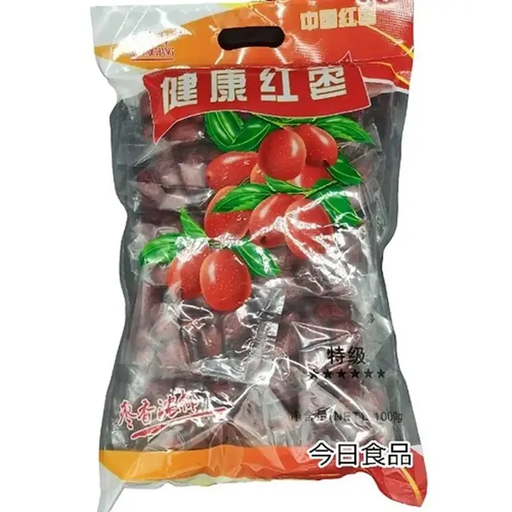
The 1 kg pack is worth considering if you’re looking for a larger quantity of red dates for your cupboard or to use as an ingredient. Plan your own portions and check the fat, sugar and ingredients on the pack.
 No image available
The pitted option is worth considering if you’re looking for red dates without stones to keep in your cupboard. The pack contains 280 g; compare its fat and sugar content and ingredients with those of other options on each pack.
No. Under the EU regulation provided by the Federal Office of Consumer Protection and Food Safety, solid foods can only be labelled ‘low fat’ if they contain no more than 3 g of fat per 100 g. Check the figure for the specific product, particularly for mixes containing coconut or nuts.
No. Fat and sugar are separate nutritional values. The North Rhine-Westphalia Consumer Advice Centre gives 50 to 70% as typical sugar levels for dried fruit because water has been removed. So compare the sugar per 100 g and take your intended portion into account.
Check the ingredients and allergen information for the specific product. The Lower Saxony State Office for Consumer Protection and Food Safety states that they must be labelled when present at levels of more than 10 mg/kg or mg/l; labelling should also be checked for loose products.
Follow the storage instructions on the pack. The mango strips and Medjoul dates listed by REWE are recommended to be stored in a dry place and protected from heat; also follow the instructions for storing an opened pack.