
Lieferung heute & morgen

Qualitätsgarantie

Willkommens-Angebote freischalten: KOSTENLOSE Lieferung | Bis zu 80 % RABATT | Kostenlose 30-Tage-JoyPlus-Testphase
App herunterladen
Planters are more than just decorative containers for your greenery. They determine how much space the roots have, where excess water drains, and whether a pot sits securely on your balcony, patio or windowsill. If you buy purely on colour or shape, you risk overlooking some important details.
Three common buying mistakes crop up time and again:
First, measure your existing pot and the available space. For many houseplants, the new pot should only be slightly larger than the current inner pot. Oversized indoor plant pots often retain moisture for longer when the root mass is small.
With large plant pots and standing planters, the footprint also comes into play. A tall, narrow container needs a stable, level surface. On a balcony or patio, check that railings, doors or walkways won't be obstructed. The internal volume is not always the same as the external measurement: a decorative outer pot may require a smaller inner pot.
Ceramic planters and stoneware look decorative indoors and are available in many modern designs. Glazed surfaces can usually be cleaned with a soft, damp cloth. However, ceramic is fragile and should be placed on a stable surface.
For outdoor planters, details such as UV resistance, water resistance and temperature range are important. According to the product information, the Beliani MYRA model is made from a clay-fibre blend with magnesium chloride and fibreglass, and is rated for a range of -20 °C to 40 °C. Even so, extreme weather and frost may make sheltered storage advisable.
Iron can provide a stable frame construction for standing planters. Pay attention to assembly, level positioning and care instructions. The Trosa models require assembly; according to the manufacturer, cleaning should be done with a damp cloth.
Plant pots with drainage help to channel excess water away from the root zone. However, the overall system is what really matters:
Not every decorative container has drainage. The Yuri Ceramic Planter in Black does not list a drainage hole in the product specifications. This makes it particularly suitable as a decorative outer pot, provided you use a suitable inner pot. The white and gold speckled ceramic pot from Premier Housewares, on the other hand, is described as having a drainage hole. The Beliani ABDERA model has a pre-formed opening that can be drilled out if needed, or sealed with the supplied stopper.
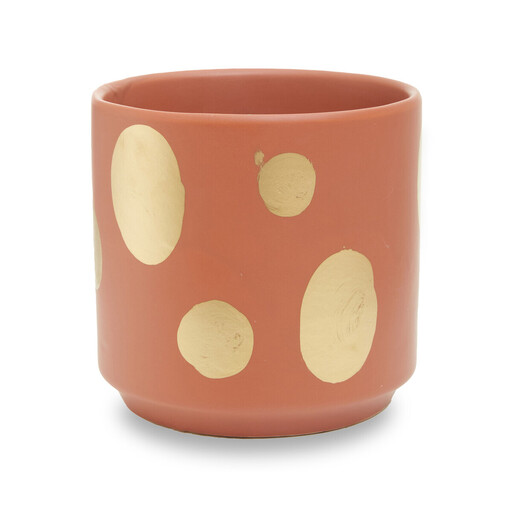
Why this product fits the profile: This compact ceramic planter measures 14 × 14 × 14 cm according to the product details, making it ideal for small plants, succulents or decorative indoor arrangements.
The clear external dimensions make it easy to plan where to place it. As the container is made from stoneware, you should check before buying whether an inner pot and a saucer are needed.
Compact format, stoneware material and an easy-care surface that can be cleaned with a soft cloth.

Why this product fits the profile: This rectangular ceramic pot comes with two drainage holes and a removable drip tray. According to the details, it measures 25 × 12 × 10 cm.
The drainage is clearly described, and the tray reduces the risk of water running directly onto furniture or windowsills.
Matte black ceramic, two drainage holes and a removable ceramic tray for indoor use.
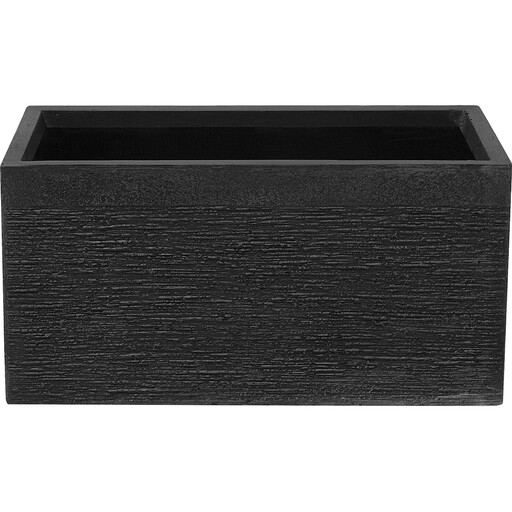
Why this product fits the profile: With a width of 60 cm and a stated volume of 42 litres, this elongated planter works well as a room divider or planted privacy screen for indoors and patios.
Two drainage holes, UV resistance and a stated temperature range provide concrete details rather than a vague outdoor promise.
Elongated shape, 42-litre volume, two drainage holes, plus details on UV, water and wind resistance.
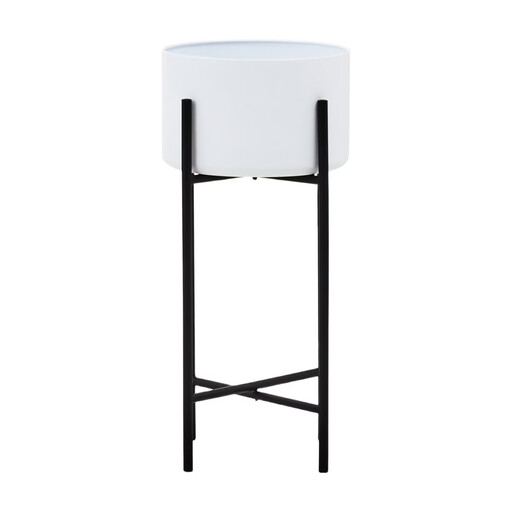
Why this product fits the profile: This large planter combines a white pot with a black iron frame and, according to the product data, reaches a height of 55 cm.
The stated dimensions and frame construction help with planning. Before use, consider the floor space, assembly, and the weight when filled with soil and a plant.
55 cm height, iron frame with crossed struts and a high-contrast colour combination for modern living or outdoor spaces.
We have put together a complete, regularly updated list of products that fully meet these strict selection criteria and the safety regulations in force in the EU.
For houseplants, ceramic planters, plastic pots, glass containers and decorative outer pots are all suitable. What matters are the right internal dimensions and controlled water management. With a container that has no drainage hole, you should use an inner pot so that excess water does not sit permanently around the roots.
A drainage hole can be practical for plants that are watered regularly, but it is not the only measure of quality. What really counts is a suitable drip tray, a stable base, and the ability to remove excess water. For delicate surfaces, an outer pot without an opening can be the more practical solution.
The lifespan depends on the material, workmanship, usage and weather conditions. UV- and water-resistant materials are designed for outdoor use, but they do not replace the manufacturer's care instructions. In frost, extreme temperature fluctuations or an exposed location, storing the planter in a dry indoor space can help extend its life.