
Lieferung heute & morgen

Qualitätsgarantie

Willkommens-Angebote freischalten: KOSTENLOSE Lieferung | Bis zu 80 % RABATT | Kostenlose 30-Tage-JoyPlus-Testphase
App herunterladen
Choosing the right running shoes starts with more than an eye-catching colour or a marketing promise such as “maximum energy return”. What matters is whether the shoe suits your running surface, foot shape and training volume. A model for paved roads has different requirements from trail running shoes designed for woodland paths and loose stones.
Many shoppers, however, focus only on weight or appearance. This can lead to common mistakes: the shoe feels too tight after just a few runs, the outsole provides too little grip on wet surfaces, or the cushioning is unsuitable for the intended distance. The following criteria will help you compare men's running shoes, women's running shoes and unisex models objectively.
Lightweight running shoes can feel pleasantly responsive during fast-paced training. For longer distances or changing surfaces, however, you also need suitable cushioning and sufficient support. A particularly low weight alone says nothing about stability, durability or traction.
Breathable running shoes with mesh uppers usually release heat and moisture effectively. In rain, mud or cold weather, however, a very open-weave upper may offer less protection. Lightweight mesh can be ideal for summer road runs, while trail running shoes also need abrasion-resistant reinforcements.
Running shoes with carbon plates and racing running shoes are primarily designed for specific training and racing situations. A plate changes the shoe's rolling characteristics and may feel unfamiliar. For everyday runs, easy sessions or beginners, a well-balanced model without a carbon plate is often the more obvious choice. Claims about energy return or percentage-based performance figures should always be viewed as manufacturer specifications and do not automatically apply to everyone.
Your toes should be able to move as your foot rolls through the stride, without your foot sliding around inside the shoe. There should be a small amount of room for movement between your longest toe and the front of the shoe. A wider toe box can feel more comfortable for broader feet, while narrower feet may benefit from a closer fit or a slim fit.
Men's and women's running shoes do not fundamentally differ in terms of running technique. The relevant factors are the last shape, size range and individual foot width. Therefore, check the stated foot length in millimetres and compare it with the size chart for the model in question.
An EVA midsole can soften impact when your foot lands and provide a certain level of rebound. However, “cushioned running shoes” are not automatically suitable for every distance or body weight. For longer distances, a more comfortable setup may be preferable, while lightweight training or racing shoes often provide a more direct underfoot feel.
Pay attention to the midsole construction, not just terms such as “High Performance”. The PELLIOT models are specified as having a highly elastic EVA foam midsole. Depending on the version, the LI-NING models use BOOM or SUPER-BOOM foam. These product specifications describe the construction, but do not guarantee a particular running performance or health benefit.
Road running shoes need a tread that rolls reliably over asphalt, paving and firm paths. For woodland and mountain trails, trail running shoes with a more pronounced tread and abrasion-resistant uppers are more suitable. When choosing non-slip running shoes, pay particular attention to the specific outsole material and tread design.
According to the product description, the PELLIOT models use a ROCKYTEC rubber outsole; selected versions are stated to feature Vibram Megagrip. The LI-NING models are fitted with GCR or GCU rubber outsoles. Such specifications may be relevant on wet or loose surfaces, but they do not replace an assessment of the actual terrain.
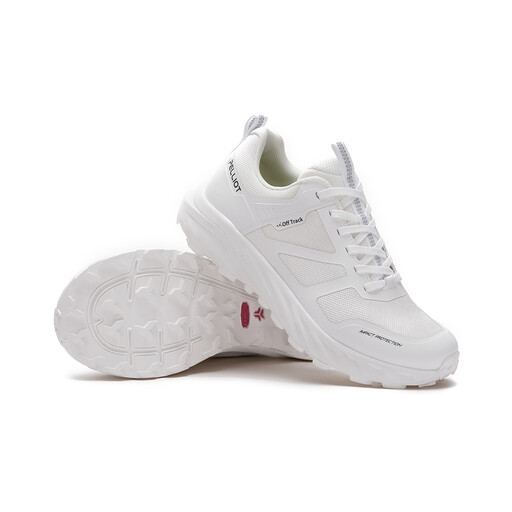
Why this product suits this profile: This unisex model combines a lightweight sandwich-mesh upper with an EVA midsole and is designed for firm paths and transitions onto trails.
The product description specifies the materials, midsole, outsole and a size chart, rather than focusing solely on its low weight.
Sandwich mesh for airflow, a highly elastic EVA midsole and ROCKYTEC rubber outsole, according to the product specifications.
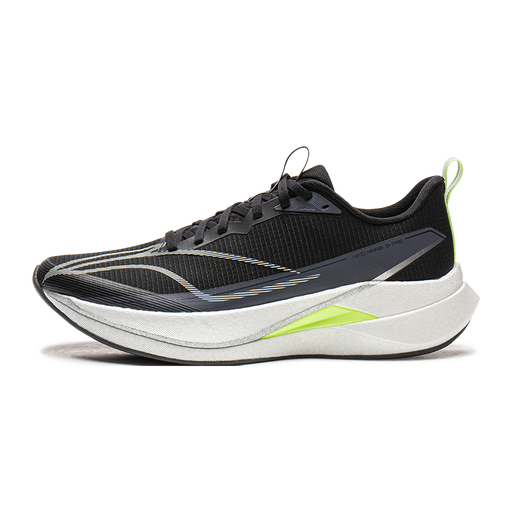
Why this product suits this profile: The wider platform, BOOM midsole and woven BOOM-FIBER upper will appeal to runners looking to combine stability, ventilation and a roomier feel.
The construction focuses on more than just lightness, explicitly specifying the platform width, TPU element, midsole construction and GCR outsole.
Wider last, dual-layer BOOM midsole and BOOM-FIBER fabric with a specified ventilation structure, according to the manufacturer’s information.

Why this product suits this profile: This model is designed for moving between urban paths, firm trails and more demanding surfaces, and is available in standard and slim-fit versions.
The selection considers more than ventilation, including abrasion resistance, EVA cushioning and a tread designed for wet or loose surfaces.
Sandwich mesh and fabric, a highly elastic EVA midsole and ROCKYTEC rubber; according to the product description, selected versions feature Vibram Megagrip.
We’ve put together a complete, regularly updated list of products that fully meet these strict selection criteria and the safety regulations applicable in the EU.
Try on your running shoes with the socks you wear for training whenever possible. Your feet can swell slightly over longer distances. Check for pressure points around the toes, heel and midfoot. With a close-fitting, race-oriented last, going up half a size may be sensible if you need a roomier toe area.
New shoes should initially be worn for short runs. This helps you spot chafing, pressure points or an unfamiliar rolling sensation before they become a problem on a long run or marathon. Clean mesh and fabric surfaces according to the manufacturer’s instructions, allow them to air-dry and avoid direct heat.
There is no fixed mileage that applies to every model. Lifespan depends on the surface, body weight, running style, training frequency and care. Signs of wear include a visibly compressed midsole, uneven tread or reduced grip. Even if the upper still looks intact, the shoe’s running characteristics may already have changed.
For longer distances, suitable cushioning, secure heel hold and enough room in the forefoot are important. If you run mainly on asphalt, choose road running shoes with an even tread. On mixed surfaces, versatile models with an abrasion-resistant outsole and a more supportive construction may be more suitable.
Not necessarily. Carbon plates change the shoe’s stiffness and rolling characteristics. For beginners or easy training sessions, a neutrally tuned shoe with reliable cushioning may be easier to use. Carbon models should be introduced gradually in training before a race, so that the fit and running feel suit your individual technique.