Shoppers with a strict sugar limit
You want to keep sugar as low as possible at breakfast and avoid confusing ‘sugar-free’, ‘low sugar’ and ‘no added sugar’.


If you’re specifically looking for sugar-free granola for breakfast, start by checking the ‘of which sugars’ figure on the nutrition label. Under EU Regulation (EC) No 1924/2006, a solid food can only be labelled ‘sugar-free’ if it contains no more than 0.5 g of sugar per 100 g. The muesli and crunchy muesli examples mentioned here are all above that threshold. Whether a lower sugar content, fruit sweetness without added sugar or a crunchy recipe is right for you depends on your priorities and the ingredients list.
You want to keep sugar as low as possible at breakfast and avoid confusing ‘sugar-free’, ‘low sugar’ and ‘no added sugar’.
You want to avoid added sugar but are happy to have sugars from dried fruit in a fruity muesli.
You’re looking for an easy weekday breakfast and want to check sweeteners, ingredients and sugar content as well as texture or protein.
First, decide which quality matters most for your weekday breakfast. Then compare nutrition information on the same per-100 g basis. Fruity muesli, crunchy muesli and granola aren’t interchangeable just because their packaging makes similar claims.
| Criterion | What to check | Who it matters to |
|---|---|---|
| Sugar limit | Check ‘of which sugars’ per 100 g. Under EU Regulation (EC) No 1924/2006, ‘sugar-free’ means no more than 0.5 g per 100 g. | If I want to keep sugar to a minimum, the figure on the label matters more than fruit sweetness or crunch. Around 36% of shoppers put this sugar limit first. |
| Fruit sweetness | Compare dried fruit and other sweetening ingredients with the sugar content per 100 g. Kölln says its no-added-sugar fruit oat muesli contains 40% fruit; REWE lists 22 g of sugar per 100 g. | I want fruity flavour without added sugar and am willing to accept a higher sugar content. Around 29% of shoppers put fruit sweetness first. |
| Crunch | For crunchy muesli, check the ingredients list for sweeteners too. REWE lists maltitol syrup and 1.5 g of sugar per 100 g for Dr. Oetker Vitalis Knusper Pur with no added sugar. | For a quick breakfast, a crunchy texture matters more to me, as long as I’m happy with the sweeteners used. This is the top priority for around 21% of shoppers. |
| Protein and recipe | Compare protein, fibre and sugar per 100 g. Alnatura lists 25 g of protein, 12 g of fibre and 8.8 g of sugar per 100 g for its protein muesli. | I prioritise protein and the mix of ingredients; keeping sugar as low as possible is less important to me. Around 14% of shoppers put these factors first. |
These claims describe different qualities. Kölln says its no-added-sugar fruit oat muesli contains 40% fruit; according to REWE, it contains 22 g of sugar per 100 g.
If you’re specifically looking for a sugar-free product, check the ‘of which sugars’ figure against the limit of no more than 0.5 g per 100 g set out in EU Regulation (EC) No 1924/2006.
Descriptions such as ‘naturally sweet’ don’t tell you the full sugar content. The consumer advice centre notes that ingredients such as fruit juice, honey and dried fruit can contribute too.
Read the ingredients list and nutrition information together, and compare sugar figures per 100 g.
A low sugar figure on the label doesn’t mean that crunchy muesli was made without sweeteners. REWE lists maltitol syrup in Dr. Oetker Vitalis Knusper Pur with no added sugar.
If you want to avoid sweeteners, check the ingredients list for the specific product.
These claims describe different product qualities. Alongside 25 g of protein, Alnatura lists 8.8 g of sugar per 100 g for its protein muesli.
Compare protein, fibre and sugar separately, and check which ingredients contribute to the sweetness.
The examples below show how specific muesli and granola recipes differ; they don’t describe every product from each brand.
Worth considering if a low sugar content matters more to you than fruit sweetness in your muesli.
Worth considering if you’re looking for fruit muesli with no added sugar and actively want dried fruit in the mix.
Worth considering if you’re choosing between crunchy granola and a muesli with a stated protein content.
A retailer’s range where you can compare nutrition information for specific muesli and granola products.
This selection includes crunchy mueslis with different sweetness claims, as well as a fruit muesli with no added sugar. You’ll still need to check whether the specific product meets your preferred sugar limit and ingredient requirements.
 No image available
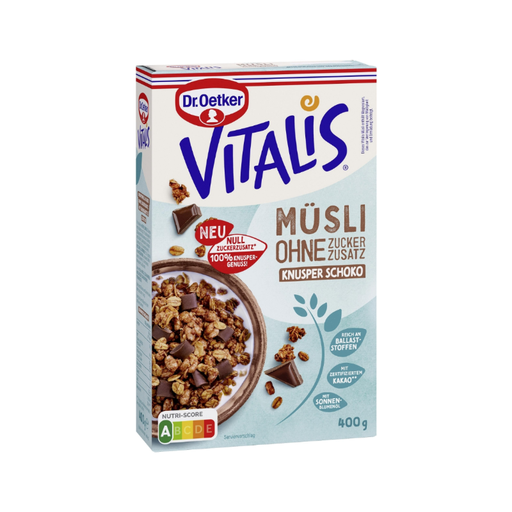
A crunchy chocolate muesli option if you’re happy to have sweeteners in the mix. Check the sugar content and ingredients list before buying; ‘no added sugar’ doesn’t mean sugar-free.
 No image available
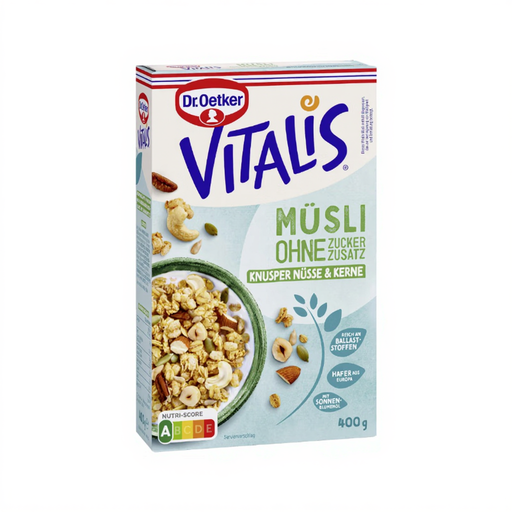
A nutty option for anyone looking for crunchy muesli with no added sugar. Pay particular attention to sweeteners and allergens in this product’s ingredients list; information for another Vitalis variety won’t necessarily apply to this one.
 No image available
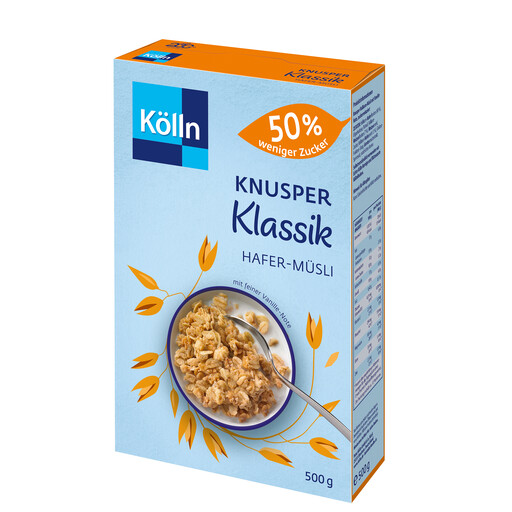
For shoppers looking for crunchy oat muesli in a variety labelled ‘50% Less Sugar’. The ‘of which sugars’ figure per 100 g is still what matters for your sugar limit; a comparative claim means neither ‘sugar-free’ nor ‘no added sugar’.
 No image available
A crunchy breakfast option if the ingredients in this Pure variety suit your preferences. Check the ingredients list as well as the sugar content: the words ‘Less Sweet’ alone don’t tell you whether it’s sugar-free or contains added sugar.
 No image available
A fruit muesli for shoppers who prefer fruit sweetness without added sugar to the lowest possible sugar content. Compare the nutrition information for this 50% fruit product with your sugar limit; don’t assume the figures for another Kölln fruit muesli recipe apply to it.
No. Under EU Regulation (EC) No 1924/2006, solid foods can only be labelled ‘sugar-free’ if they contain no more than 0.5 g of sugar per 100 g. A product with no added sugar may still contain sugar from its ingredients, so check the nutrition information.
Not if you’re specifically looking for a sugar-free product: REWE lists 22 g of sugar per 100 g for this Kölln muesli. Kölln says it contains 40% fruit; ‘no added sugar’ doesn’t make the muesli sugar-free.
Read the ingredients list alongside the ‘of which sugars’ figure on the nutrition label. The consumer advice centre lists ingredients such as glucose syrup, fruit juice, honey and dried fruit as potential contributors to sugar content.
Check the ingredients list for the specific crunchy muesli for sweeteners. For example, REWE lists maltitol syrup in Dr. Oetker Vitalis Knusper Pur with no added sugar; this information can’t be applied to other varieties across the board.