What should you look for when buying?
First, match the batch size to how much yoghurt you need for your smoothies. Then check that the programme finish and the time needed to chill the yoghurt afterwards fit around your shared kitchen routine.
| Buying priority |
What to look for |
Who it matters most to |
| Predictable programme finish |
Check the programme duration and automatic shut-off, and allow time to chill the yoghurt afterwards. |
If you’re coordinating preparation around several kitchen schedules, knowing when a batch will finish matters. This is likely to be the top priority for around 36% of consumers. |
| Batch size and portions |
Compare how much you need per batch with the jar size, total capacity and space available in your fridge. |
If you’re preparing yoghurt for several smoothies, you’ll want to divide it into suitable portions or store it all together. The amount you can make is likely to be the top priority for around 29% of consumers. |
| Smoothie base consistency |
Decide whether you prefer a pourable yoghurt or a thicker base, then check which programmes or filters the model offers. |
If you’re using the yoghurt directly in smoothies, the consistency you want is key. It’s likely to be the main buying priority for around 21% of consumers. |
| Options for different recipes |
Check the programmes explicitly listed against the ingredients you use and the instructions for the specific model. |
If you like to switch between different types of yoghurt, you’ll want suitable programmes rather than the same basic recipe every time. This variety is likely to be the deciding factor for around 14% of consumers. |
Yoghurt makers at Joybuy
This selection includes yoghurt makers with larger containers, as well as models with several portion jars for smoothie supplies you can plan together.
 No image available
FOHERE yoghurt maker with two XXL glass containers
The two containers let you make a shared supply of yoghurt instead of lots of small individual portions.
The product title gives the glass containers’ capacities as 2,000 ml and 1,400 ml. The description lists programmes, adjustable running times and a yoghurt strainer.
View at Joybuy
 No image available
Fosmet yoghurt maker with a 1.6-litre stainless steel insert and nine jars
The nine small jars suit households that want to prepare individual portions for different smoothies.
The product title lists a 1.6-litre stainless steel insert, nine 100 ml borosilicate glass jars, temperature control and a timer. The description lists automatic shut-off.
View at Joybuy
 No image available
FOHERE yoghurt maker with eight jars
The eight jars let you divide a batch into separate portions for several smoothies.
The product title lists a total capacity of 1,440 ml and a 48-hour timer. The description lists several pre-set fermentation programmes.
View at Joybuy
 No image available
Yoghurt maker with a 1.5-litre capacity and strainer
The stated capacity makes this an option for preparing one shared batch instead of lots of small individual portions.
The product title lists a capacity of 1.5 litres, 20 W and a strainer for natural and Greek yoghurt.
View at Joybuy
 No image available
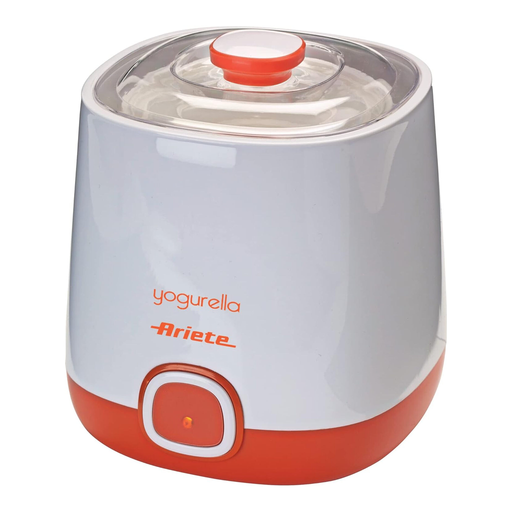
Ariete Yogurella 621, 1 litre
The stated capacity and filter make this an option if you want to prepare a shared yoghurt base with a thicker consistency.
The product title lists a capacity of 1 litre. The description lists two containers, a filter for Greek yoghurt and a timer.
View at Joybuy
Frequently asked questions
Can I leave the finished yoghurt in the switched-off appliance until the next time someone’s in the kitchen?
Automatic shut-off doesn’t chill the yoghurt, so make sure you allow time to put it in the fridge. The German Consumer Advice Centre says homemade yoghurt should be stored in the fridge afterwards.
Will I also need a blender?
If you want to make a smoothie with yoghurt, fruit and other ingredients, you’ll need a separate suitable blender. The yoghurt makers described here are for making or straining yoghurt, not blending.
How do I keep the containers and ingredients clean?
Clean the containers and work surfaces thoroughly, and follow the instructions for your model. The German Federal Centre for Nutrition recommends keeping things clean and hygienic when preparing food; the Severin instructions say to clean the jars and lids after every use.
Can I use raw milk to make yoghurt at home?
If you use raw milk, boil it before making the yoghurt. The German Federal Institute for Risk Assessment specifically gives homemade yoghurt as an example of a food in which the milk isn’t heated sufficiently again before consumption.
Can I use an external timer with the Steba JM 2?
No. The Steba JM 2 instruction manual prohibits using the appliance with an external timer or a separate remote-control system.


