
Lieferung heute & morgen

Qualitätsgarantie

Willkommens-Angebote freischalten: KOSTENLOSE Lieferung | Bis zu 80 % RABATT | Kostenlose 30-Tage-JoyPlus-Testphase
App herunterladen
Anyone looking to buy a chopping board will find a wide range of options made from wood, bamboo, plastic, stainless steel and combinations of materials. At first glance, many models look similar. However, differences become clear when it comes to moisture resistance, stability, cleaning, knife-friendliness and the amount of space available on the worktop.
Three common buying misconceptions particularly often lead to the wrong choice:
A wooden chopping board made from beech or acacia feels sturdy, and many models are gentle on knife blades. Wood and bamboo should be dried immediately after cleaning and should not be soaked for extended periods. For several available models, cleaning in the dishwasher is expressly not recommended.
A bamboo chopping board provides a firm work surface and is available in a wide range of sizes. Check the exact care instructions, as moisture and heat can cause the material to warp. For switching between different food groups every day, a plastic chopping board or a reversible model can be practical, provided it can be cleaned thoroughly.
Stainless steel is easy to wipe clean and resistant to moisture. However, its surface may affect your knife differently from wood or plastic. When choosing an antibacterial chopping board, read the specific material description and the manufacturer’s instructions rather than relying on the product name alone.
For everyday preparation, dimensions of around 30 × 20 cm are compact. Models measuring approximately 34 × 24 cm or 40 × 28 cm provide more room for vegetables, bread or several ingredients. Greater material thickness can make a board more stable, but a non-slip underside or secure footing on the worktop is also important.
A chopping board with a handle can be carried conveniently from the worktop to the table and hung up to save space. Check whether the handle reduces the usable surface area and whether it gets in the way while chopping.
A chopping board with a collection tray is suitable for households where chopped ingredients are to be collected directly. A chopping board with a draining function can make washing and placing fruit or vegetables easier. Removable components that can be cleaned separately are important, as is a sturdy construction.
Hand washing is often required for wooden and bamboo boards. Depending on the manufacturer’s instructions, plastic models may be dishwasher-safe. This information should be checked before ordering and should not be inferred from the material alone.
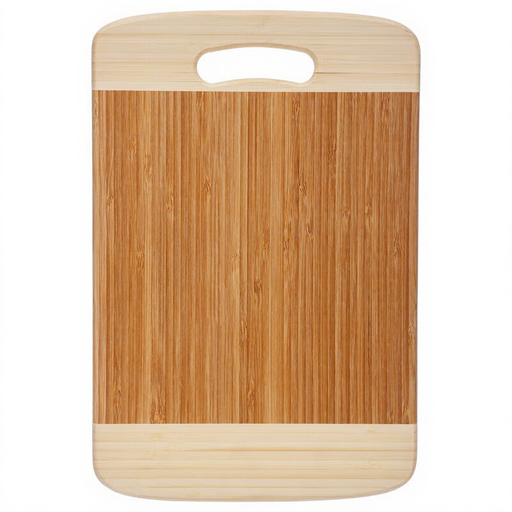
Why this product suits this profile: The compact 30 × 20 cm surface is ideal for smaller kitchens and everyday chopping tasks. The integrated handle makes it easy to carry and hang up.
The clearly stated dimensions prevent you from overestimating the available worktop space. The hand-washing and drying instructions make the care requirements transparent.
Bamboo construction, a 30 × 20 cm surface and an integrated handle.
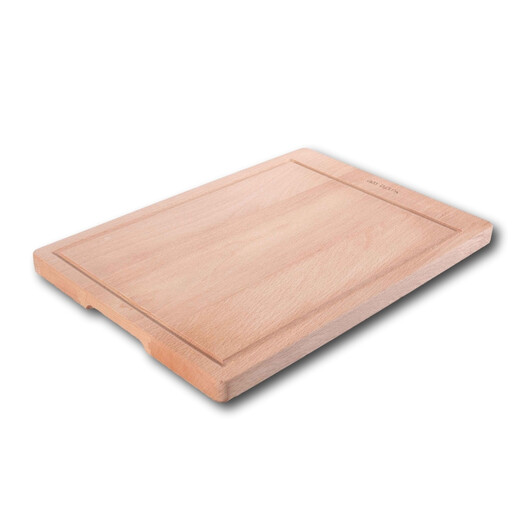
Why this product suits this profile: Its 2.2 cm thickness and 34 × 24 cm surface provide a solid base for regular food preparation in a family kitchen.
The material, dimensions and care information are clearly stated. This model is not intended for prolonged soaking or dishwasher cleaning.
Beech wood, 34 × 24 × 2.2 cm and a knife-friendly wooden surface according to the product description.
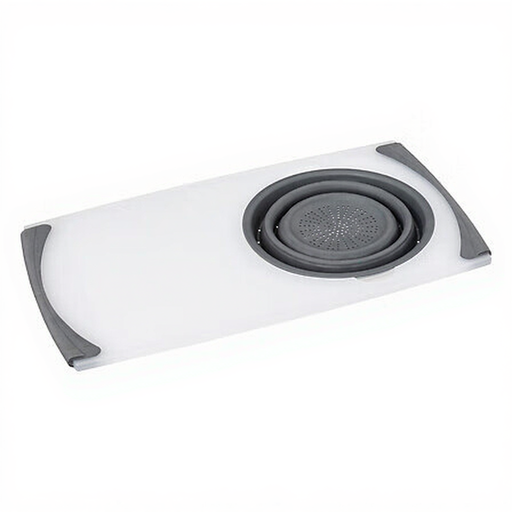
Why this product suits this profile: This plastic board combines a chopping surface with a pull-out colander for washing and draining fruit or vegetables.
The additional feature is clearly described: the colander slides away completely after use and should be positioned correctly before storage.
Polypropylene, an integrated pull-out colander, and suitability for hand washing and dishwasher cleaning according to the product description.
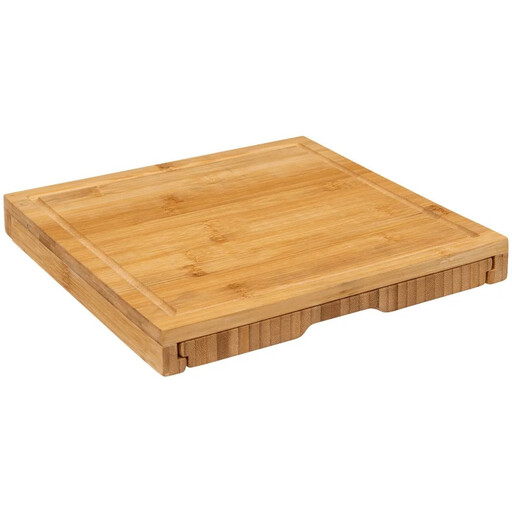
Why this product suits this profile: This cheese board combines a 30 × 30 cm serving surface with four cheese knives and an integrated storage solution.
Its role as a serving board is the focus, so it does not need to be bought as an oversized everyday board. Hand washing is expressly specified.
Bamboo, 30 × 30 cm, four cheese knives and a storage drawer.
We have put together a complete, regularly updated list of products that fully meet these strict selection criteria and the safety regulations applicable in the EU.
That depends on your kitchen routine. Wooden and bamboo boards offer a firm, knife-friendly work surface but require careful hand care. Plastic or combined-material boards may be worth considering if easy cleaning and a lower weight are important.
There is no universally applicable lifespan. It depends on the material, how intensively it is used, cleaning and storage. Deep cuts, cracks, warping or smells that remain permanently are practical signs that it may be time to replace the board.
A chopping board set can be useful if you want to keep different food groups separate or need different sizes. For a single-person household, one compact board is often enough. Families and frequent users are more likely to benefit from several surfaces or a model with a separate collection or storage solution.