
Lieferung heute & morgen

Qualitätsgarantie

Willkommens-Angebote freischalten: KOSTENLOSE Lieferung | Bis zu 80 % RABATT | Kostenlose 30-Tage-JoyPlus-Testphase
App herunterladen
A chopping board is one of the most frequently used items in the kitchen. Yet unclear material descriptions, unsuitable dimensions and incorrect care instructions often lead to the wrong purchase. If you’re looking for a chopping board for the kitchen, don’t just focus on colour and design. The surface, cleaning requirements and intended use are what matter most.
The Joybuy Product Recommendation Officer’s selection is based on clear product specifications. This makes it easier to assess marketing claims and choose the right model for preparing vegetables, meat or bread, or for serving.
An antibacterial chopping board may be advertised as having a particular surface material or coating. However, this doesn’t mean you can skip cleaning or that all pathogens will be removed. After contact with raw meat, fish or poultry, the board must be thoroughly cleaned and dried.
It’s also important to check whether the manufacturer provides specific care instructions. A textured surface can improve grip, but deep cuts may make it harder to clean.
A compact board saves space, but offers little room to work when preparing larger quantities. Very thin models may move more easily on smooth worktops or warp. For everyday use in a family household, dimensions of around 30 to 40 cm in length are often more practical. If you only prepare fruit, bread or small ingredients, a smaller model with a handle may be a good choice.
Not every dishwasher-safe chopping board is made of wood. According to their product details, walnut, beech and bamboo boards should generally not be soaked or cleaned in the dishwasher. Heat and moisture can cause warping, cracks or a rough surface.
For plastic or stainless steel models, check the product description to see whether they’re suitable for the dishwasher. If the instructions aren’t clear, hand-washing is the safer option.
A wooden chopping board has a natural look and is generally sturdy when it’s made to a suitable thickness. Walnut’s dark grain makes it an attractive choice, but it needs to be dried carefully. A bamboo chopping board should also never be left in water for long periods. Beech is another popular option, with a lighter surface.
A plastic chopping board is lightweight, often available in several sizes and easy to clean in many cases. Polypropylene, or PP for short, is a commonly used plastic for kitchen boards. Non-porous surfaces can make cleaning easier, but they don’t replace thorough hygiene.
A stainless steel chopping board is water-resistant and, in many cases, particularly easy to wipe clean. However, its hard surface may affect knives differently from wood or plastic. Double-sided models often pair stainless steel with a softer plastic or wheat straw fibre side.
For everyday food preparation, widths of 24 to 31 cm work well in many kitchens. If you regularly cut bread, meat or larger quantities of vegetables, a bigger work surface is a better choice. Thickness affects both weight and stability: boards around 8 to 10 mm thick are generally lighter, while models around 19 to 20 mm thick feel sturdier and are less likely to move around.
A chopping board with a handle is easier to carry from the worktop to the table. If the handle is long, check that you have enough space in a drawer or cupboard, or on a wall-mounted rack.
A double-sided chopping board can provide two clearly separate work surfaces. For example, you could use one side for raw meat and the other for vegetables or bread. You should still clean both sides after every use. A chopping board set with several sizes or colours makes it easier to keep different food groups separate.
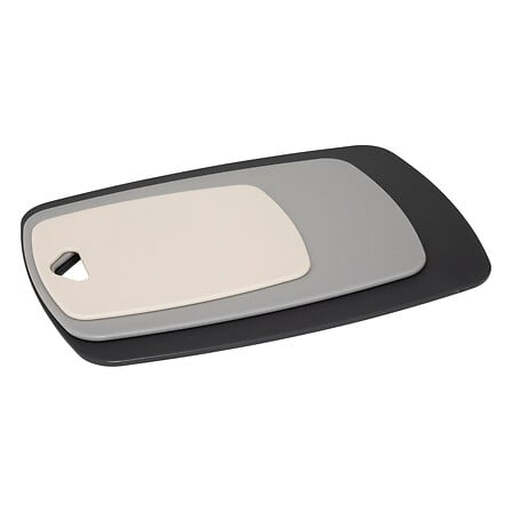
Why this product suits this type of user: Three sizes of polypropylene board cover a range of chopping tasks, making this set a good starting point for households.
The different sizes reduce the risk of using a board that’s too small for the task. Check the care instructions before buying.
Three sizes; polypropylene; largest board measures 35 × 25 cm.
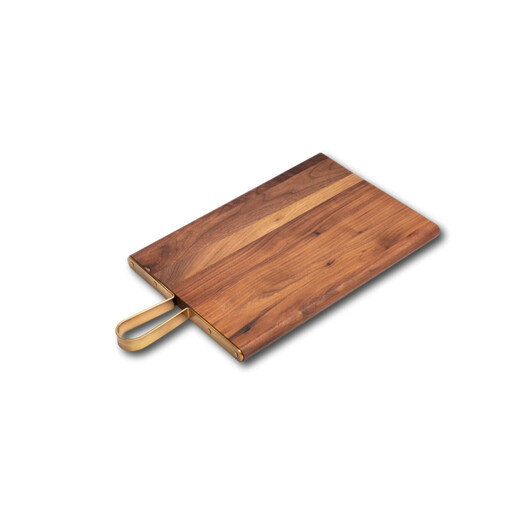
Why this product suits this type of user: This 20 mm-thick walnut board offers a generous surface and a long handle, and can also be used for serving.
Its stated thickness makes it less likely to be unstable. However, it must not be soaked or cleaned in the dishwasher.
Walnut; 250 × 360 × 20 mm; long handle.
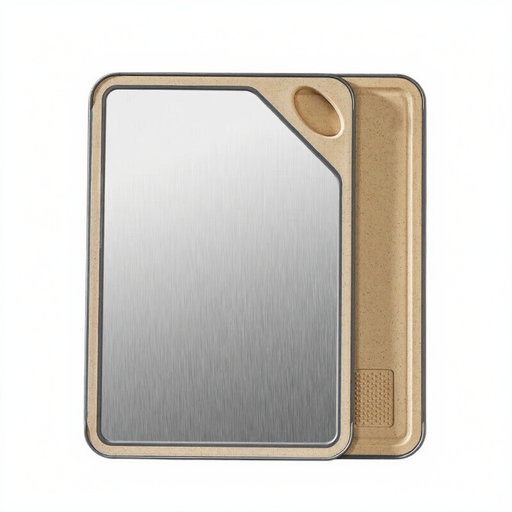
Why this product suits this type of user: The double-sided design pairs a stainless steel surface with a wheat straw fibre and PP side, to suit different foods and ways of working.
The separate sides make it easier to keep ingredients apart. “Antibacterial” describes a product feature; it doesn’t replace cleaning.
304 stainless steel; double-sided design; 25 × 36 cm; hanging hole.
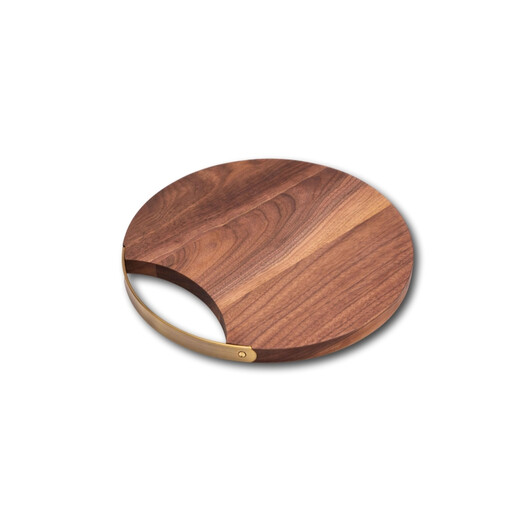
Why this product suits this type of user: The round shape, 31 cm diameter and handle make it suitable for smaller preparation tasks, as well as serving bread, cheese or other dishes.
The handle makes it easier to carry. The 20 mm thickness is a clear product specification; as it’s made of wood, it still needs to be hand-washed.
Walnut; round shape with a 310 mm diameter; handle; 20 mm thick.
We’ve put together a complete, regularly updated list of products that meet these strict selection criteria and the safety regulations in force in the EU.
Hygienic use doesn’t depend on the material alone. A smooth, intact surface, appropriate cleaning and thorough drying are all important. Plastic and stainless steel are often easy to wipe clean, while wood needs gentler care. Replace the board if it develops deep grooves or cracks.
For everyday tasks, a length of around 30 to 36 cm works well for many households. If you regularly prepare large quantities of vegetables, meat or bread, choose a larger work surface. In a small kitchen, a chopping board with a handle or a set with several sizes can offer more flexibility.
As a rule, wooden, bamboo and walnut boards shouldn’t go in the dishwasher. Heat and prolonged exposure to moisture can cause the material to warp or crack. Always follow the specific care instructions provided by the manufacturer.