Olives for tapenade
If you want to chop small quantities coarsely or blend them into a dip, depending on the recipe, look for a chopper that lets you control the process in stages.


If you only chop small quantities of olives occasionally and have little storage space, a compact manual chopper is worth considering. If you use it more often or switch between chunky olives and tapenade, an electric mini chopper with a pulse function could be a better fit. The key things to consider are how you want to operate it, how much space it takes up and how easy the individual parts are to clean. The uses mentioned are based on manufacturers’ claims, not on a comparative hands-on test with olives.
If you want to chop small quantities coarsely or blend them into a dip, depending on the recipe, look for a chopper that lets you control the process in stages.
If you only prepare olives occasionally, a compact footprint, easy storage and not having another electrical appliance to accommodate may matter more than a larger bowl.
If you often chop small quantities, consider not only how the chopper works but also how easy its individual parts are to clean after use.
A good fit if: you only chop small quantities occasionally and don’t want a motor or plug socket on your worktop.
The trade-off: It takes manual effort to operate, and cleaning instructions vary by model and component.
A good fit if: you prepare olives more often or want to switch between chunky ingredients and a dip. KitchenAid lists tapenade as one use for its mini chopper.
The trade-off: It needs worktop or storage space and a power socket; a stated bowl capacity doesn’t tell you the minimum quantity it can process effectively.
A good fit if: you regularly prepare larger quantities of olives for dips, or chop other ingredients, and have room for the appliance.
The trade-off: A larger stated capacity doesn’t tell you how well it handles very small portions of olives.
| Buying priority | What to check before buying | Who it matters most to |
|---|---|---|
| Chopping texture | Check whether you can control the process in stages and inspect the result as you go. | If I want recognisable pieces rather than a smooth dip, it’s important to be able to check the texture while chopping. Around 33% of consumers put chopping texture first. |
| Space and portion size | Compare the appliance’s dimensions with the space you have and the bowl capacity with your usual quantity; capacity figures don’t confirm a minimum portion size. | If you have limited space and usually prepare small quantities, you won’t want to give up worktop space for capacity you rarely use. Around 27% of consumers prioritise space and portion size. |
| Cleaning | Check the care instructions for every part, especially the lid, blade and drive unit. | If I want to clean the bowl and blade easily after using oily ingredients, I need clear guidance for each part. Around 20% of consumers put cleaning first. |
| Ease of use | Weigh up repeated manual actions against using a motor, needing a power socket and finding extra storage space. | If you chop ingredients often, you’ll want a process that suits the way you prepare food, rather than relying on wattage alone to make your decision. Around 20% of consumers prioritise ease of use when processing ingredients repeatedly. |
The manufacturers’ stated capacities of 830 ml for the KitchenAid 5KFC3516 and 1.5 litres for the Rommelsbacher MZ 500 don’t confirm a minimum quantity or guarantee a particular result with small portions of olives.
Choose based on your usual portion size and the texture you want. If the minimum quantity matters to you, check whether the manufacturer specifies one for the exact model.
For the Tefal K13304, the manufacturer says the bowl and blade are dishwasher-safe, while the lid should be wiped clean. Tescoma says the HANDY rotary chopper is not dishwasher-safe.
Check the instructions for your exact model and clean the lid and drive unit only as directed.
The wattage stated for the Kenwood CHP61.100WH is an electrical rating, not the result of a comparative test of how evenly it chops olives.
If you want chunky olives, pay attention to how the chopper works and check the contents as you process them.
The 5KFC3516 mini chopper is an electric option for smaller quantities and coarse chopping.
The Easy Chop CHP61.100WH is an electric mini chopper with a 500 ml bowl.
The manual 5-Second Chopper K13304 is a cordless option for smaller quantities of ingredients.
The HANDY rotary chopper is a manual design for small or pre-prepared ingredients.
The MZ 500 is a larger electric alternative if you regularly prepare more ingredients.
The products below include compact manual and electric choppers for small quantities, with different ways of operating them to suit your preferences.
 No image available
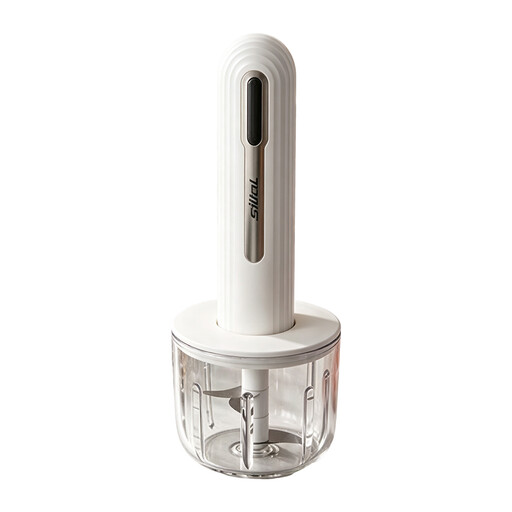
If you’re looking for a compact chopper for small portions, this cordless model is one to consider. The product details recommend short bursts to adjust the consistency; the removable parts should be washed by hand.
 No image available
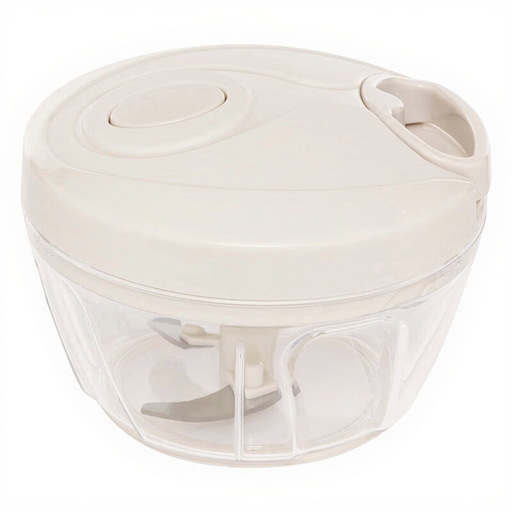
If you want to chop without electricity and check the texture as you go, this manual mini chopper is a suitable option. Its pull-cord mechanism requires manual effort.
 No image available
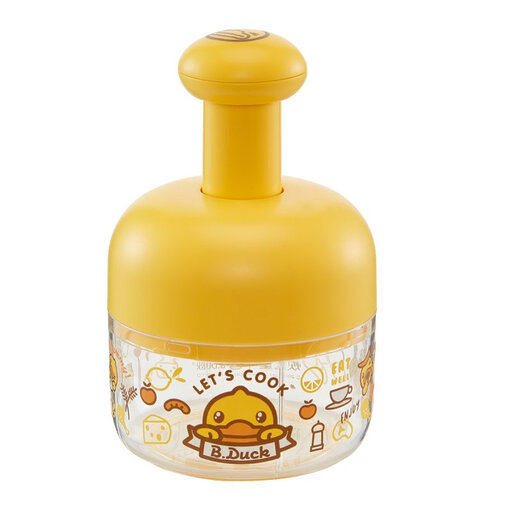
This manual chopper, with its 220 ml bowl, is worth considering for small quantities of ingredients. The product details describe pulling repeatedly to adjust the consistency you want; chopping takes manual effort.
 No image available
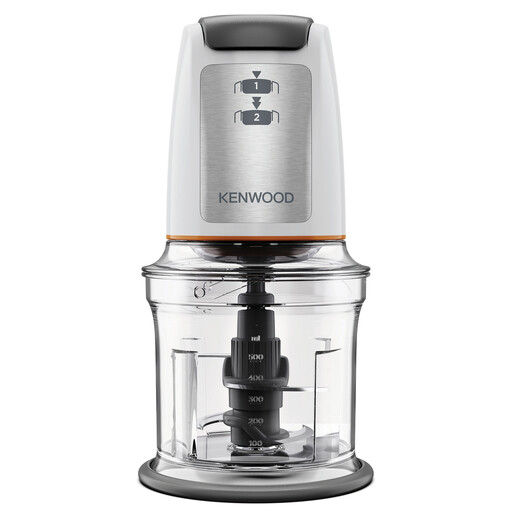
If you’re considering an electric mini chopper for small to medium quantities for dips or sauces, this model is a compact option. Its product name lists a 0.5 l bowl, 500 watts and two speed settings.
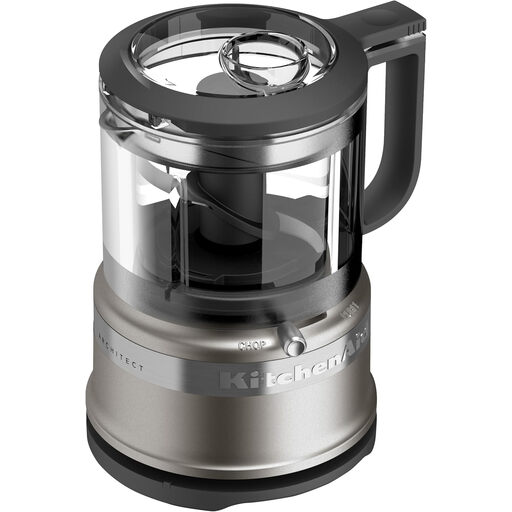 No image available
If you’re looking for an electric mini chopper with several operating options, this model is worth considering. The product details list two speeds and a pulse function, but don’t confirm a particular result with olives. According to the product details, the motor base must not be immersed in water.
Use pitted olives in a blade chopper and follow the instructions for your specific appliance. KitchenAid’s tapenade recipe uses pitted Kalamata olives, but that doesn’t mean every model is suitable.
Process the olives in stages and check the result as you go. KitchenAid lists a pulse function for the 5KFC3516; according to the manufacturer, you can adjust the texture of the manual Tefal K13304 by pulling repeatedly. Neither approach guarantees a particular result.
It depends on the model and the individual part. For the K13304, Tefal says the bowl and blade are dishwasher-safe, while the lid should be wiped clean; Tescoma says the HANDY rotary chopper is not dishwasher-safe. Check the instructions before cleaning the lid or drive unit.
No. The Verbraucherzentrale distinguishes between statutory consumer rights and a guarantee, which is offered voluntarily and is subject to its own terms and conditions. When looking for spare parts, check the exact model number too; Bosch offers a model-specific spare parts search for the MMR08A1.