What to look for when buying
A single smart speaker
A good fit if: you listen in different places or want to start with one speaker in a single spot, and can play your recording using a supported playback method.
The trade-off: A single enclosure doesn’t automatically give you two spatially separated channels at a fixed listening spot.
A compatible stereo pair
A good fit if: spatial separation matters to you at your preferred listening spot and you have two suitable places for the speakers. Sonos and Apple each specify conditions for using their speakers in stereo.
The trade-off: You’ll need two compatible devices and enough space; your listening position and room reflections will affect the result.
Multiple listening zones
A good fit if: you want your music to remain audible as you move between the living room and kitchen, and your chosen system supports multiple zones.
The trade-off: Multi-room playback distributes sound around your home, but doesn’t automatically create a precise stereo image at a particular seat.
First, decide whether you’ll mainly listen from one fixed spot or in several areas. Then you can compare the recording source, controls and the size of system you need more easily.
| What matters |
What to check before buying |
Who is it important to? |
| Spatial presentation |
Approval for the specific models, two possible speaker positions and your preferred listening spot. |
If spatial separation in a choral recording matters to me at my usual listening spot, I’ll check stereo-pair compatibility and placement. Around 29% of consumers also make spatial presentation their top priority. |
| Volume and placement |
Possible speaker positions and volume controls at your listening spot, as well as how adjoining areas are used. |
If other people share the open-plan living space, I want to set a suitable volume and position the speakers accordingly. Around 22% of consumers prioritise consideration for the people they live with. |
| Access to recordings |
Storage location or service, supported connection methods and any adapters you may need. |
If I want to listen to specific choral recordings, the playback method I choose needs to match my source exactly. Around 21% of consumers put access to their recordings first. |
| Setup and controls |
Device needed for setup, available controls and the effect of a microphone switch. |
If I want setup and microphone controls to be straightforward, I’ll check that the model’s requirements match my devices. Around 14% of consumers prioritise ease of use and control. |
| System size |
Whether one device is enough, you plan to add a second compatible device or your player needs an adapter. |
If I only want to plan for the devices and accessories I need to play my recordings, I’ll compare a single speaker, a pair and the connection options. Around 14% of consumers put keeping their system simple first. |
Joybuy products
These Apple speakers are worth considering for stereo playback, AirPlay or listening across several areas. Before choosing, check that setup and playback work with your devices and recordings.
 No image available
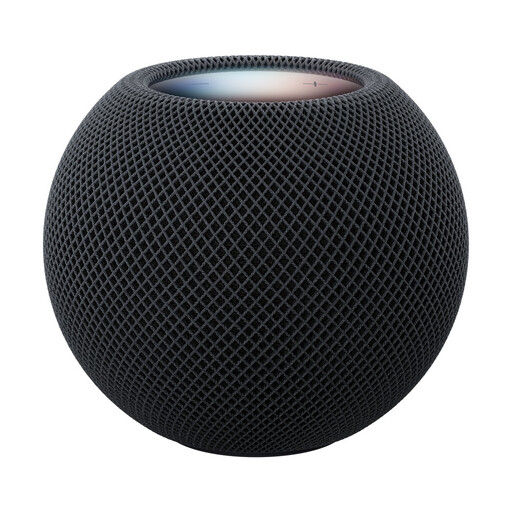
Apple HomePod mini 2 Smart Speaker, Midnight
An option if you’re considering a stereo pair or AirPlay multi-room for several listening areas.
The description lists stereo pairing with a second HomePod mini 2, as well as AirPlay multi-room.
According to the product description, setup requires a compatible iPhone or iPad, Wi-Fi and an Apple ID.
View at Joybuy
 No image available
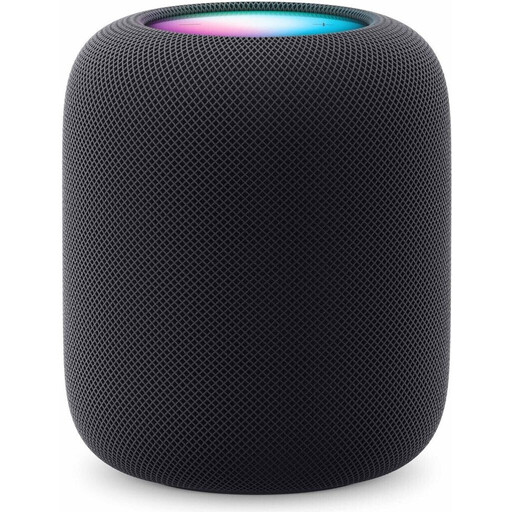
Apple HomePod (2nd Generation), Midnight
An option if you’re considering stereo playback or AirPlay multi-room for your choral recordings.
Apple lists AirPlay, multi-room audio and stereo playback for the second-generation HomePod. Dolby Atmos requires compatible content.
According to the product description, setup requires a compatible iPhone or iPad running a current operating system, as well as Wi-Fi.
The product description warns that magnets and electromagnetic fields may interfere with medical devices. Check the required distance with your doctor and the device manufacturer.
View at Joybuy
Frequently asked questions
How should I position a stereo pair for choral recordings?
Start with your preferred listening spot and check whether you can position two approved speakers appropriately. Sonos recommends spacing its stereo pairs 2,5–3 m apart, with 2,5–3,5 m between the speakers and your listening spot. These are manufacturer-specific guidelines, not general rules or a guarantee for open-plan layouts.
Can I listen to choral recordings from a CD player through a Sonos Era 100?
Yes. According to Sonos, Line-In is possible with a separately available Sonos Line-In or Combo Adapter. Also check which audio output your CD player has.
Is the Dolby Atmos label enough for my choral recording?
No, not on its own. The device specification doesn’t confirm that your particular recording is available in this format. Apple notes that 3D Audio requires compatible content and supported apps, and that not all content is available in Dolby Atmos.
What else do I need for a stereo pair or an external player?
You’ll need two compatible speakers for a stereo pair. Sonos says Line-In on the Era 100 requires a separate adapter; also check that your player’s audio output matches the connection provided.
What are the rules on radio equipment and volume in the home in Germany?
Radio equipment supplied in Germany must meet the relevant conformity requirements, including the required CE marking and documentation. The marking alone is not a sound or safety test. For neighbourhood noise, the Federal Environment Agency points to rules set by the federal states and local authorities, as well as house rules, so there is no single time or volume limit that applies to every home. The Federal Network Agency notes that devices designed to record discreetly and transmit audio wirelessly are prohibited; an ordinary smart speaker is not in the same category simply because it has a microphone.


