What to consider when choosing
With a stereo pair, speaker placement to the left and right of your listening position matters: Genelec describes similar conditions for both speakers as important for stereo imaging. Also check the connections, whether the offer is for a pair or a single speaker, and any local quiet-hour rules.
| Priority |
What to check before buying |
Who it matters most to |
| Spatial separation of choral voices |
Pair or single speaker; space for suitable left-right placement. |
If I listen to choral recordings from a dedicated listening position, I want to hear the voices positioned to the left and right. Around 31% of consumers place the stereo soundstage above all else. |
| Speaker placement and room acoustics |
Check the listening area, distances and reflective surfaces at the actual location. |
In an open-plan living space, I want to position speakers where I actually listen, without overlooking problematic reflections. Around 25% of consumers put speaker placement and room acoustics first. |
| Connecting your music source |
Check the inputs on the specific model, any adapters you need and, for passive speakers, the amplifier compatibility. |
If I want to keep using a CD player, smartphone or existing amplifier, the connections and system type need to be compatible. Around 19% of consumers prioritise compatibility with their music source. |
| Overall system requirements |
Compare whether the offer includes a pair or a single speaker, along with any electronics, cables and adapters you need. |
I want to know before deciding whether I’m getting a pair or a single speaker, and what other equipment I’ll need. Around 13% of consumers focus primarily on what’s needed to get a system up and running. |
| Considerate listening |
Consider volume control from your listening position, as well as house rules and local quiet-hour requirements. |
If I listen in a flat with neighbours, I want to adjust the volume easily and respect local quiet-hour rules. Around 12% of consumers put considerate listening first. |
Joybuy products
The Joybuy products below include options for stereo playback with built-in sources, active speakers and passive speakers.
 No image available
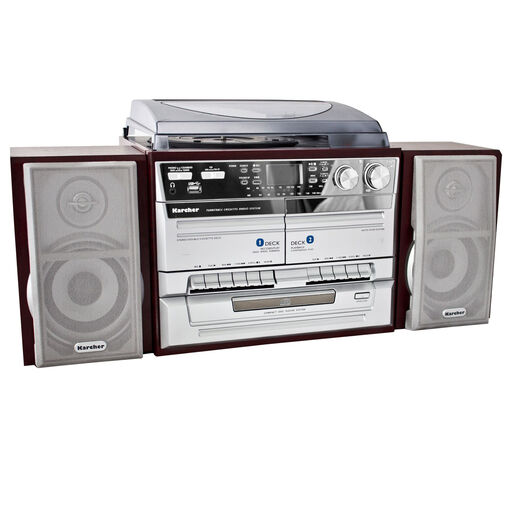
Karcher KA 320 Compact System
Could suit you if you’re looking for a stereo system with two separate speakers and several built-in playback options.
CD, Bluetooth, USB and AUX are listed; the product name also mentions a cassette player, radio and SD card reader.
Joybuy
 No image available
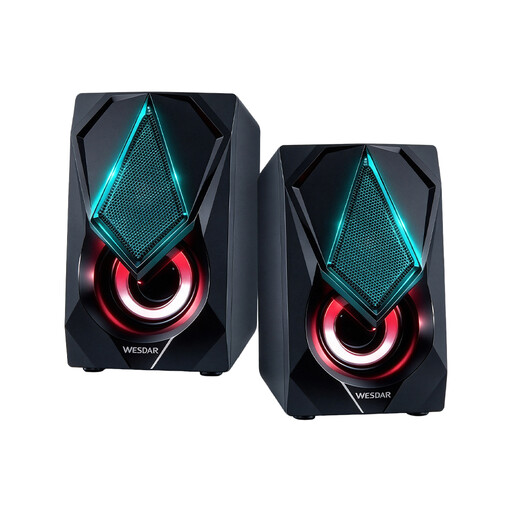
Compact stereo desktop speakers with coloured LED lighting
Could suit a computer desk if you’re looking for a two-piece stereo set with a USB connection.
A wired USB connection to a computer is listed.
Joybuy
 No image available
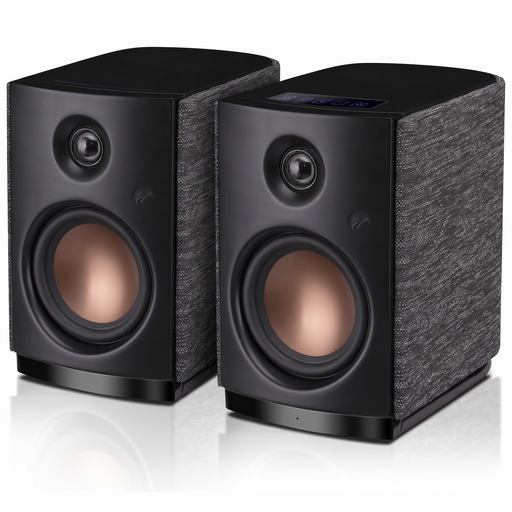
HiVi-Swans OS-10 Hi-Fi Stereo Speakers
Could suit you if you’re looking for active bookshelf speakers with Bluetooth or a wired AUX input.
Features listed include Bluetooth 5.0, AUX, a 4-inch woofer and touch controls.
Joybuy
 No image available
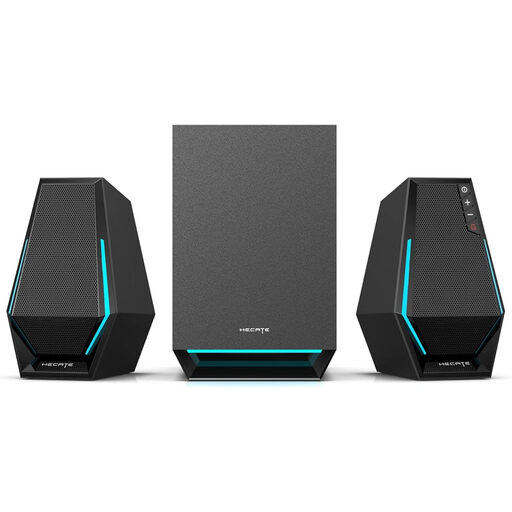
Edifier Hecate G1500 MAX 2.1 Speaker System
Could be an option if a 2.1 system with two satellite speakers and a music mode suits your setup; the product description identifies it as a gaming system.
Bluetooth 5.3 and USB, Type-C and 3.5 mm AUX inputs are listed.
Joybuy
 No image available
HiVi D3.1MKII Passive Hi-Fi Stereo Speakers
Could suit you if you already have a suitable amplifier and want to build a passive stereo system.
The specifications list 8 Ohm impedance and a recommended amplifier power of 10–120 W. A suitable amplifier is required for use.
Joybuy
Frequently asked questions
How should I position two speakers for a dedicated listening position?
Start by positioning them in similar conditions on the left and right, and angle both towards your usual listening position. Genelec recommends this symmetrical arrangement as a guide, but it won’t guarantee the same stereo image from every seat in an open-plan living space.
Can automatic room calibration fully compensate for poor speaker placement?
No, you shouldn’t rely on it to do so. Genelec notes that calibration alone won’t solve every room-related issue. So check your speaker positions and any noticeable reflections first; the calibration features available depend on the model.
What should I bear in mind when buying online and trying speakers at home?
According to the Verbraucherzentrale, distance contracts generally come with a 14-day right of withdrawal after you receive the goods. Check the terms of your specific purchase and handle the product carefully. Your statutory rights against the seller are separate from any voluntary guarantee.
What should I check when buying a wireless speaker in Germany?
For products covered by the relevant rules, Germany’s Federal Network Agency checks matters including CE marking, product identification and manufacturer details. A CE mark isn’t an independent assessment of sound quality.
Is there one set time when loud music is allowed in every home in Germany?
No, you can’t assume there’s one rule that applies to every home. Germany’s Federal Environment Agency says that requirements relating to noise affecting neighbours may come from state law, local regulations or house rules. Check which rules apply where you live.


