
Lieferung heute & morgen

Qualitätsgarantie

Willkommens-Angebote freischalten: KOSTENLOSE Lieferung | Bis zu 80 % RABATT | Kostenlose 30-Tage-JoyPlus-Testphase
App herunterladen
The right Christmas lighting can transform any home, garden, or business into a festive wonderland. However, the market is flooded with products whose quality and functionality often only become apparent after purchase. Many consumers invest in lighting that breaks after just one season or proves impractical in daily use. This guide will show you what to look for to find durable and suitable Christmas decorations and which pitfalls to avoid.
Before making a purchase, it's crucial to recognise common marketing promises and product weaknesses. These three points frequently lead to disappointment:
To avoid the problems mentioned above, you should carefully check three technical features before buying. These define the safety, atmosphere, and practicality of your Christmas lighting.
The IP (Ingress Protection) rating indicates how well an electrical device is protected against the ingress of foreign objects and water. For any outdoor Christmas decorations, whether in the garden, on the balcony, or on a fa?ade, a waterproof IP44 rating is the absolute minimum.
The colour temperature, measured in Kelvin (K), significantly determines the lighting mood. The choice between warm white, cool white, or multicolour should match your decoration concept.
The choice of power supply depends on the location of use. Additionally, smart features are crucial for ease of use.
Here are some product recommendations tailored to specific needs and user profiles.
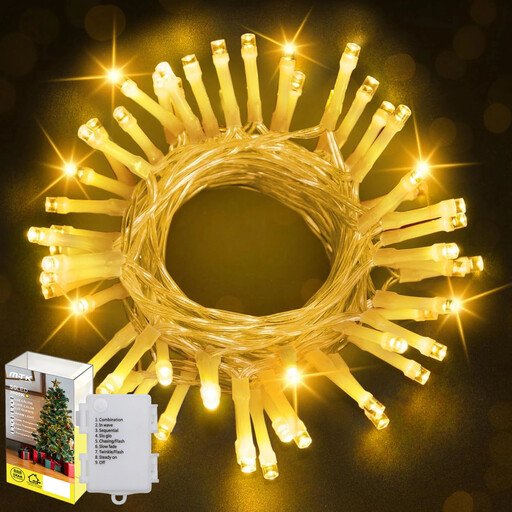
Why This Fits Their Persona: Ideal for users who want to decorate flexibly without being tied to a power outlet. Perfect for windowsills, door wreaths, or a small balcony. The warm white colour creates an inviting atmosphere.
Battery operation bypasses the trap of cumbersome handling due to a lack of outlets. The IP44 certification ensures it is suitable for sheltered outdoor use and is not falsely advertised as fully waterproof.
Advantage: Maximum flexibility thanks to battery operation. Pros: 8 lighting modes with a memory function for personalised effects.
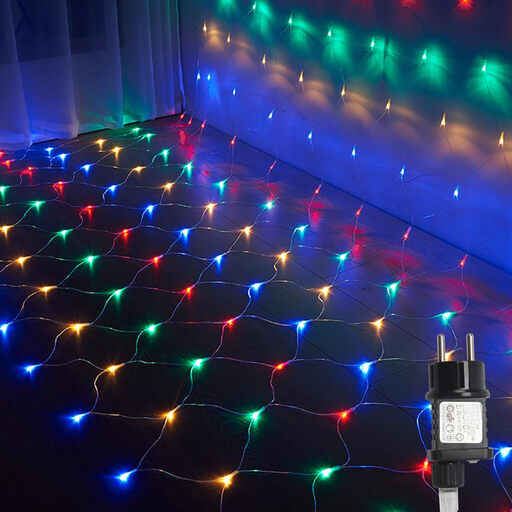
Why This Fits Their Persona: This light net is designed for large-scale decoration of bushes, hedges, or walls in the garden. It provides even and dense illumination over a 2x2 meter area.
The IP44 certification is clearly specified for outdoor use. Operation with 30V low voltage minimises safety risks. The memory function prevents the daily resetting of the lighting mode, solving the problem of poor functionality.
Advantage: Quick and uniform decoration of large areas. Pros: Enhanced safety due to 30V low voltage.
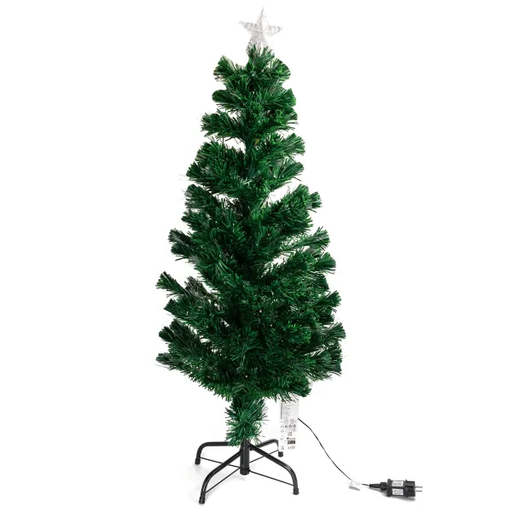
Why This Fits Their Persona: For anyone looking for a hassle-free, all-in-one solution. This artificial Christmas tree with integrated fibre optic and LED lighting eliminates the need to separately choose and tediously hang string lights.
As an integrated system, it bypasses the problem of incompatible or low-quality individual components. Equipped with a timer, memory function, and 8 lighting modes, it offers the convenience often lacking in basic products.
Advantage: Time-saving all-in-one solution. Pros: Versatile RGBY colour options and IP44 suitability for indoor and outdoor use.
We've compiled a complete, up-to-date list of products that fully meet these strict selection criteria and UK safety regulations.
The IP44 rating means that the lighting is protected against solid foreign objects larger than 1mm in diameter and against splashing water from all directions. This makes it suitable for outdoor use, as long as it is not directly exposed to heavy rain or standing water. The power adapter should typically be additionally protected, for example, in a waterproof junction box.
A common rule of thumb is to use about 100 LEDs for every 30 cm (1 foot) of tree height. For a 1.8m (6 ft) tall tree, that would be around 600 LEDs for dense and even lighting. For trees with a very wide diameter, the requirement may be higher.
Yes, as long as the string light itself has at least an IP44 rating. However, the crucial point is the battery compartment. It is often not, or only inadequately, protected against moisture. Therefore, place the battery compartment in a dry, sheltered location (e.g., under an eave, in a plastic bag, or a special protective box) to prevent malfunctions and corrosion.