
Lieferung heute & morgen

Qualitätsgarantie

Willkommens-Angebote freischalten: KOSTENLOSE Lieferung | Bis zu 80 % RABATT | Kostenlose 30-Tage-JoyPlus-Testphase
App herunterladen
Christmas lights are designed to illuminate the Christmas tree, home, entrance area or garden in a decorative way. In practice, however, unclear product specifications, unsuitable protection ratings and incorrectly estimated cable lengths can quickly lead to disappointing purchases. Checking a few technical details before buying will help you choose lighting that is much better suited to where you intend to use it.
A string of lights may be marketed as outdoor lighting even though it is only protected against splashing water. For example, the IP44 rating means protection against solid foreign objects measuring 1 millimetre or more, as well as splashing water from various directions. It does not mean that the lighting is waterproof or suitable for submersion.
For balconies, patios or gardens, you should therefore check that the power supply, battery compartment and plug connections are also suitable for the intended use. Extra care is required in heavy rain, snow or areas exposed to direct jets of water.
Warm white Christmas lights usually create a subtle look and complement traditional wooden, gold or natural decorations. Colourful Christmas lights or multicoloured LEDs, on the other hand, create eye-catching accents but can quickly look overpowering in smaller rooms. The term “warm” does not always describe the same visual effect either. A specification such as 3000 Kelvin provides better guidance than purely promotional wording.
Battery-operated string lights can be positioned flexibly on shelves, sideboards or in areas without a power socket. However, the batteries need to be replaced regularly. For larger installations, a mains connection is often more practical. You should also check whether a timer is included, which switching times can be set and whether batteries are supplied.
The overall length alone says little about the actual lighting effect. The number of LEDs, the distance between the light points and the length of the lead cable are also important. A string of lights for a Christmas tree should be long enough to be distributed evenly. For windows, roof overhangs or façades, wider spacing and several metres of cable are often more suitable.
An LED string of lights with many small light points creates a different look from a decorative garland with large baubles. With meteor string lights, you also need to take the length of the hanging tubes into account.
Battery-powered models give you more freedom when choosing where to place them. Check:
Mains-powered Christmas tree lights or larger indoor and outdoor lighting are better suited to longer operating times. For 220–240-volt products, the supplied power adapter should be used and protected from moisture.
The protection rating is particularly important for outdoor areas. IP44 is designed to protect against splashing water, but it does not replace protection against persistent damp. Cables and connections should not be left in puddles. Damaged cables, housings or plugs must not be used. When storing battery-powered products, it is advisable to remove the batteries to help prevent possible damage caused by leaking batteries.
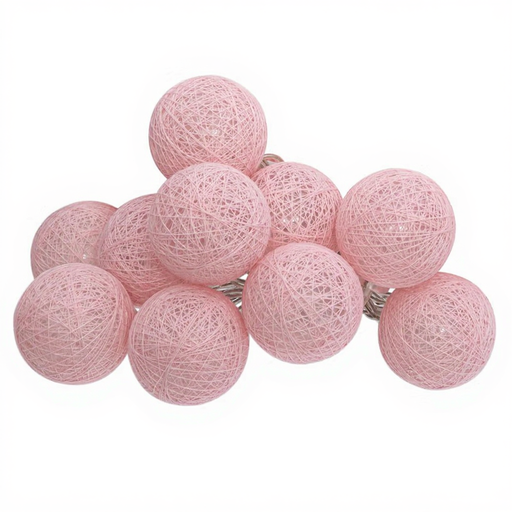
Why this product suits this profile: The compact garland with ten illuminated balls is designed for shelves, sideboards or smaller decorative areas. Battery operation allows it to be positioned without a power socket.
The stated overall length of 165 cm helps you plan smaller areas realistically and prevents a short garland from being chosen for a large tree.
Ten balls, each with one LED, battery-powered operation and a low product weight of 0.09 kg.
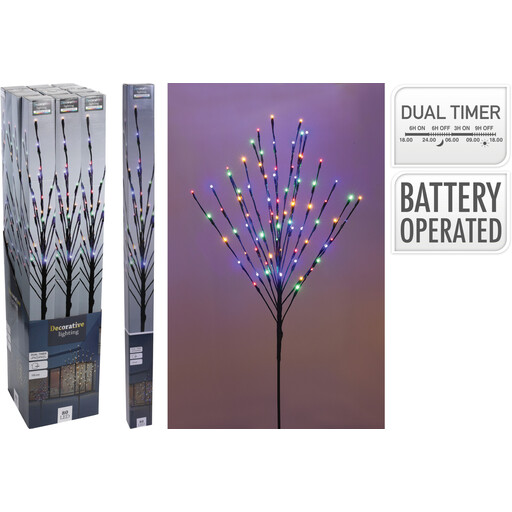
Why this product suits this profile: The 110 cm-high LED light tree adds a distinctive splash of colour to planters, entrance areas or larger indoor spaces.
The product specifications state that it has 80 integrated LEDs, a 100 cm cable section and a dual timer. This makes it easier to assess the amount of light, positioning and operating times.
Multicoloured LEDs, a height of 110 cm and battery operation with three AA batteries; batteries are not included.
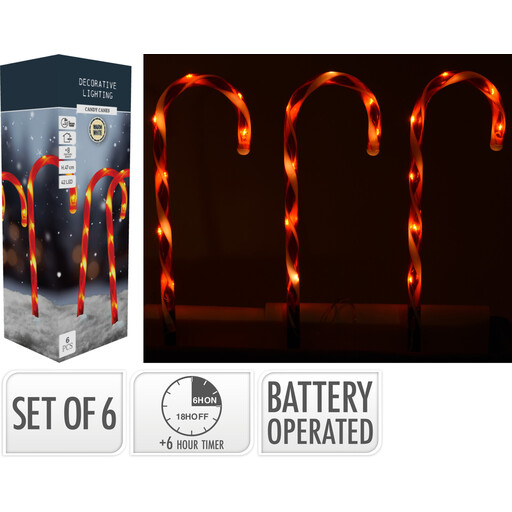
Why this product suits this profile: The candy-cane Christmas lights are suitable for families, shop windows, garden paths or decorated roof overhangs where you want a clear theme.
The IP44 protection rating, the timer with six hours of operation and 18 hours of pause, and the remote control are all clearly specified.
Six lights, 42 LEDs in total, eight functions via remote control and a warm white light colour. Three AA batteries are required and are not included.

Why this product suits this profile: The meteor string lights are designed for larger decorative areas on façades, trees, roof overhangs or commercial entrance areas.
The specifications for 720 LEDs, 15 hanging points, 70 cm spacing and coverage of 10 × 0.5 m make the required installation area easy to understand.
720 warm white LEDs at 3000 Kelvin, IP44 protection, a 9-watt adapter and memory function. A one-year warranty against manufacturing and workmanship defects is stated.
We have put together a complete, regularly updated list of products that fully meet these strict selection criteria and the safety regulations applicable in the EU.
The actual lifespan depends on usage, storage, moisture and the quality of the electrical components. LEDs generally use less energy than conventional bulbs, but they should still not be operated continuously. A timer reduces the daily operating time. Before storing your lights, keep them somewhere dry and protected from direct sunlight.
For sheltered outdoor areas, products with a suitable protection rating such as IP44 may be suitable. This rating indicates protection against splashing water, not complete waterproofing. Power supplies and plug connections must remain dry. With battery-operated string lights, you should also ensure that the battery compartment is designed for outdoor use and protected from direct moisture.
Running costs depend on the wattage, daily lighting duration and electricity tariff. With a mains adapter, you can estimate consumption roughly using the wattage: divide the wattage by 1,000 and multiply it by the number of operating hours to calculate consumption in kilowatt-hours. Battery-powered models incur costs through regular battery replacement. A timer can limit the lighting duration and thereby reduce energy or battery consumption.