Shoppers focused on fat content
You want to compare products by their fat content. To do that, you need nutritional information per 100 g and a fair basis for comparison. The words ‘natural’ or ‘unprocessed’ on their own won’t answer your question.


Natural or unsalted nuts are not automatically lower in fat. If you’re specifically looking for a lower fat content for the Christmas market, compare the fat per 100 g in similar products and check what any reduction claim refers to. If simple ingredients or a controlled snack portion matter more to you, unsalted options or a portion set aside in advance may suit your plans better.
You want to compare products by their fat content. To do that, you need nutritional information per 100 g and a fair basis for comparison. The words ‘natural’ or ‘unprocessed’ on their own won’t answer your question.
You want to choose nuts without strong seasoning to enjoy with your mulled wine. Check the ingredients list and salt content rather than assuming that ‘unsalted’ means lower in fat. Lidl, Seeberger and EDEKA24 offer examples of natural or unsalted options.
You’d like to take a set amount with you on your stroll rather than eat from a large pack. A smaller pack or a portion set aside in advance can help you decide how much to take; ALDI Nord offers TRADER JOE'S products in different pack sizes.
First, decide whether a fair fat comparison, the ingredients or the amount you can snack on while out matters most to you. Each calls for a different check of the packaging.
| Criterion | What to check | Who it matters to |
|---|---|---|
| Fat content | Compare fat and energy per 100 g in similar products. If a product is labelled ‘reduced fat’, check which product it is being compared with. | If I’m specifically looking to choose less fat, I need comparable nutritional information rather than relying on the impression created by the packaging. For around 50% of consumers, this fat comparison would be the main priority. |
| Salt and ingredients | Read the ingredients list and salt content. Distinguish natural or unsalted nuts from seasoned options and mixes. | For a snack during my visit to the market, I mainly want to avoid salt and strong seasoning. Around 30% of consumers would make these ingredients their most important buying criterion. |
| Snack portion | Check the net weight and pack format, or set aside a portion from a larger pack in advance. | When I’m out and about, I want to take only a pre-decided amount with me. For around 20% of consumers, portion size would take priority over a particular recipe. |
‘Natural’ or ‘unprocessed’ does not mean that the fat content has been reduced. For example, a natural hazelnut product listed by EDEKA24 contains 63,3 g of fat per 100 g.
Use the description to choose by ingredients. To compare fat content, check the nutritional information per 100 g for similar products.
‘Reduced fat’ refers to a comparison and does not, on its own, tell you how much fat the product contains per 100 g.
Before choosing an option, check the basis of comparison as well as the fat and energy information on the pack.
Natural nuts, seasoned snacks and mixes can contain different ingredients. Product ranges from Lidl, ALDI Nord and EDEKA24 include these different types of product.
Where possible, compare similar products. For mixes, also check the ingredients list and salt content.
When snacks are sold loose, allergen information is just as important for choosing as it is for packaged products.
Ask the stallholder for clear information about the allergens present. If you don’t get enough information to make your decision, don’t choose that snack.
The product ranges below offer different choices in terms of ingredients and pack formats. A brand name alone doesn’t indicate that a product is reduced fat.
Lidl’s own-label range includes natural nuts as well as other nut and snack options.
Seeberger offers natural nuts and kernels, as well as options prepared in different ways.
ALDI Nord’s own-label range includes individual types of nuts and mixes in different pack sizes.
EDEKA24 lists both unsalted and salted nut products under this brand.
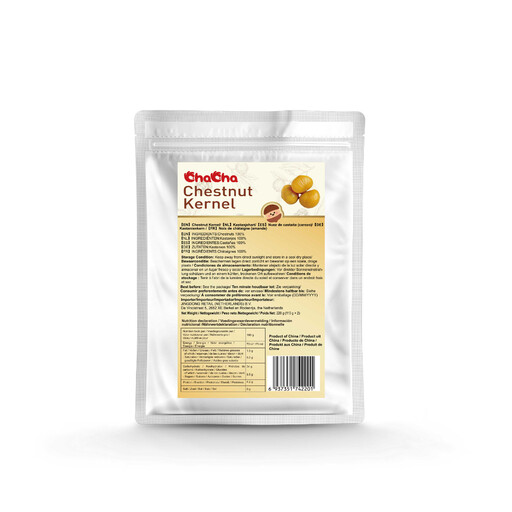
This selection from Joybuy features chestnut kernels as a snack for a visit to the market. If you’re looking for a lower fat content, compare their nutritional information with similar chestnut products. The pack size can help you plan how much you’ll snack on.
 No image available
Chestnut kernels for a snack portion planned in advance for your market visit; the pack contains 220 g.
If you’re looking for a lower fat option, check the nutritional information per 100 g and compare similar chestnut products. The pack size does not indicate that the fat content has been reduced.
No. ‘Natural’ or ‘unprocessed’ does not automatically mean a lower fat content. To compare fat content, check the fat per 100 g in similar products and look separately at any reduction claim.
The description means that the fat content has been reduced compared with another product; it doesn’t mean that the product is low in fat in absolute terms. Check what it is being compared with, and also read the nutritional information per 100 g.
The Nutri-Score is no substitute for checking fat content. According to the Verbraucherzentrale, it is most useful to compare Nutri-Scores within the same product group or between products used in the same way. If you’re specifically comparing fat content, you’ll still need the fat figures per 100 g.
Before buying, check which allergens are present in the loose snack. Ask the stallholder for clear product information, and don’t buy it if the information you’re given is unclear.
Follow the storage instructions for the specific product and reseal the pack after use. For example, EDEKA24 recommends storing one natural hazelnut product in a dry place away from heat.