When choosing popcorn for a visit to the Christmas market, start by comparing the calories per 100 g on packaged products, then consider how much you actually want to eat. For popcorn sold loose, portion size and ingredients are the key things to ask about before you buy. Making popcorn at home lets you control the amount of sugar and oil, but adding extras doesn’t automatically make it the lower-calorie choice.
Who should compare popcorn?
For anyone comparing calories
You’d like to enjoy popcorn during your Christmas market visit and know what your chosen portion adds up to. For packaged products, the nutrition information per 100 g gives you a common starting point; after that, it’s the size of your portion that matters. Lebensmittelklarheit explains how to compare products on a per-100-g basis.
For anyone keeping an eye on sugar
You enjoy sweet popcorn but want to compare recipes. In the examples listed by REWE, sugar content ranges from 22 g to 52 g per 100 g. An organic label alone doesn’t tell you anything about this figure.
For anyone checking ingredients and allergens
You need to know what’s in the popcorn and any toppings. Before buying loose popcorn at a market stall, ask about the ingredients and allergens, and whether products are prepared together, if that matters for your choice.
What should you look for when buying?
For packaged popcorn, start with the nutrition information per 100 g, then consider your planned portion. At a Christmas market stall, you’ll need to ask directly about the ingredients and portion size.
| What to compare |
What to check when buying |
Who it matters to |
| Calories and portion size |
For packaged products, compare kcal per 100 g, then take the pack weight or chosen cup size into account. |
I want to work out what the amount I actually eat adds up to. For around 40% of consumers, this comparison of energy and portion size comes first. |
| Sugar and fat |
For sweet popcorn, compare ‘of which sugars’ and fat per 100 g, as well as the ingredients list. |
I enjoy a sweet taste, but don’t want to overlook added sugar and fat. Around 30% of consumers focus primarily on these differences. |
| Ingredients and allergens |
For loose popcorn, ask about the cooking fat, toppings and any relevant allergens. |
Before buying popcorn from a stall, I need clear information about the recipe. This is the most important buying criterion for around 20% of consumers. |
| Making it yourself |
Check whether you have popcorn kernels and suitable equipment; measure out the oil and sweetener yourself. |
I prefer to prepare my snack in advance so I can choose what goes into it. Around 10% of consumers put this level of control first. |
Which buying mistakes should you avoid?
-
Assuming ‘organic’ or ‘vegan’ means fewer calories
These labels don’t tell you how much energy a product contains. REWE lists Heimatgut Organic Sweet Popcorn at 450 kcal per 100 g.
For a calorie comparison, check the nutrition information per 100 g rather than relying on the label on the front of the pack.
-
Comparing only the stated serving size
Serving sizes can refer to different amounts, so they aren’t a substitute for comparing products on the same basis.
First compare kcal per 100 g, then apply the figure to the amount you plan to eat.
-
Assuming market-stall popcorn has a standard recipe
Oil, butter, caramel and other toppings can change the ingredients and nutritional values of the portion you buy. The description ‘sweet popcorn’ also doesn’t answer questions about specific allergens.
Before you buy, ask about the ingredients, toppings and any allergens that matter to you. If you need to avoid an ingredient and can’t get a clear answer, choose something else.
Brands to help you compare
REWE Beste Wahl
The 300 g pack of sweet microwave popcorn is an option for making at home.
- REWE lists this product at 417 kcal, 22 g sugar and 13 g fat per 100 g.
- The product contains sugar and palm fat. Follow the pack instructions when preparing it and opening the pack.
Snackline
The listed sweet popcorn is ready to eat, so there’s no preparation needed.
- For the 100 g pack, REWE lists 394 kcal and 3.7 g fat per 100 g.
- The stated sugar content is 30 g per 100 g; a lower calorie count alone doesn’t tell you everything about the recipe.
Chio
The listed sweet popcorn is a ready-to-eat option for when you’re out and about.
- REWE lists this option at 413 kcal and 6.1 g fat per 100 g.
- At 52 g sugar per 100 g, its sugar content is noticeably different from the other examples listed here.
Heimatgut
The listed sweet organic popcorn may suit consumers who value an organic label when choosing a product.
- The ingredients listed by REWE are maize, cane sugar and 13% coconut oil.
- REWE states that it contains 450 kcal, 28 g sugar and 17 g fat per 100 g. An organic label doesn’t mean fewer calories.
Popcorn to make at home
These Joybuy products suit two ways of preparing popcorn before your Christmas market visit: popcorn kernels, where you control the additions yourself, and sweet microwave popcorn. For the finished portion, the amount you make and eat is what matters.
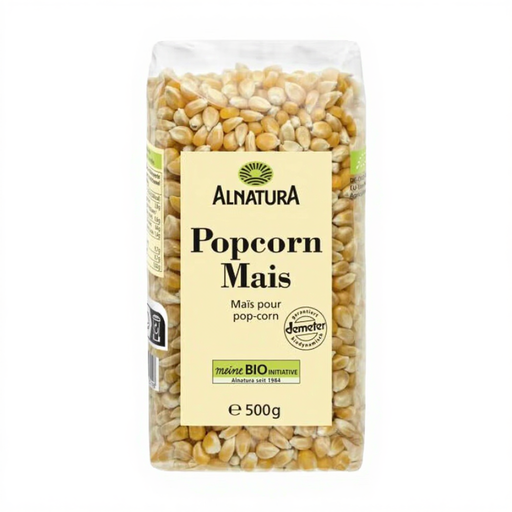 Image unavailable
Alnatura Organic Popping Corn Kernels, 500 g
For popcorn where you’d like to measure out the sugar and oil yourself. This 500 g pack of popcorn kernels lets you choose what to add and how much, helping determine what goes into your finished portion.
View on Joybuy
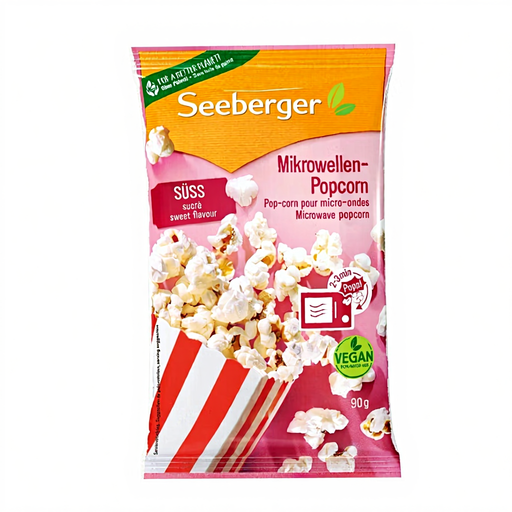 Image unavailable
Seeberger Sweet Microwave Popcorn, 90 g
For sweet popcorn you can make in the microwave before heading to the market. The pack contains 90 g; follow the pack instructions when preparing it and opening the pack.
View on Joybuy
Frequently asked questions
Is sweet popcorn at around 400 kcal per 100 g a lower-calorie choice?
You can only tell by comparing it with a specific alternative using the same amount as your basis. The sweet popcorn examples listed by REWE range from 394 to 450 kcal per 100 g; the size of your portion also matters when working out the calories in what you eat.
Which details should I compare on a pack of popcorn?
Compare energy, sugar and fat per 100 g, then consider how much you plan to eat. Lebensmittelklarheit explains why per-100-g figures provide a common basis for comparison; the serving size is useful extra information.
What should I ask about popcorn from a Christmas market stall?
Ask about the portion size, ingredients and toppings before you decide. If allergens matter to you, ask for clear information about them too, and if necessary, whether the popcorn is prepared alongside other products.
Does homemade popcorn automatically contain fewer calories?
No. The calories in your finished portion depend on how many popcorn kernels you use and what you add. When making it yourself, you can control the amount of oil, sugar and seasoning; remember to include these extras when comparing it with other products.


