
Lieferung heute & morgen

Qualitätsgarantie

Willkommens-Angebote freischalten: KOSTENLOSE Lieferung | Bis zu 80 % RABATT | Kostenlose 30-Tage-JoyPlus-Testphase
App herunterladen
A citrus juicer can quickly turn oranges, lemons, limes and grapefruits into juice. However, not every model is right for every household. Small containers, difficult-to-clean components or impractical reamers often mean that a citrus juicer is barely used after a short time.
Before buying, you should therefore consider more than just the design and motor power. Ease of use, capacity, cleaning and safe handling are also crucial.
A high power rating does not automatically mean that an electric citrus juicer is better suited to everyday use. With citrus fruits, the pressing mechanism, the shape of the reamer and the way the juice is directed also play a role. A 30 W model may be sufficient for occasional servings, while families making several glasses one after another should pay closer attention to the container size and ease of use.
A 500 ml citrus juicer may seem spacious at first glance. What matters, however, is whether the juice flows directly into the container, whether it has a drip-stop function and how easy the container is to remove. For a single glass, a smaller capacity may be more practical. If you regularly prepare fresh orange juice for several people, you should compare container sizes more carefully.
Pulp, seeds and sticky juice residue collect especially around the reamer, strainer and spout. If these parts cannot be removed or are difficult to reach, cleaning becomes more time-consuming. A manual citrus juicer can often be cleaned quickly under running water. With an electric citrus juicer, however, the housing should never be immersed in water.
A manual citrus juicer does not require electricity and is suitable for smaller quantities and occasional use. It is usually compact and can be used independently of a power socket. Lever models reduce the effort required when pressing larger quantities.
A lever citrus juicer or one with an electric pressing mechanism is worth considering if you regularly process oranges or grapefruits. Check whether the lever is guided securely and whether the appliance remains stable on the worktop during pressing.
Check:
A container holding 400 to 600 ml is suitable for several small servings. For larger quantities, placing a glass directly underneath may be more practical. Product information should clearly distinguish between the container size and the actual amount of juice it can hold.
Removable reamers and strainers make cleaning easier. With electric appliances, you should also check the information about mains voltage. Models with 220–240 V and suitable earthing are intended for German households, provided this is stated in the product details.
Other practical points include:
In households with children, it is also important that children do not operate the appliance unsupervised. An appliance without blades is not automatically risk-free: electrical components, rotating reamers and the mains connection still require proper use.
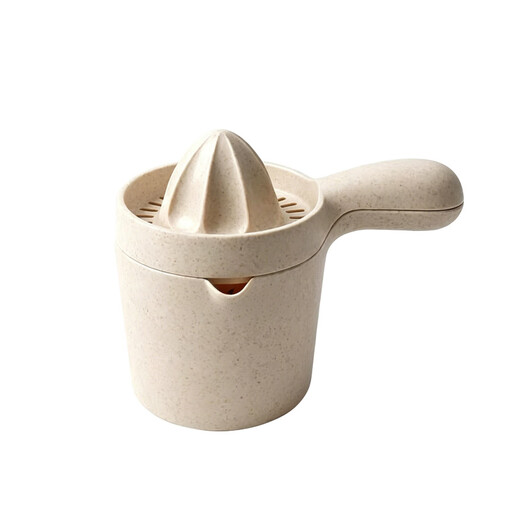
Why this product suits this profile: The manual design is suitable for users who want to press small to medium quantities of juice from oranges, lemons and other fruits without using electricity.
No motor means no electricity consumption and fewer technical components to consider when cleaning.
Manual operation and a stated capacity of 500 ml.
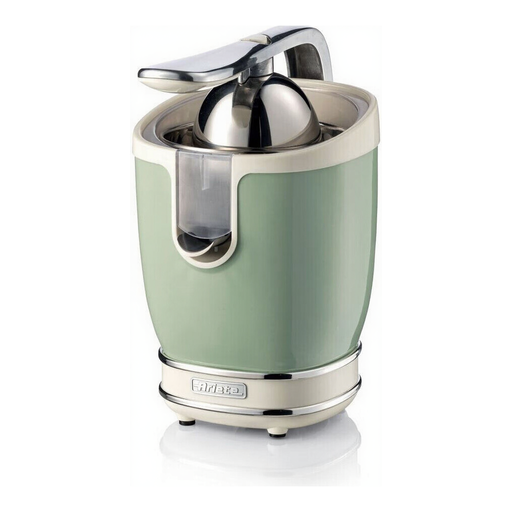
Why this product suits this profile: This electric orange juicer combines a pressing lever with a 0.6-litre container, making it suitable for regular servings.
According to the product description, the drip-stop spout is designed to provide cleaner pouring; however, the cleaning instructions and design should still be checked before purchase.
85 W motor, electric lever and two reamers for different citrus fruits.
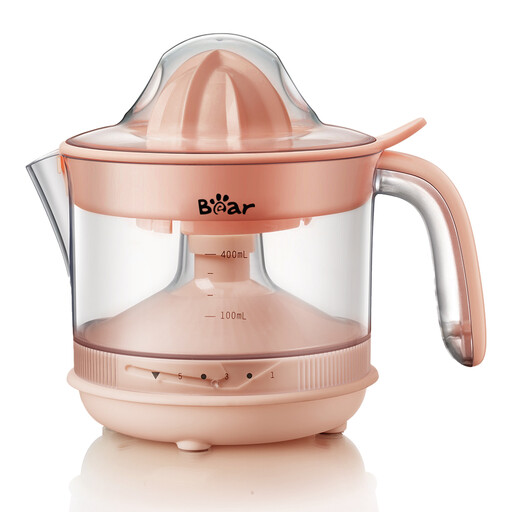
Why this product suits this profile: This compact electric appliance is aimed at households that need variable settings and a removable design for repeated juicing.
The removable design makes it easier to access the parts that come into contact with juice. The housing must be cleaned with a dry method in accordance with the safety instructions.
30 W, 400 ml capacity, five adjustable settings, 110 mm filling opening and non-slip base.
We have put together a complete, regularly updated list of products that fully meet these strict selection criteria and the safety regulations applicable in the EU.
The decision mainly depends on quantity and frequency of use:
For everyday use, you should also consider the noise level, stability and cleaning after each use. The electricity consumption of a 30 W or 85 W appliance depends on the actual running time; with short pressing cycles, the absolute consumption generally remains manageable.
For the occasional glass, a manual citrus juicer is often sufficient. If you need to serve several people, an electric citrus juicer or a lever model with a container holding around 500 ml or more may be a good choice.
First, unplug the appliance. Removable reamers, strainers and containers can be cleaned in accordance with the manufacturer’s instructions. The motor housing must not be immersed in water and should be wiped with a damp cloth.
Its lifespan depends on the quality of the materials, frequency of use, cleaning and proper operation. Overloading, dried-on juice residue, unsuitable fruit or moisture entering the motor housing can affect its performance. Choose a model whose capacity and design suit your everyday requirements.