
Lieferung heute & morgen

Qualitätsgarantie

Willkommens-Angebote freischalten: KOSTENLOSE Lieferung | Bis zu 80 % RABATT | Kostenlose 30-Tage-JoyPlus-Testphase
App herunterladen
Dense city traffic, unreliable public transport schedules, and the desire for more flexible, eco-friendly mobility are leading more and more people to seek alternatives to the car. A city e-bike offers a practical solution for making the daily commute or city errands efficient and stress-free.
This article serves as a guide. It highlights the key features of various urban electric mobility solutions and presents a selection of models tailored to different needs. The goal is to provide you with a factual basis for your purchasing decision.
Selecting the right model depends heavily on your individual requirements. The following points will help you evaluate the crucial criteria.
For city riding with frequent stops at traffic lights or intersections, comfort when mounting and dismounting is a key factor. The step-through e-bike has proven to be particularly practical here. The low-step frame makes daily handling significantly easier, which is especially appreciated by riders who value straightforward use. In contrast, models with diamond frames offer greater frame rigidity, which can be advantageous for a sportier riding style or when carrying heavier loads. A classic women's city e-bike is often designed as a step-through model today and is used by all genders due to its comfort.
An e-bike's drivetrain consists of the motor and the battery. Most models sold in Germany are classified as 25 km/h pedelecs, meaning the motor assists your pedalling up to a speed of 25 km/h. For a commuter e-bike, the battery capacity, measured in watt-hours (Wh), is crucial. A higher capacity allows for a long e-bike range, so you'll need to recharge less often and can tackle longer tours without range anxiety. Pay attention to the stated maximum range and remember that it is influenced by factors such as rider weight, terrain, and the selected assistance level.
Besides the classic city e-bike, there are specialised models. A fat tyre e-bike, with its extra-wide tyres, offers excellent cushioning and grip, not just on asphalt but also on cobblestones or unpaved park paths. For commuters who cover part of their journey by bus or train, a road-legal e-scooter can be a sensible addition. These compact and often foldable electric scooters are ideal for the so-called "last mile" from the station to the office.
Based on the criteria mentioned, we have compiled a selection of different electric mobility solutions for the urban environment.
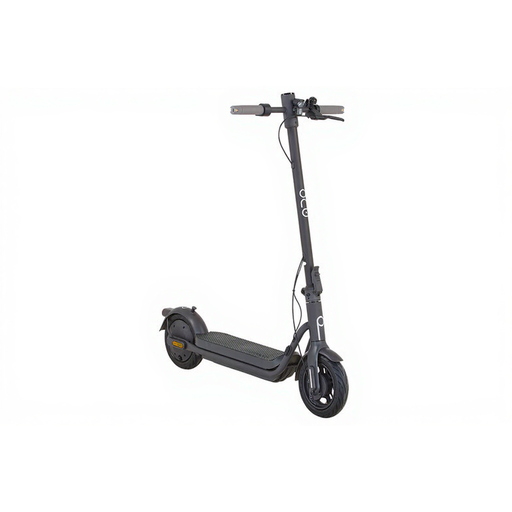
Why it stands out: The Prophete E-Scooter ONE is designed for maximum portability and practicality for urban commuting. Its folding mechanism and Bluetooth connectivity make it a modern companion for the last mile.
Advantages:
Who is it for? Ideal for commuters who combine their route with public transport, as well as for users looking for an agile and quickly storable solution for short distances in the city.
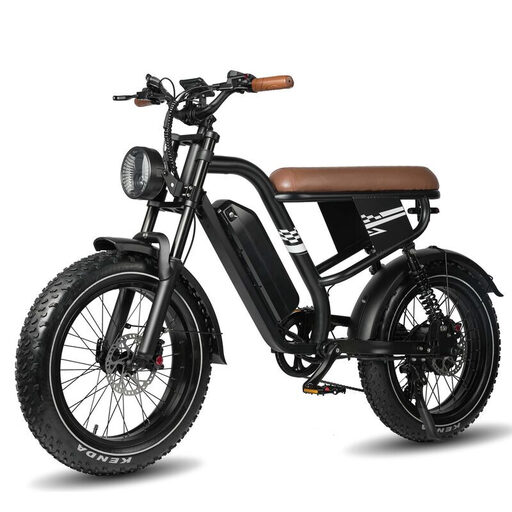
Why it stands out: The MX10 combines a retro design with the robustness of a fat bike. Its high load capacity and wide tyres make it a versatile vehicle that is just as at home on asphalt as it is on gravel paths.
Advantages:
Who is it for? A great choice for riders looking for an extremely stable and durable e-bike. It is suitable for commuters who travel on various surfaces, as well as for heavier individuals who need a reliable bike with a long range.
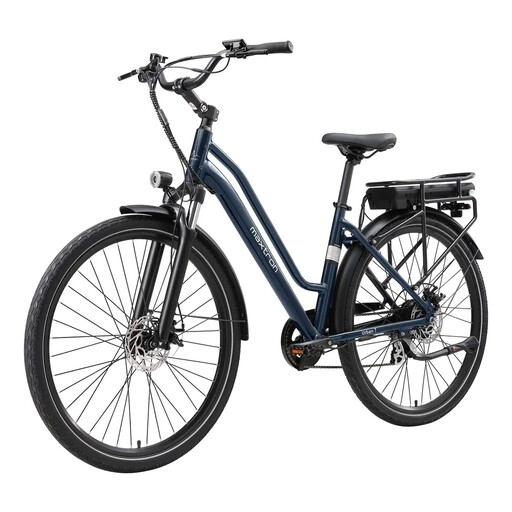
Why it stands out: This model is consistently designed for comfort and everyday usability. The ultra-lightweight aluminium step-through frame makes mounting and dismounting particularly easy.
Advantages:
Who is it for? Perfect for daily commuters, for shopping, and for recreational cyclists who place the highest value on comfort, an upright posture, and straightforward handling.
The models presented cover many, but not all, use cases. If you are looking for other electric mobility solutions or specific accessories, you can find a wider selection of products related to electromobility in our Electrical Equipment category.
Although the term "e-bike" is used colloquially for all bicycles with an electric motor, most models sold are legally pedelecs (Pedal Electric Cycles). A 25 km/h pedelec only assists the rider while they are pedalling and cuts off the assistance at 25 km/h. It is legally equivalent to a bicycle. E-bikes in the stricter sense can also be ridden by pressing a button without pedalling and often require insurance and a driving licence.
The battery capacity, specified in watt-hours (Wh), is one of the most important indicators of range. For a commuter e-bike that is used daily, a higher capacity means more flexibility and less frequent charging. A long e-bike range of 80 km or more is particularly advantageous if there is no daily charging option or if longer tours are planned.
Yes, a road-legal e-scooter must comply with the requirements of the German Small Electric Vehicle Ordinance (eKFV). This includes a design-based maximum speed of 20 km/h, two independent brakes, a lighting system, and a valid insurance sticker attached to the vehicle. Only then can the e-scooter be legally ridden on public roads and cycle paths.