
Lieferung heute & morgen

Qualitätsgarantie

Willkommens-Angebote freischalten: KOSTENLOSE Lieferung | Bis zu 80 % RABATT | Kostenlose 30-Tage-JoyPlus-Testphase
App herunterladen
Deciding to buy a city e-bike is a step towards greater flexibility and independence in the urban environment. However, with the vast array of models, technical specifications, and designs, making the right choice can be complex. This article serves as an objective guide to help you identify the features that are most relevant to your individual needs. We will introduce various concepts, from long-range models to specialised frame types, so you can make an informed decision about your new electric bike for the city.
Before making a selection, it's wise to understand the fundamental technical parameters that determine an e-bike's performance and daily usability.
Range is a critical factor, especially for commuters or those planning longer tours. Battery capacity, measured in watt-hours (Wh), is the most important indicator for this. A battery with a higher Wh rating generally offers the potential for a greater distance. A long-range e-bike typically features a battery of 500 Wh or more. Note that the actual range is influenced by factors such as rider weight, the selected assistance level, terrain, and outside temperature.
The frame design and tyre type directly impact riding comfort and potential uses.
In Germany, most models sold as urban e-bikes are so-called Pedelecs (Pedal Electric Cycles). These assist the rider with a maximum nominal continuous power of 250 watts only when the pedals are being turned. The assistance cuts out at a speed of 25 km/h. Legally, these pedelecs are treated like bicycles, which means there is no mandatory insurance, license, or helmet requirement (although a helmet is always recommended).
Here is a selection of models that cover different requirements for a modern city e-bike.
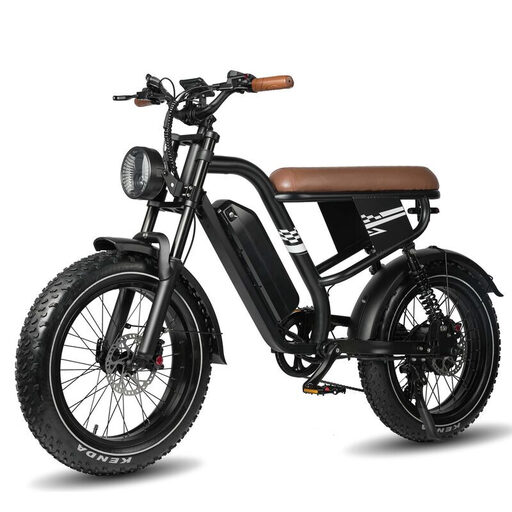
Why it stands out: The MX10 combines a striking retro look with the functionality of a fat tyre bike. Its robust construction and high payload capacity make it a versatile companion for the city and light terrain.
Advantages:
Who is it for? This model is a great choice for riders looking for a stable and comfortable e-bike that is also suitable for heavier body weights or for transporting luggage. Its eye-catching style and all-terrain capabilities appeal to users who ride in the city as well as on unpaved paths.
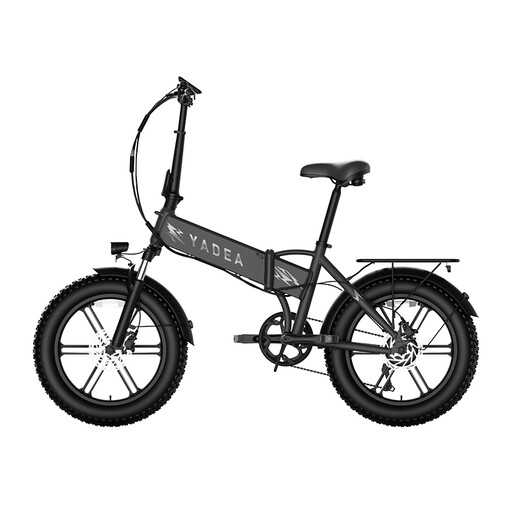
Why it stands out: The Yadea Rover combines two sought-after features: it is a folding e-bike and a fat tyre bike in one. This combination offers maximum portability without sacrificing the comfort and stability of wide tyres.
Advantages:
Who is it for? The Yadea Rover is ideal for the commuter e-bike user who relies on a combination of performance and portability. It is suitable for users with limited storage space at home or in the office, as well as for anyone who wants to take their bike on holiday in a car or camper van.
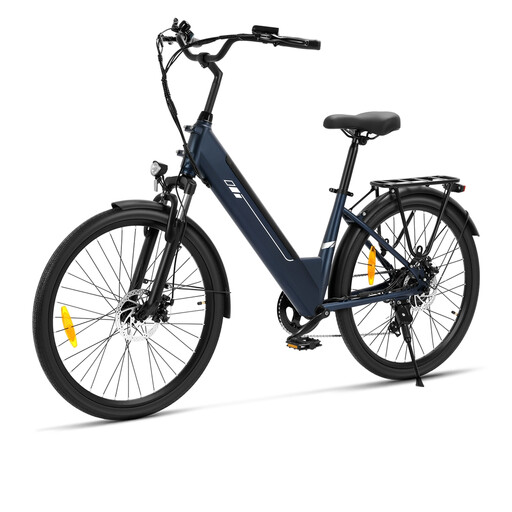
Why it stands out: As a classic step-through e-bike, the Touroll Roamer 2 ST focuses on maximum comfort and ease of use in daily life. The low-step frame makes mounting and dismounting effortless.
Advantages:
Who is it for? This model is aimed at users who value comfort and an upright riding position. It is an excellent choice for seniors, people with physical limitations, or for daily use in the city where frequent stopping and dismounting is required, such as for shopping.
If you are considering a particularly space-saving option or one tailored to specific commuting routes, a used folding electric bike could be an interesting alternative. Discover a selection of models in our corresponding category.
In common parlance, both terms are often used interchangeably. Technically and legally, however, there is a distinction. A 25 km/h pedelec provides assistance up to a speed of 25 km/h and is legally considered a bicycle. E-bikes in the stricter sense can also be ridden without pedalling via a throttle or provide assistance up to 45 km/h (S-Pedelecs). The latter are classified as mopeds and require insurance, a license plate, and a driver's license. The models presented here are pedelecs.
Torque, measured in Newton-metres (Nm), describes the force with which the motor drives the crank. Higher torque (e.g., 45 Nm or more) is advantageous for starting on hills and accelerating in stop-and-go traffic. For a commuter e-bike in a hilly city, higher torque is therefore a relevant factor for riding comfort.
Yes, absolutely. While the wide tyres were originally designed for soft surfaces, they offer a significant comfort advantage in the city. They effectively smooth out bumps like cobblestones, potholes, and tram tracks. Although the rolling resistance on smooth asphalt is slightly higher than with narrow tyres, the electric motor typically compensates for this effortlessly.