
Lieferung heute & morgen

Qualitätsgarantie

Willkommens-Angebote freischalten: KOSTENLOSE Lieferung | Bis zu 80 % RABATT | Kostenlose 30-Tage-JoyPlus-Testphase
App herunterladen
A set of clamp pliers and screw clamps can replace several individual tools when you’re gluing, assembling, holding workpieces in place or carrying out repairs. However, clamps and clamp pliers vary considerably in clamping width, clamping force, operation and material. If you focus only on a high kilogram rating or the number of pieces in a set, you could end up with tools that aren’t right for the job.
A high clamping force is useful for sturdy wooden joints and metalwork. On delicate surfaces, though, it can leave pressure marks. The force also needs to suit the size and strength of the workpiece. For model-making and light DIY tasks, a small one-handed clamp with a lower clamping force may be more suitable than a large screw clamp.
The clamping width is the maximum distance the jaws can open. The throat depth tells you how far the clamp can reach over the workpiece. So a clamp with a 150 mm clamping width and an 80 mm throat depth isn’t automatically suitable for every 150 mm workpiece. Check both measurements when working with wide panels, frames or cabinets.
When working with flexible fuel, coolant or brake hoses, ordinary water-pump pliers can crush or damage the material. Hose clamp pliers, on the other hand, have suitable clamping surfaces or a cable mechanism for reaching awkward places. Bear in mind that tools designed for flexible hoses aren’t necessarily suitable for hard, reinforced or high-pressure lines.
For woodworking clamps, these measurements are particularly important:
A screw clamp set with a range of sizes will usually cover more jobs than four identical clamps. The WORKPRO set of four screw clamps includes two models with a 150 mm clamping width and two with a 300 mm clamping width. The stated clamping force is 272 kg, with an 80 mm throat depth.
For frequent repositioning, one-handed clamps with a quick-release button are handy. You can position them with one hand while holding the workpiece with the other. A screw mechanism usually gives you finer control over the pressure, but takes longer to adjust.
With a reversible ratcheting clamp or an F-clamp, check that the fixed jaw can actually be repositioned to turn it into a spreader clamp. This is particularly useful when you need to hold components apart rather than press them together.
Steel bars provide a stable base for clamps with a greater clamping width. Reinforced nylon bodies, by contrast, are lighter and suitable for less demanding tasks. Plastic or TPU protective pads can help prevent scratches on delicate wooden surfaces, but they don’t remove the need to check the pressure being applied.
After use, clean clamps to remove glue, dust and moisture, then store them somewhere dry. Check screw clamp spindles from time to time to make sure they move smoothly. Avoid exposing plastic clamp pliers to unsuitable solvents or excessive heat.
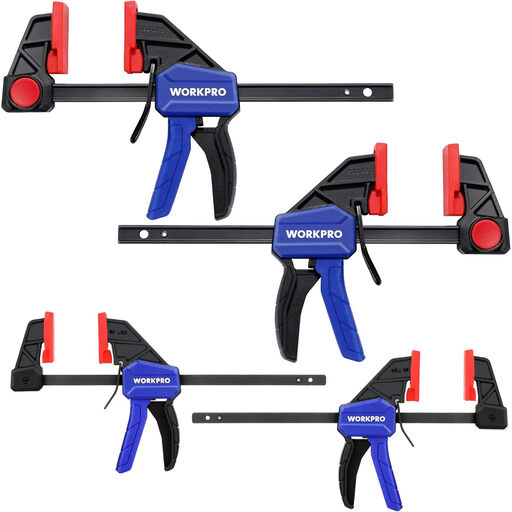
Why this product suits this profile: The two sizes make this set suitable for smaller woodworking jobs, craft projects and occasional repairs. One-handed operation makes it easier to position the clamps when space is limited.
The stated clamping forces of 23 kg and 68 kg give you a clearer idea of what these clamps are designed for than a vague ‘heavy-duty’ description.
120 mm and 150 mm models, quick-release buttons, reversible jaws and soft TPU pads.
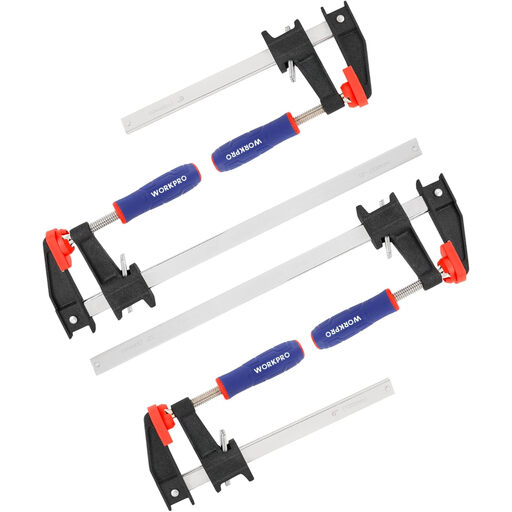
Why this product suits this profile: The two clamping widths cover both smaller and larger woodworking joints. The screw mechanism lets you adjust the pressure in a controlled way when gluing or assembling.
The clamping width, throat depth and stated clamping force are all clearly specified. Protective caps help prevent the metal jaws from coming into direct contact with the surface.
Two 150 mm clamps and two 300 mm clamps, 80 mm throat depth, steel construction and a stated clamping force of 272 kg.
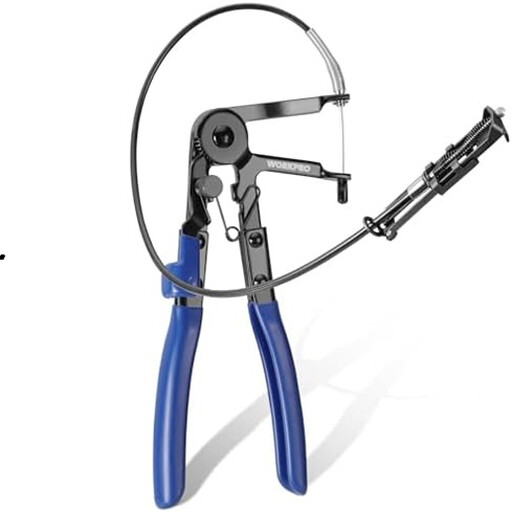
Why this product suits this profile: These flexible hose clamp pliers are designed for vehicle and machinery maintenance, where ordinary pliers may struggle to reach the clamp.
The tool is intended for hose clamps and openings measuring 10 to 50 mm. Don’t assume it’s suitable for hard or reinforced lines.
67 cm flexible cable, ratchet lock, carbon steel and an adjustable clamping range of 10 to 50 mm.
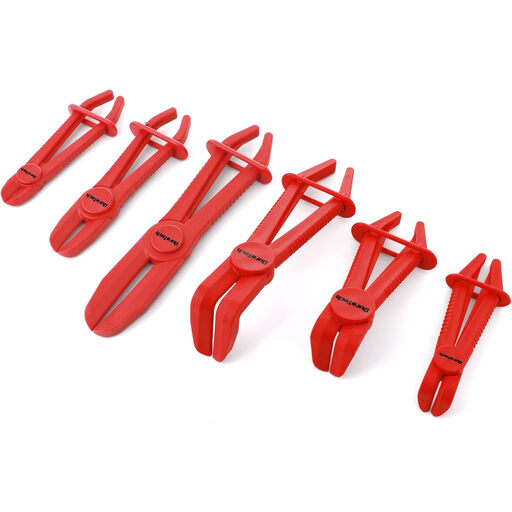
Why this product suits this profile: The straight and 90-degree angled pliers suit different installation set-ups for flexible lines. This set is designed for maintenance work involving a range of hose diameters.
Six sizes and two styles of pliers make it easier to choose the right tool for the hose. The manufacturer specifically states that they’re only suitable for flexible lines.
Clamping range of 0 to 64 mm, reinforced PA6 nylon, non-slip handles and retaining clips.
We’ve put together a complete, regularly updated list of products that meet these strict selection criteria and the safety regulations in force across the EU.
Before use, make sure the clamping surfaces are clean and free from shavings, glue residue and oil. Position the clamp as close to a right angle to the workpiece surface as possible. Applying too much pressure can warp wood, damage plastic or put strain on the mechanism.
There are additional safety considerations when using car repair tools and hose clamp pliers:
For woodworking, clamping width, throat depth and protective pads are key. An F-clamp set with quick-release buttons is handy for quick assembly jobs. For stronger, controlled pressure when gluing, a screw clamp set with a steel bar and spindle may be a better choice.
A one-handed clamp is usually positioned and tightened using a handle or trigger. A ratcheting clamp uses a step-by-step mechanism to build up pressure in stages. Some models can be converted into spreader clamps. The precise operation and maximum pressure depend on the model.
Their lifespan depends on the materials, how heavily they’re used, how they’re stored and how well they’re maintained. Regularly exceeding the stated clamping force, exposure to moisture and glue residue can all affect performance. Storing them in a dry place, cleaning them after use and checking the spindle, guide bar and quick release will help keep them in working order for longer.