
Lieferung heute & morgen

Qualitätsgarantie

Willkommens-Angebote freischalten: KOSTENLOSE Lieferung | Bis zu 80 % RABATT | Kostenlose 30-Tage-JoyPlus-Testphase
App herunterladen
A sturdy clamp set is the foundation of many successful DIY projects. Whether you're gluing wood, assembling furniture, or performing precision holding tasks, the right clamping tool often determines success or failure. But the market can be confusing, and not every set that looks robust lives up to its promise. As your Joybuy Product Recommendation Officer, I'm here to help you navigate the common pitfalls and make an informed decision.
Many users invest in a set only to find that the clamps can't withstand the pressure after a short time. The most common problems include:
To avoid a bad purchase, you should check three core technical parameters before making a decision. These determine the performance and durability of your future clamp set.
Clamping force, often specified in kilograms (kg) or Newtons (N), is the most important performance metric. It describes the maximum pressure a clamp can exert on the workpiece.
The bar is the backbone of any clamp. It must withstand the bending moment created during tightening. Look for heat-treated or tempered steel. Such bars are significantly more resistant to bending than simple steel or iron profiles and prevent the clamp from giving way under load. An F-clamp set with a solid I-beam bar generally offers greater stability and force transmission than models with a flat bar.
The choice of mechanism depends on your primary use case.
Based on the criteria mentioned, we have identified some products suitable for specific user profiles.
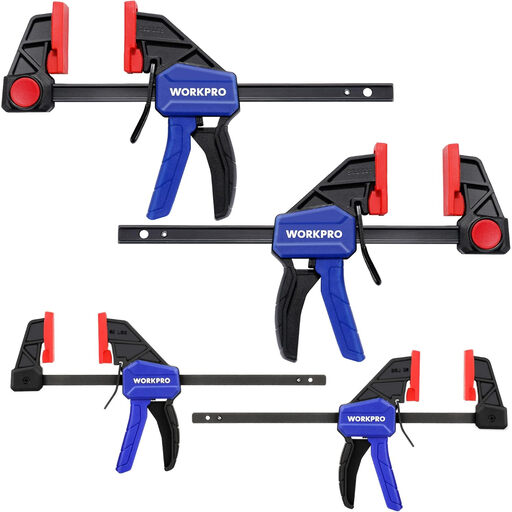
Why This Fits Their Persona: With two different sizes, this set provides a good starter kit for various DIY projects without breaking the bank. It's ideal for hobbyists looking for a versatile solution for repairs, crafts, and smaller woodworking projects.
The soft TPU jaw pads prevent pressure marks on delicate surfaces. The quick-release mechanism is designed for easy one-handed operation, avoiding the typical jamming found in cheaper models.
The set includes two sizes (120 mm and 150 mm) for greater flexibility. The black oxide coated steel bar offers good corrosion resistance.
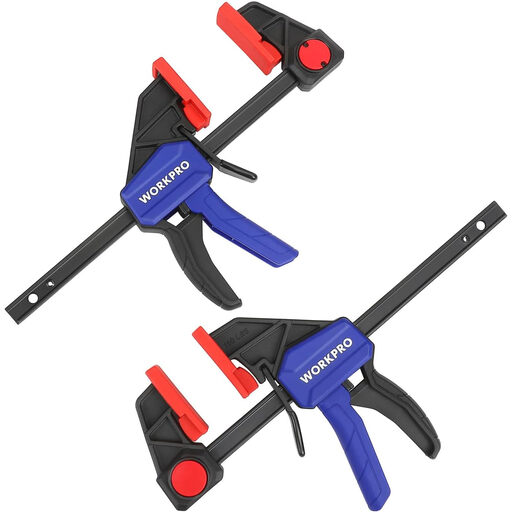
Why This Fits Their Persona: For users who prioritize speed and ease of use. Ideal for rapid assembly work where workpieces need to be repeatedly positioned and secured without putting the tool down.
The dedicated quick-release button enables true one-handed operation, which is often clumsy on many competing products. The 68 kg clamping force is clearly defined and sufficient for quick securing tasks.
The clamp converts to a spreader function without tools. The nylon protective caps prevent damage to the workpiece.
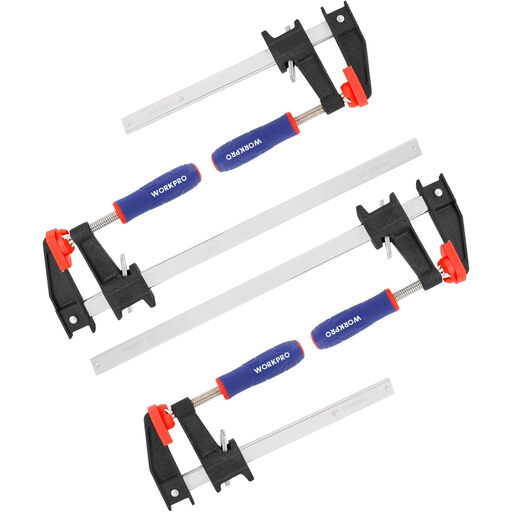
Why This Fits Their Persona: This set is aimed at users who create precise and strong joints, such as in furniture making. The high clamping force and robust construction are designed for gluing solid wood or panel materials.
With a real-world clamping force of 272 kg, this set delivers the necessary pressure that many lighter models only promise. The thickened alloy steel bar resists bending even under maximum load.
The quick-adjust button mechanism speeds up coarse adjustments. The non-slip grooves on the bar prevent the movable arm from slipping.
We have compiled a complete, up-to-date list of products that fully meet these strict selection criteria and applicable safety regulations.
How much clamping force do I really need for my woodworking projects? For simply holding workpieces during processing, clamps with up to 70 kg of force are often sufficient. However, as soon as you start permanently gluing wood parts, especially for larger surfaces or hardwoods, you should opt for models with at least 150 kg, or even better, over 250 kg. This is the only way to ensure the glue is pressed evenly into the wood pores, creating a stable bond.
Can one-handed clamps replace traditional screw clamps? Not completely. One-handed clamps are unbeatable for speed and convenience, making them ideal for assembly work. However, they rarely achieve the high and precisely controlled pressures of classic screw clamps. For demanding glue-ups that require maximum pressure, screw clamps remain the tool of choice. A well-equipped workshop should ideally have both types of clamps.
How do I maintain my clamp set to extend its lifespan? Maintenance is straightforward but important. Keep the guide bars clean and free of glue residue and sawdust, as these can jam the mechanism. A drop of oil on the threaded spindle of screw clamps ensures long-lasting smooth operation. Store the clamps in a dry place to prevent corrosion.