
Lieferung heute & morgen

Qualitätsgarantie

Willkommens-Angebote freischalten: KOSTENLOSE Lieferung | Bis zu 80 % RABATT | Kostenlose 30-Tage-JoyPlus-Testphase
App herunterladen
A clamp set is an essential part of many workshops. Whether you’re gluing wood, securing metal parts, building models or carrying out repairs, the right clamp holds your workpiece in place and makes precision work easier. However, sets can vary considerably in clamping capacity, force, ease of use and material.
If you focus only on a high figure in kilograms or a large number of clamps, you may end up buying a set that doesn’t suit your needs. Some clamps are designed for light craft projects, while others are built for larger workpieces and sustained pressure.
A high clamping force may sound impressive at first. However, too much pressure can leave marks on delicate wood surfaces or shift the workpiece. It’s therefore important to check whether the set has protective pads, a controlled screw mechanism or a ratchet function that’s easy to adjust.
For small projects, one-handed clamps with moderate force are often enough. For glued panels, frames or metalwork, screw clamps with a higher load capacity may be more suitable.
Clamping capacity describes how far the jaws can open. Throat depth indicates how far the clamping jaw reaches into the workpiece. So a clamp set with a 150 mm capacity may be suitable for narrow strips, but may not reach far enough for wide panels.
Before you buy, check:
With quick-release clamps, you can usually position the jaw rapidly. But for genuinely one-handed use, the trigger, handle and clamping mechanism all need to be easy to reach. A simple quick release isn’t a substitute for a secure hold.
Also look for non-slip pads, a comfortable grip and a release mechanism that won’t be triggered accidentally while clamping.
Even distribution of force is important when clamping wood. Use protective pads on softwood or veneered surfaces. For metal parts, a sturdy steel bar and a robust threaded spindle are also important.
The stated values are provided by the manufacturer and shouldn’t be exceeded. A clamp set with a clamping force of 23 kg isn’t comparable to one rated at 272 kg, but each may be suitable for different applications.
Reinforced nylon can reduce weight and is practical for light to medium-duty work. Hardened or heat-treated steel offers greater resistance to bending at wider openings. Nickel plating can improve corrosion resistance, but it’s no substitute for storing clamps in a dry place.
For delicate surfaces, soft TPU or plastic pads are important. Check that they’re secure and that replacements are available.
A set of several small clamps may be more practical for model-making or frame work than one large clamp. For a range of projects, sets combining 150 mm and 300 mm clamps are worth considering. If you often need to push parts apart, look for a spreader function.
The terms F-clamp set, ratchet clamps, screw clamp set and quick-release clamps describe different designs. The name matters less than the combination of opening width, force, pads and ease of use.
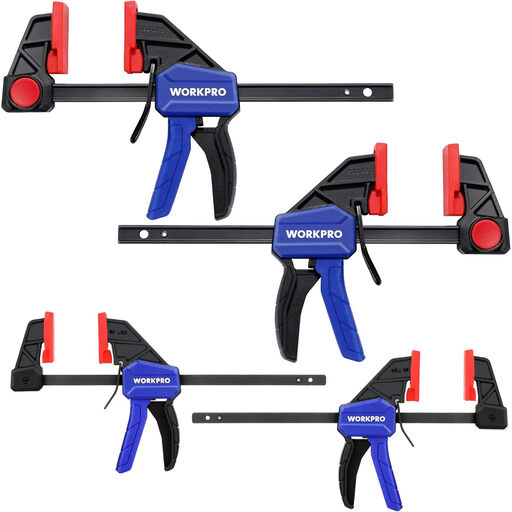
Why this product suits this user: Two sizes in one set cover smaller DIY jobs, model-making and simple woodworking projects. One-handed operation makes positioning easier.
The set clearly specifies its sizes, with two mini clamps and two light-duty clamps. TPU pads reduce the risk of pressure marks; the stated forces of 23 and 68 kg must not be exceeded.
Reinforced nylon body, heat-treated steel bar, quick release and reversible jaw.
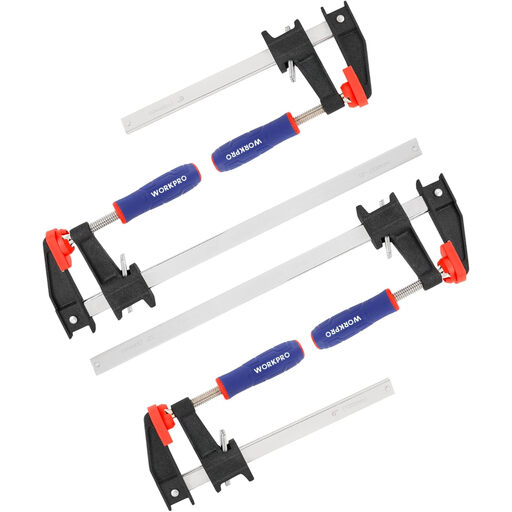
Why this product suits this user: The set includes two clamps with a 150 mm capacity and two with a 300 mm capacity. It’s designed for users who work with different-sized pieces and want a reliable screw mechanism.
The 80 mm throat depth and stated clamping force of 272 kg are clearly specified. Protective caps and double-sided grooves help provide a controlled hold.
Nickel-plated alloy steel, push-button quick adjustment and two usable clamping capacities.
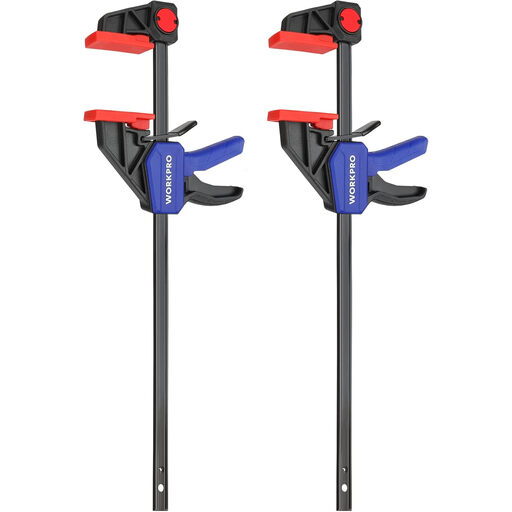
Why this product suits this user: For joiners, frequent users and larger DIY projects, this clamp offers a 305 mm capacity and a stated spreading width of 440 mm.
The conversion from clamp to spreader is explained. Soft pads help protect surfaces, while the stated force of 68 kg is the relevant load limit.
Hardened steel bar, 60 mm throat depth, quick-release button and one-handed operation.
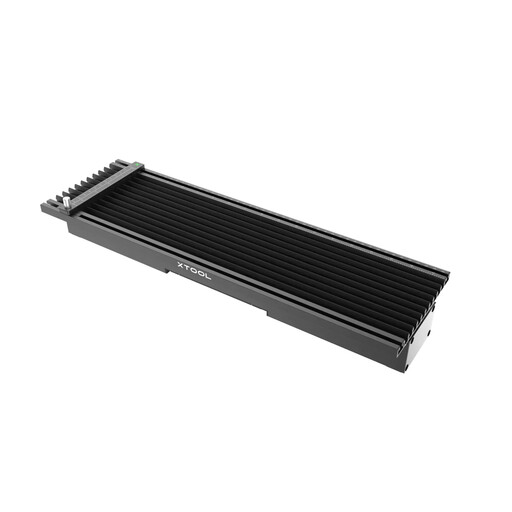
Why this product suits this user: For users of the xTool F2 laser engraver, this accessory expands the working area to 115 × 400 mm and uses five clamps to position materials.
Check compatibility with the xTool F2 system before buying. The working area and number of clamps included are clearly specified.
Expands the working area to 115 × 400 mm, includes five clamps and is designed for longer engraving and cutting jobs.
Position the clamp as square as possible to the edge of the workpiece. For delicate materials, place protective pads between the jaw and the surface. Tighten a screw clamp only enough to hold the workpiece securely. Excessive tightening can warp wood or put strain on the mechanism.
After use, remove dust, glue residue and moisture from your clamps. Store steel parts in a dry place, and maintain moving threads in accordance with the manufacturer’s instructions. For laser engraving accessories, dust extraction hoods for angle grinders and other specialist products, compatibility with the relevant equipment is also essential.
Clamps aren’t interchangeable with every type of holder. A bicycle phone holder or an electric scooter phone holder, for example, requires different dimensions and safety checks from a workshop clamp. A laser engraving extension or a cordless straightening iron also belongs to a different product category and should be chosen according to the relevant technical specifications.
We’ve put together a complete, regularly updated list of products that meet these strict selection criteria and fully comply with the safety regulations in force in the EU.
F-clamps, one-handed clamps and screw clamps are all suitable for woodworking. Check that the clamping capacity and throat depth are sufficient, and look for soft protective pads. For frames or smaller strips, several compact clamps are often more practical than one large model.
It depends on the workpiece and the task. A force of 23 kg may be enough for light craft projects. Higher values are useful for larger glue-ups or sturdy assembly work. However, don’t exceed the manufacturer’s stated limit, and make sure the force is distributed evenly.
Lifespan depends on how heavily the clamps are used, how they’re stored and how well they’re maintained. Keeping them dry, cleaning the threads and using them correctly helps reduce wear. Before using them again, check any clamps with damaged pads, bent bars or stiff mechanisms, and replace them if necessary.