
Lieferung heute & morgen

Qualitätsgarantie

Willkommens-Angebote freischalten: KOSTENLOSE Lieferung | Bis zu 80 % RABATT | Kostenlose 30-Tage-JoyPlus-Testphase
App herunterladen
Whether you’re working with wood, maintaining a vehicle or repairing pipework, your clamps and pliers need to be right for the job. The most common buying mistakes aren’t down to choosing the cheapest option, but to picking the wrong size, overlooking unclear load ratings or choosing a design that isn’t versatile enough for everyday use.
A high clamping force might sound impressive, but it can be too much for delicate wooden surfaces if there are no protective pads or the force can’t be adjusted precisely. With pliers, the maximum jaw opening isn’t the only thing that matters. Jaw shape, tooth pattern and handling all affect how securely a workpiece is held.
For a one-handed clamp, the stated length often refers to the maximum clamping capacity, not the tool’s overall length. Water pump pliers are usually specified by their maximum jaw opening, but how well they work also depends on the shape of the workpiece. Before buying, consider clamping capacity, throat depth and jaw opening separately.
A large set of screw clamps can be cost-effective if you need several sizes. For the occasional repair, a few one-handed clamps may be all you need. On the other hand, a single pipe wrench won’t necessarily cover every plumbing job. What matters is whether the set suits the tasks you actually do and can be stored neatly.
For woodworking clamps, the clamping capacity is the maximum distance the jaws can span. The throat depth describes how far the jaws reach into the workpiece. A clamp with a 305 mm clamping capacity and a 60 mm throat depth can secure wide components, but its reach into the workpiece remains limited.
Treat the stated clamping force as a technical upper limit. Do not exceed it. Soft TPU or plastic pads are useful for delicate materials, as they reduce direct contact between the metal and the surface. Even so, it’s a good idea to test on a spare piece before gluing or assembling.
Materials and finishes matter if you use your DIY tools regularly. Chrome vanadium steel is commonly used for water pump pliers and other mechanical pliers. Clamping tools, meanwhile, may feature hardened steel bars, alloy steel or reinforced nylon bodies.
A black or nickel-plated finish can help protect against corrosion, but it’s no substitute for storing tools in a dry place. Clean and dry tools after using them around moisture, coolant or dirt. Moving joints can be lightly oiled before longer periods in storage.
One-handed clamps, quick-release clamps and ratchet clamps mainly differ in how they operate. A quick-release button makes positioning easier, while separate triggers on some models give you more control over clamping and release. Reversible jaws can also provide a spreading function.
For hose clamp pliers, material compatibility is particularly important. Plastic pliers are suitable for flexible hoses, but not necessarily for rigid, reinforced or high-pressure hoses. With automotive tools, also check that they’re long enough to reach into the available space.
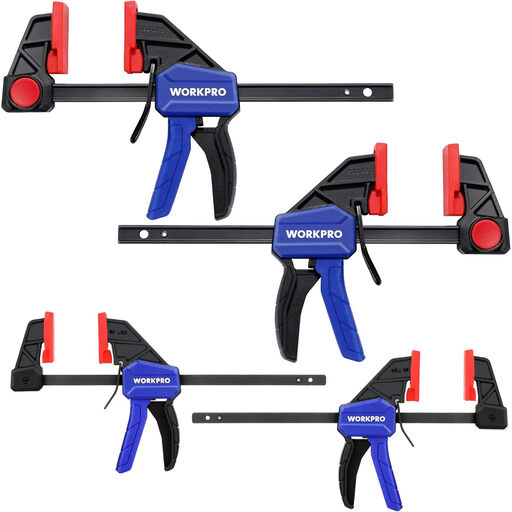
Why it suits this profile: The set includes two 120 mm and two 150 mm one-handed clamps, making it suitable for smaller woodworking and DIY jobs.
The two sizes make the clamping capacity easy to understand, while the soft TPU pads reduce direct contact with the workpiece surface.
One-handed operation, quick-release function and stated clamping forces of 23 kg and 68 kg.
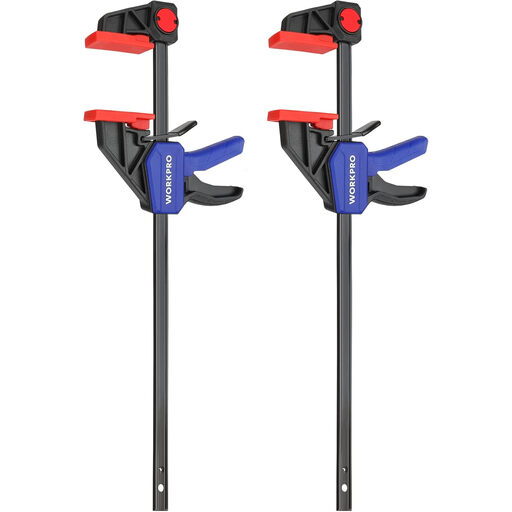
Why it suits this profile: These clamps are designed for larger wooden workpieces, assembly jobs and precise gluing.
Clamping and spreading capacities are listed separately: 305 mm for clamping and 440 mm for spreading.
Hardened steel bars, quick-release button, one-handed operation and a stated clamping force of 68 kg.
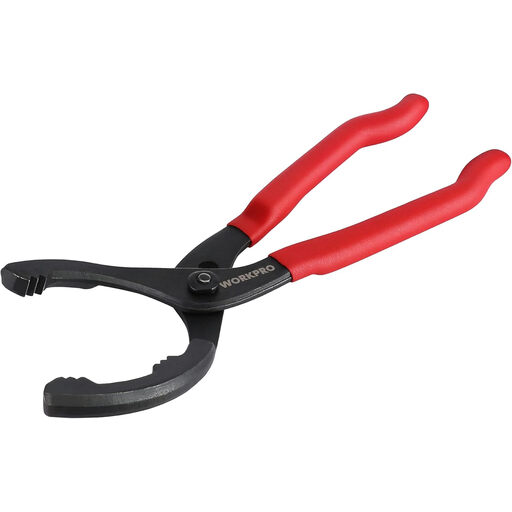
Why it suits this profile: For automotive mechanics and workshop owners, these adjustable oil filter pliers can be used on filters, pipes and certain fittings.
The opening adjusts to three positions between 60 and 102 mm, rather than being designed for just one filter size.
30.48 cm long, with serrated jaws and heat-treated carbon steel, according to the product specifications.
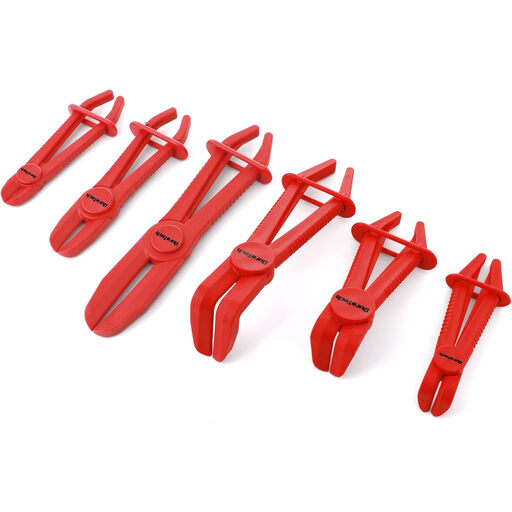
Why it suits this profile: This set is designed for work on flexible fuel, brake, coolant and heater hoses.
Six straight and angled sizes suit different flexible hose diameters; rigid or high-pressure hoses are specifically excluded.
Reinforced PA6 nylon, non-slip handles and a locking mechanism for hands-free use.
We’ve put together a complete, regularly updated list of products that meet these strict selection criteria and the safety regulations in force in the EU.
It isn’t possible to give a reliable one-size-fits-all estimate of tool lifespan. It depends on workload, storage, the materials the tool comes into contact with and how well it’s maintained. If you use tools regularly, it’s worth keeping them organised by task: clamping tools for woodworking and assembly, water pump pliers for fittings, and specialist pliers for automotive hoses or oil filters.
Water pump pliers or a pipe wrench are suitable for many pipe and fitting jobs. Choose the size to suit the diameter and shape of the workpiece. Serrated jaws can leave marks, so take appropriate precautions when working on visible surfaces.
One-handed clamps are handy for assembly, gluing and smaller clamping jobs. For heavier work, compare the clamping force, capacity and throat depth. Screw clamps or a combination of several clamps may be more suitable for larger workpieces.
Key things to consider are the adjustment range, jaw shape and available leverage. Don’t use oil filter pliers with excessive force on badly corroded components. Before you start, check the temperature of the engine and components, and follow the vehicle manufacturer’s instructions.