
Lieferung heute & morgen

Qualitätsgarantie

Willkommens-Angebote freischalten: KOSTENLOSE Lieferung | Bis zu 80 % RABATT | Kostenlose 30-Tage-JoyPlus-Testphase
App herunterladen
Whether you are drying laundry, sealing food bags or holding a workpiece in place while glue sets, clamps and clips perform a wide range of tasks around the home and in the workshop. This is also where a common buying mistake occurs: a product may look versatile in the photo, but its clamping width, material or handling may not suit the intended use.
This guide explains what households, families, DIYers, craft enthusiasts, tradespeople, installers and vehicle mechanics should look out for before buying.
A clothes peg does not need to hold a pipe connection, while hose clamp pliers are not designed for delicate fabrics. With technical clamps, the maximum opening width determines whether a workpiece, hose or fitting can be reached securely. If this information is missing, it is difficult to assess whether the product is suitable.
Wooden clips, plastic clips and metal clips each have different properties. Wood is suitable for laundry and photo clips, but can deteriorate visually and structurally when exposed to constant moisture. Plastic is lightweight and does not rust, but must be protected from extreme heat. For pliers, details such as chrome vanadium steel, heat treatment or carbon steel are more relevant than general claims about robustness.
A large set is not automatically the right choice. For a balcony, 24 clothes pegs may be enough; in a family household or for frequent washing, 50 wooden pegs may be more practical. With water pump pliers or a DIY plier set, however, the combination of several sizes is crucial. Different plier lengths cover different pipe diameters and working areas.
High clamping force is only useful if the workpiece can withstand the pressure. For woodworking, soft protective pads help reduce pressure marks and scratches. With a screw clamp, clamping capacity, throat depth and permitted clamping force should be suitable for one another.
With pliers, the teeth should provide a secure grip without unnecessarily damaging delicate surfaces. Simple plastic hose clamps are not automatically suitable for pressurised, hard or reinforced pipes. Manufacturer restrictions must be observed.
Longer handles can provide better force transfer when working on larger workpieces, but require more space. An 180 mm model is often suitable for smaller jobs, while 250 mm pliers can cover larger openings. With flexible hose clamp pliers, the length of the Bowden cable and the possible opening range are also important.
For household clips, compact dimensions, low weight and safe storage are more important than high clamping force.
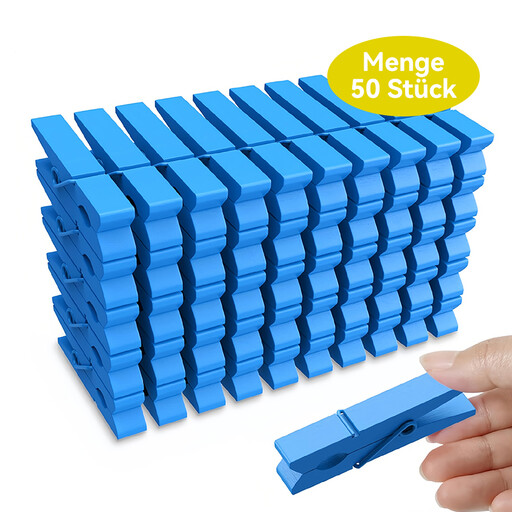
Why this product suits this profile: The 50-piece set made from natural wood with metal springs covers laundry care, crafting and photo decoration with one product.
The stated set contents make the number of pieces supplied clear. The wooden material prevents rust on the clip itself, although moisture should still be taken into account.
50 pieces, natural wood, metal springs and use as clothes pegs or photo clips.
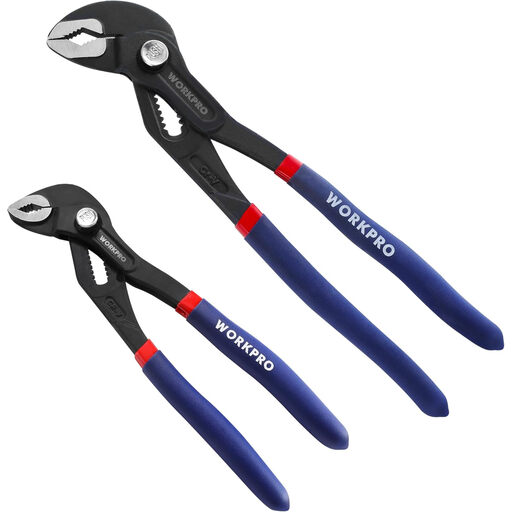
Why this product suits this profile: Two sizes, a push-button adjustment mechanism and serrated jaws are designed for repeated jobs involving different shapes.
The product details specify maximum openings of 33 mm and 43 mm. This makes it easier to compare the intended use with the workpiece before buying.
Chrome vanadium steel, two plier lengths and ergonomic resin handles with a non-slip surface.
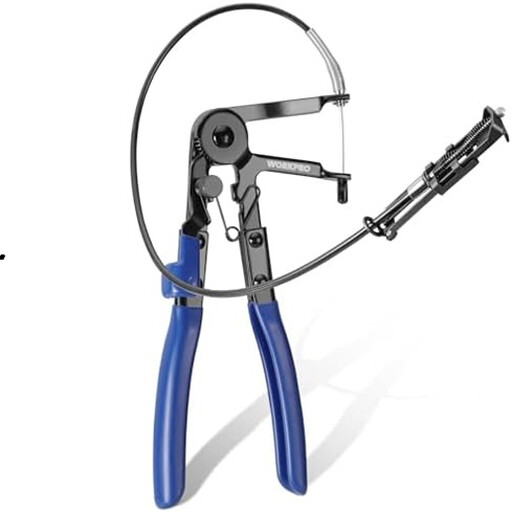
Why this product suits this profile: The flexible 67 cm design is aimed at vehicle mechanics and users who need to work on spring clamps in hard-to-reach places.
The stated working range of 10 to 50 mm clearly defines the intended use. These pliers should not be viewed as a universal tool for every type of pipe.
67 cm flexible shaft, locking function and carbon steel construction for working on spring-band clamps.
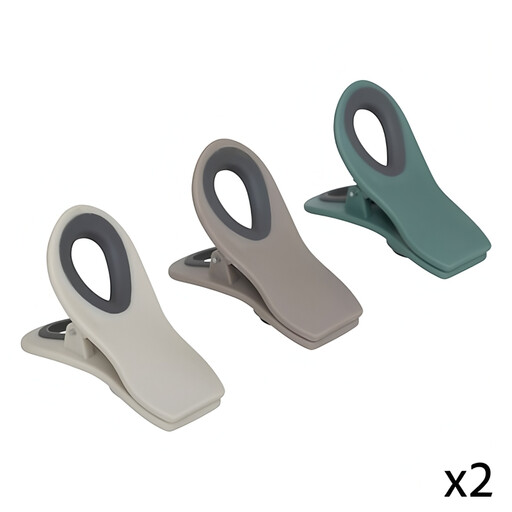
Why this product suits this profile: Six assorted-colour bag clips help organise opened packaging and small office items every day.
The product information explicitly states that use is restricted at extreme temperatures. This prevents the clips from being used in a freezer, oven or hot environment without checking first.
Set of six made from PP, magnetite and TPE/TPR, in three colours with compact dimensions.
We have put together a complete, regularly updated list of products that fully meet these strict selection criteria and the safety regulations applicable in the EU.
When using pliers and clamps in the workshop, bathroom or on vehicles, you should follow a few basic rules:
For everyday laundry, wooden or plastic clothes pegs are suitable. Wooden pegs are also often used as photo clips. Plastic pegs are lightweight and practical for travelling. In strong winds, you should consider the gripping surface, spring strength and the actual hold on the item of clothing.
Water pump pliers usually have adjustable, serrated jaws and can grip a variety of shapes. A traditional pipe wrench is designed more specifically for gripping pipes and often uses self-reinforcing teeth. Neither type of pliers should be used on delicate surfaces without suitable protection.
Service life depends on the material, load, cleaning and temperature. PP clips should not be used in environments excluded by the manufacturer. Replace a clip if it no longer closes securely, develops cracks or becomes permanently deformed. For direct contact with food, always follow the relevant product and care instructions.