
Lieferung heute & morgen

Qualitätsgarantie

Willkommens-Angebote freischalten: KOSTENLOSE Lieferung | Bis zu 80 % RABATT | Kostenlose 30-Tage-JoyPlus-Testphase
App herunterladen
A clamps and pliers set can cover a wide range of tasks: clamping hoses, holding workpieces in place while glue dries, gripping pipes or reaching components in vehicles. Choosing one may seem straightforward at first, but many disappointing purchases result from unsuitable clamping ranges, unclear material specifications or overly broad descriptions of intended use.
A wide opening does not automatically mean that a tool is suitable for every application. With water pump pliers or pipe wrenches, the opening must match the shape and surface of the workpiece. For clamps used in woodworking, throat depth, rail length and available clamping force are also important.
So look for specific details such as:
Terms such as “robust” or “industrial” are no substitute for clear material specifications. For frequently used pliers, relevant details may include chrome vanadium steel, heat treatment and corrosion protection. With F-clamp sets and one-handed clamps, the guide rail should be sufficiently rigid and resistant to deformation.
Plastic pliers can be useful for delicate or flexible lines. However, they are not automatically suitable for hard, reinforced or high-pressure lines. The manufacturer’s specific information about the intended application is crucial.
A one-handed clamp is easy to position and release. This is practical for assembly work, model-making or smaller woodworking projects. For large workpieces and lengthy gluing jobs, however, a screw clamp set with greater clamping force may be more suitable. Do not exceed the specified force, as this could damage the workpiece, thread or clamping mechanism.
Clamping force is often stated in kilograms. It describes the holding force intended by the manufacturer under specified conditions. For gluing work, even fixation is more important than achieving the highest possible number. Plastic or TPU protective caps can help protect delicate surfaces from pressure marks.
A quick adjustment saves time when positioning the clamp roughly. For final fixation, a screw mechanism or sturdy ratchet mechanism is often more precise. Also check whether the clamp can be used as spreading pliers and what spreading width is specified.
Toothed jaws grip round, square or flat workpieces. For wood, the contact surfaces should not create unnecessary pressure marks. With corner clamps for wood, a precise 90-degree angle is important, for example when building picture frames, small boxes or cabinet components.
Hose clamp pliers, on the other hand, require a suitable clamping surface. Hose clamp pliers for flexible lines should close the hose as evenly as possible without cutting into it. For fuel, coolant or brake lines, it is important to distinguish between flexible lines and reinforced or pressurised lines.
A 305-mm pair of pliers provides more leverage than a compact model, but it also requires more space. For pliers for car repairs, a 67-cm flexible shaft can be helpful when spring clamps are located behind components or in confined engine bays. For plumbing work, however, adjustable water pump pliers or pipe wrenches with a suitable jaw opening are often more practical.
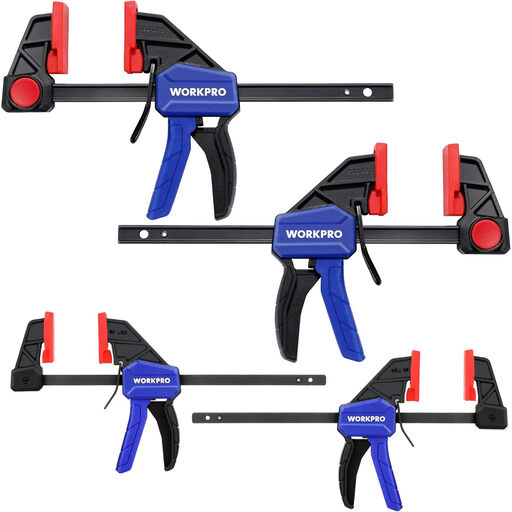
Why this product suits this profile: Two sizes and one-handed operation cover smaller repairs, model-making and straightforward woodworking projects.
The stated clamping forces of 23 kg and 68 kg make the tool’s operating limits clear.
Four clamps, a reinforced nylon body, steel I-rail and soft TPU pads.
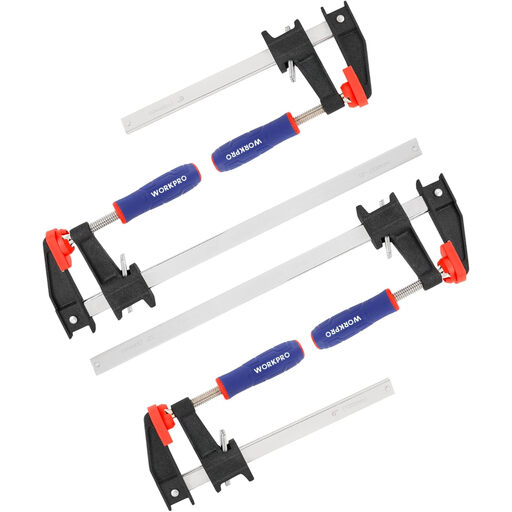
Why this product suits this profile: Two sizes with a defined throat depth are available for regular woodworking, metalworking and assembly tasks.
The specifications state an 80-mm throat depth, 272 kg clamping force and a Quick-Adjust mechanism.
Alloy steel with nickel coating, anti-slip grooves and protective caps.
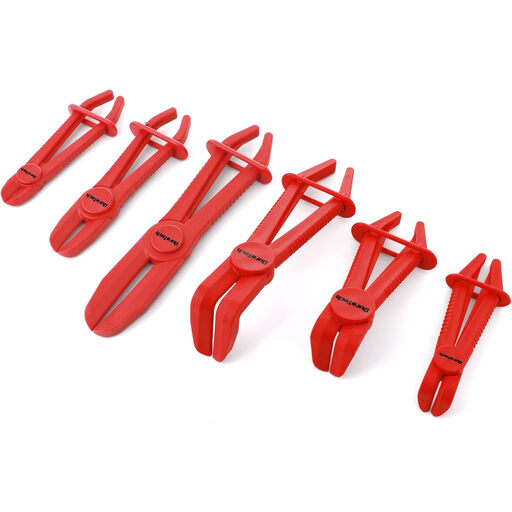
Why this product suits this profile: Six variants are available for maintenance work on flexible fuel, coolant, brake and water hoses.
The manufacturer explicitly limits these pliers to flexible lines and specifies clamping ranges from 0 to 64 mm.
PA6-reinforced nylon, insulated construction, anti-slip handles and locking bar.
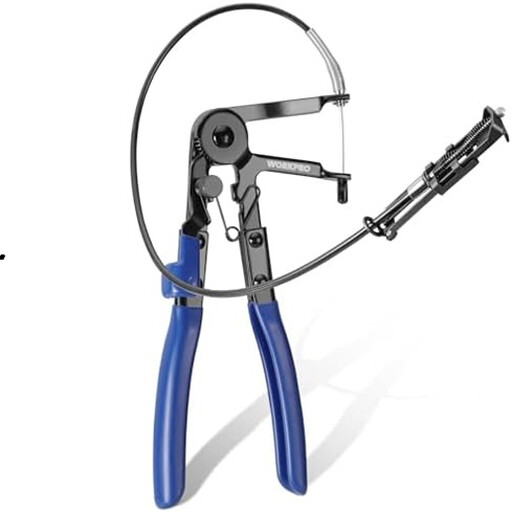
Why this product suits this profile: The flexible shaft is designed for hard-to-reach spring clamps on vehicles, radiators and oil lines.
The 10 to 50 mm opening range and 67-cm shaft show the confined installation situations this tool is designed for.
Heat-treated carbon steel, ratchet lock and one-handed operation.
We have put together a complete, regularly updated list of products that fully meet these strict selection criteria and the safety regulations applicable in the EU.
For flexible coolant, fuel or water hoses, hose clamp pliers with a suitable opening range are a good choice. In confined installation spaces, flexible hose clamp pliers with an extension shaft may be more practical. Hard, reinforced or high-pressure lines may only be worked on with a tool designed for that purpose.
This depends on the size of the workpiece, the glued surface and the material. For small craft and model-making projects, clamps with lower force are often sufficient. For larger joints, clamping range, throat depth and even pressure distribution are more important than achieving the highest possible figure. Protective caps reduce the risk of visible pressure marks.
Remove wood dust, metal shavings and liquid residue after use. Steel parts should be stored dry and lightly maintained when necessary. Moving mechanisms, quick releases and threads should operate smoothly without catching. Check damaged handles, bent rails or worn gripping surfaces before the next use.