
Lieferung heute & morgen

Qualitätsgarantie

Willkommens-Angebote freischalten: KOSTENLOSE Lieferung | Bis zu 80 % RABATT | Kostenlose 30-Tage-JoyPlus-Testphase
App herunterladen
Whether you are gluing wood, sorting documents or hanging out the washing: clamps and clips make many practical tasks easier. However, product names often sound more similar than their actual functions suggest. If you focus only on a low price or bold promises, you can quickly end up with a set that is too small, too weak or unsuitable for the job in hand.
This guide explains which features matter before you buy and which types of products are suited to different everyday situations.
A high clamping force is not automatically an advantage. Small binder clips or paper clips may be sufficient for paper. When building furniture or gluing materials, however, you need to check whether the clamp can apply the required pressure evenly. Too much force can damage delicate surfaces or shift your workpieces.
The clamping capacity describes how far the jaws open. The throat depth shows how far the jaws reach into the workpiece. A clamp with a 150 mm clamping capacity is therefore not automatically suitable for every 150 mm component. For woodworking, both measurements should be compared with those of the workpiece.
Metal, plastic and reinforced nylon plastic have different properties. A steel bar may be suitable for heavier loads, while soft pads can reduce pressure marks. With clothes pegs, the spring mechanism, grip area and shape are also important. The term “windproof” should not be understood as a blanket guarantee. It needs to be considered alongside the design and clamping opening.
For DIY enthusiasts and woodworkers, three specifications are particularly important:
An F-clamp set with several sizes can be more practical than a single screw clamp if you regularly work on workpieces of different sizes. One-handed clamps are suitable for quick positioning, while screw clamps with a spindle often allow more precise adjustment.
Soft TPU or plastic pads can protect delicate materials from scratches and pressure marks. Even so, an additional protective layer made from cardboard, felt or scrap wood is recommended for painted, veneered or polished surfaces. It is also important that the pads sit flat and do not slip.
Hardened steel bars or reinforced plastic bodies may be suitable for workshop tasks. When repairing flexible hoses, hose clamp pliers must be explicitly suitable for the type of hose in question. Models for flexible fuel, coolant or brake lines must not automatically be used on hard, reinforced or high-pressure lines.
In the office, jaw width, paper capacity and folding handles are more important. When choosing a clips set, it is worth checking the number of pieces and the actual size of each clip. For laundry, rust-resistant materials and a comfortable shape are key considerations.
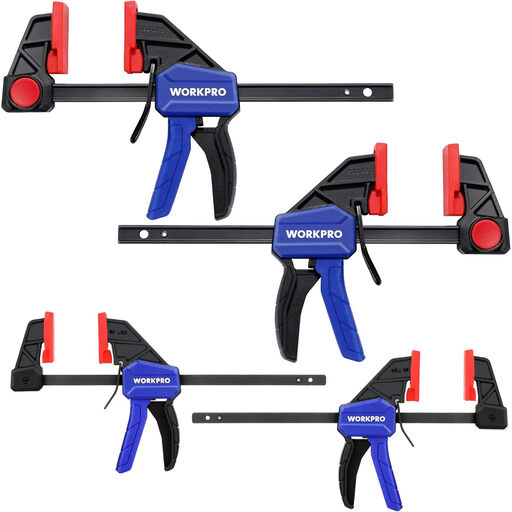
Why this product suits this profile: The set contains two clamps with a 120 mm clamping capacity and two with a 150 mm clamping capacity. This gives DIY beginners several sizes for smaller woodworking, model-making and repair jobs.
The different sizes avoid being limited to a single clamping capacity. The TPU pads are designed for contact with workpiece surfaces.
One-handed operation, quick-release function, reversible jaw, and stated maximum clamping forces of 23 kg and 68 kg respectively.
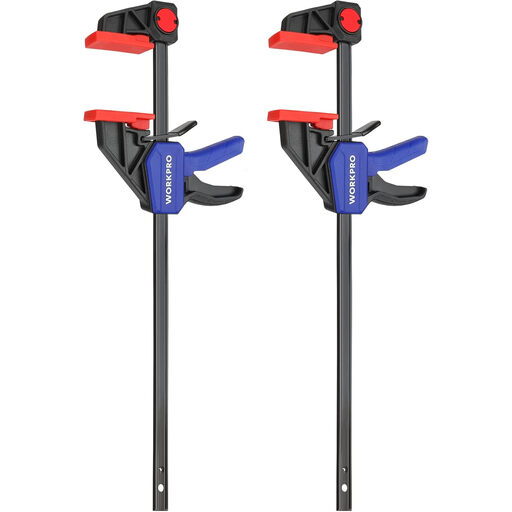
Why this product suits this profile: For more extensive woodworking, assembly tasks and model-making, this two-piece set offers a stated clamping capacity of 305 mm and a spreading width of 440 mm.
The separate clamping and spreading specifications make it easier to check whether the tool is suitable for the task at hand. The soft pads are designed to provide surface-friendly contact.
Hardened steel bars, one-handed operation, quick-release button, and conversion from clamping to spreading function.
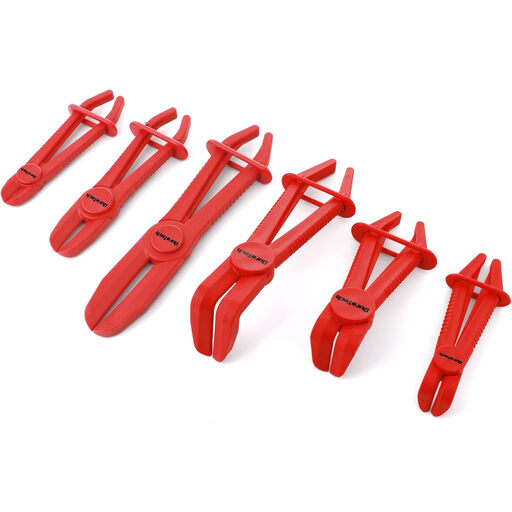
Why this product suits this profile: This set is aimed at automotive and repair users who need to temporarily clamp flexible hoses of different diameters.
The six sizes and straight or 90° angled versions make it easier to find the right fit. According to the product information, the set is not intended for hard, reinforced or high-pressure lines.
Reinforced PA6 plastic, non-slip handles, safety lock and size ranges from 0–10 mm to 19–64 mm.
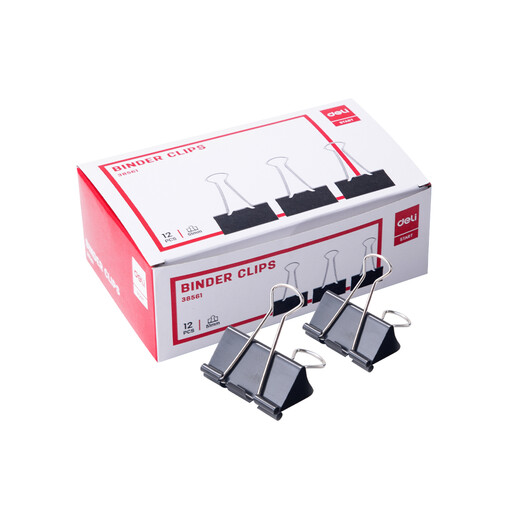
Why this product suits this profile: The 51 mm paper clips are designed for reports, receipts, documents and other stacks of papers in the office, at university or at home.
The stated jaw width makes the choice clearer than an unclear size description. The number of clips per box should be checked before purchase, as it may vary.
Metal construction with nickel plating, spring mechanism and fold-back wire handles for easy opening and space-saving storage.
We have put together a complete, regularly updated list of products that fully meet these strict selection criteria and the safety regulations applicable in the EU.
For smaller DIY projects, one-handed clamps or an F-clamp set with different clamping capacities are practical. For larger workpieces, the clamping capacity, throat depth and maximum clamping force should be compared with the dimensions and material of the workpiece. Protective pads reduce the risk of pressure marks.
Service life depends on the load, material, storage and care. Workshop clamps should be kept clean and dry. Metal clips should be protected from moisture, while plastic parts should not be exposed to high heat or aggressive liquids for prolonged periods.
Hose clamp pliers with a suitable size range may be used for flexible lines. Before use, check that the hose is soft and flexible and that the tool is designed for it. According to the product information, such pliers are not suitable for hard, reinforced or pressurised lines.