
Lieferung heute & morgen

Qualitätsgarantie

Willkommens-Angebote freischalten: KOSTENLOSE Lieferung | Bis zu 80 % RABATT | Kostenlose 30-Tage-JoyPlus-Testphase
App herunterladen
Whether you are repairing a tap, gluing wood or keeping towels organised, clamps and pliers need to be suited to the task at hand. Clamping jaws that do not open wide enough, insufficient clamping force or an unsuitable grip can make the job more difficult and, in the worst case, damage the workpiece, hose or surface.
That is why the product name alone is not enough. The key factors are the precise dimensions, materials, adjustment options and intended area of use.
Water pump pliers appear versatile thanks to their adjustable jaws. However, jaws that are too wide or have coarse teeth can damage delicate surfaces. For plumbing work, mechanical repairs and general assembly tasks, buyers should pay attention to maximum opening width, jaw shape and tooth pattern.
Overall length is also important in confined installation spaces. Long water pump pliers often provide greater leverage, but can be difficult to position in a small under-sink cabinet or engine compartment.
A stated clamping force is only useful when it matches the application and the clamp’s construction. For woodworking, for example, clamping width, throat depth and contact surfaces need to be considered together. High force combined with hard jaws can leave pressure marks on painted or soft wood.
Screw clamps and one-handed clamps should therefore have protective caps or soft pads when visible surfaces need to be secured.
Clothes pegs, towel clips, sealing clips and household clips serve different purposes. A decorative clip is not automatically suitable for damp rooms or high tensile loads. With plastic components, material thickness, spring mechanism and intended ambient temperature are important. For metal clips, suitable corrosion protection is also essential.
The manufacturer’s instructions also apply to food bags. Sealing clips should not be used in environments for which the material is not designed according to the product specifications.
The clamping width indicates how far the jaws can open. With a screw clamp or one-handed clamp, it must be greater than the width of the workpiece. Throat depth describes the distance from the guide or frame to the pressure surface. A greater throat depth allows you to clamp further in from the edge of the workpiece.
Compact clamps may be sufficient for small craft projects. Furniture making or wide panels require greater clamping widths and several clamping points. Spreader clamps are useful when a workpiece needs not only to be pressed together but also held apart.
For regular use, steel alloys such as chrome vanadium steel or heat-treated carbon steel are relevant specifications. They describe the material base, but do not replace a full assessment of the joint, gearing and handle.
For clamps used on wood or painted components, non-marking protective caps are particularly practical. Hoses, on the other hand, require smooth, suitably shaped clamping surfaces. Hose clamp pliers made from reinforced nylon may be intended for flexible lines according to the product description, but not for hard, reinforced or high-pressure lines.
A one-handed mechanism can be useful during assembly work when your other hand needs to hold the workpiece. A ratchet lock on hose clamp pliers keeps the clamp in a specific position and can make the workflow easier.
Also check:
For precision pliers used in electronics, jewellery or craft work, narrow jaws, a suitable cutting edge and compact dimensions are more important than high clamping force.
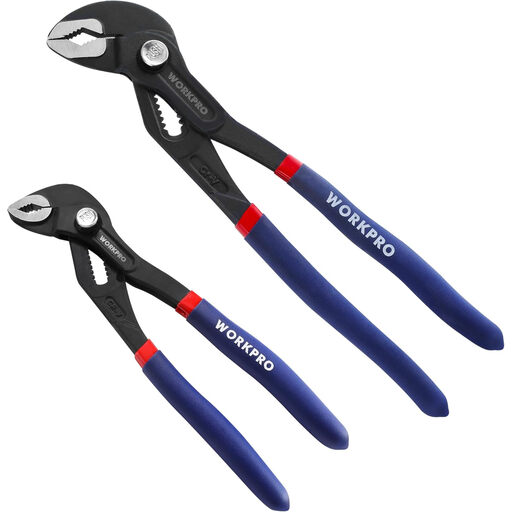
Why this product suits this profile: Two lengths cover smaller and larger assembly tasks. According to the product description, the pliers are suitable for round, flat, square and hexagonal shapes.
The specific lengths of 180 mm and 250 mm, together with maximum openings of 33 mm and 43 mm, make it easier to choose the right tool for the size of the workpiece.
Chrome vanadium steel, push-button adjustment and non-slip resin handles according to the product specifications.
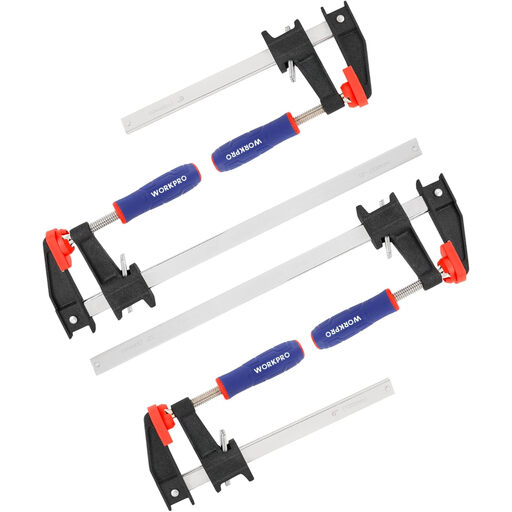
Why this product suits this profile: The set includes two sizes, making it appealing to woodworkers who want to secure workpieces of different widths when gluing, assembling or repairing.
The specified protective caps and 80-mm throat depth reduce the risk of pressure marks on surfaces when used correctly.
Four clamps, clamping widths of 150 mm and 300 mm, and a stated clamping force of 272 kg.
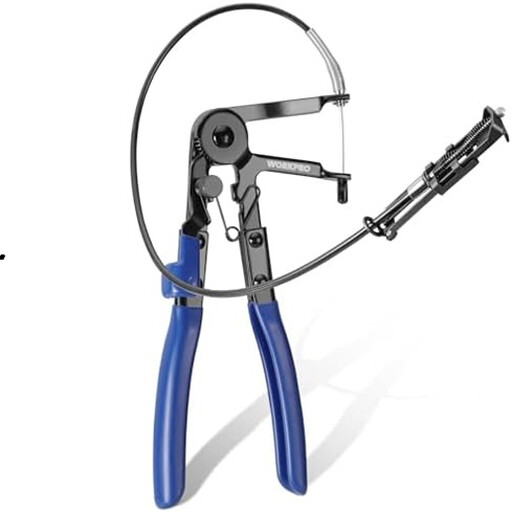
Why this product suits this profile: For mechanics and plumbers, the flexible shaft can make it easier to access hose clamps in hard-to-reach areas of vehicles or machinery.
The product specifications state a working range of 10 to 50 mm and a locking function. This provides clear selection criteria instead of an unspecified universal claim.
67-cm flexible shaft, PVC-coated handle and carbon steel construction according to the product description.
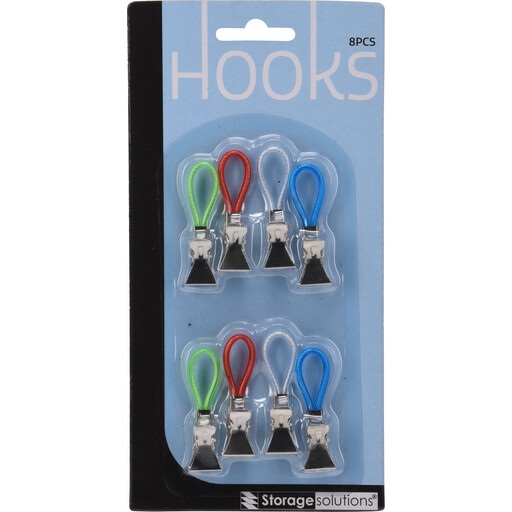
Why this product suits this profile: The eight differently coloured towel clips are suitable for shared bathrooms or kitchens where textiles need to be hung up neatly.
The stated dimensions of 5 × 1,5 × 0,5 cm make it possible to check before buying whether the clip will fit the available hanging point.
Eight metal clips with plastic attachments in four colours according to the product description.
After use, pliers and clamps should be cleared of dust, moisture and residues. Joints and adjustment mechanisms on suitable metal tools can occasionally be lubricated sparingly. Plastic clips should not be used in environments that exceed their material limits according to the manufacturer’s specifications.
Always remember:
We have compiled a complete, regularly updated list of products that fully meet these strict selection criteria and the safety regulations applicable in the EU.
Screw clamps or one-handed clamps with a suitable clamping width are ideal for gluing and assembly work. Protective caps or soft pads can help protect delicate surfaces. With wide panels, several clamps should be distributed evenly to prevent the workpiece from shifting.
Water pump pliers grip pipes, nuts and workpieces of different shapes using adjustable, serrated jaws. Hose clamp pliers, by contrast, are designed for specific hose clamps or flexible lines. Their jaw shape, reach and opening width should match the relevant vehicle or pipework system.
Service life depends on the material, load, care and frequency of use. Rust, damaged teeth, a stiff joint or deformed jaws are signs of wear. Storing tools in a dry place, avoiding overloading them and using the right tool for the job can help prevent unnecessary replacement costs.