Interviewers speaking to different guests
You pass the microphone around during short conversations and want to position it for clear voices, despite the fan noise.


For conversations one after another, a close-held handheld microphone with a cardioid polar pattern is a sensible starting point. For two people speaking at the same time, a set with two transmitters is a better fit; for longer one-to-one conversations, consider a lavalier microphone with its own recorder. Shure says the SM58’s cardioid pattern is less sensitive to sound from certain directions, but it won’t eliminate fan noise. Microphone distance and direction still matter, as does making a test recording with the fan running.
You pass the microphone around during short conversations and want to position it for clear voices, despite the fan noise.
You want to record questions and answers at the same time, even when both people are moving around.
You’d rather record directly from the person speaking than pass a microphone between you.
A good fit if: You’re conducting short interviews one after another and can hold the microphone close to whoever is speaking. Shure documents the SM58’s cardioid pattern; the Sennheiser e 835-S requires an XLR recording connection.
Bear in mind: You’ll need to pass the microphone around and manage the cable. Its directionality won’t eliminate fan noise coming from the same direction as the speaker’s voice.
A good fit if: You want to record two people at the same time from different positions. DJI lists the Mic 2 in a set with two transmitters and one receiver.
Bear in mind: Check what’s included in the set, how it connects to your recording device and that both transmitters are working. A manufacturer’s advertised noise-cancelling feature doesn’t guarantee that fan noise will disappear at your recording location.
A good fit if: One person will be speaking for longer and you want to record them without a live wireless connection to your main device. Tascam describes the DR-10L Pro as a lavalier microphone and recorder in one.
Bear in mind: Recording two people separately requires an additional recording setup, and you’ll need to match the files up afterwards.
| What matters to you | What to check before buying | Who should prioritise it |
|---|---|---|
| Clear speech despite fan noise | Check the polar pattern and microphone position, then listen to a test recording made at the interview location. If there’s a direct draught, consider a suitable windscreen too. | For short conversations, you’ll want to record the speaker as close as possible and position them in line with the microphone’s pickup direction. Around 36% of consumers put speech clarity with fan noise in the top spot. |
| Recording two voices at the same time | Check that the set includes two transmitters and a receiver, and that it connects to your recording device. | If the interviewer and guest may move around or speak at the same time, you’ll want to mic them both at close range. Around 29% of consumers prioritise recording two voices simultaneously. |
| Discreet recording of one person | Check whether the microphone and recorder are included, how you can monitor the recording and how to transfer the files. | For a longer one-to-one conversation, you’ll want to attach a microphone directly to the speaker rather than pass one around. Around 21% of consumers prioritise discreet, independent recording of one person. |
| Connection and recording setup | Check the whole signal chain: microphone, cable or receiver, any adapter you may need and the recording device. | If you want to use your existing equipment and avoid adding extra devices, the right connection is essential. Around 14% of consumers prioritise easy connection to the equipment they already own. |
A cardioid pattern or an advertised feature doesn’t tell you how a recording will sound at a particular venue.
First, plan the microphone’s distance and position, then listen to a test recording with the fan running. Treat electronic noise cancellation as an extra feature, not a guarantee.
DJI offers the Mic 2 in sets with either one or two transmitters. A set with one transmitter can’t record both people at the same time using a separate transmitter for each.
Check the contents of the specific set against the number of people who’ll be speaking at once.
Depending on your setup, you may need a second transmitter or an additional recording device.
The Sennheiser e 835-S uses XLR-3; according to the manufacturer, the RØDE Lavalier GO requires a compatible TRS input with plug-in power.
Check the entire signal chain, including the input and any power supply required, before choosing a microphone.
Depending on the equipment you already have, you may need an adapter, a suitable microphone input or a separate recorder.
The SM58 is a documented dynamic handheld microphone with a cardioid pattern, designed for close-miked vocals.
The e 835-S is a directional wired handheld microphone option.
The Mic 2 is available in a set with two transmitters and one receiver, making it relevant for interviews where both people need a microphone.
The DR-10L Pro combines a lavalier microphone with a portable recorder for one-to-one conversations.
The Lavalier GO is a wired lavalier microphone for compatible TRS inputs or transmitters in the Wireless GO range.
The following Joybuy products are designed for voice recording and interviews, with USB, camera or wireless options. Before buying, pay particular attention to the recording setup and connections you need.
 No image available
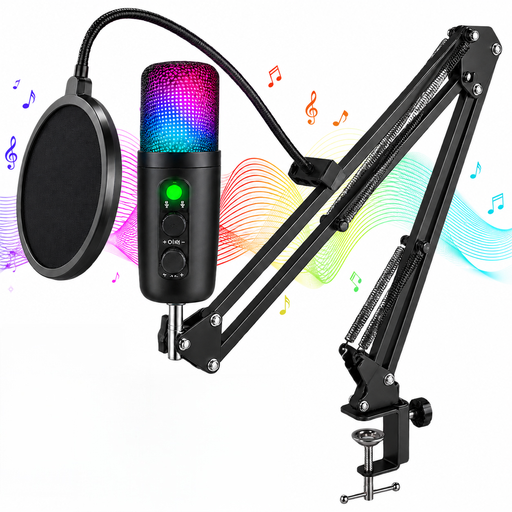
An option for recording speech on a PC if you want to use a USB microphone.
The product title mentions a USB connection, a Type-C adapter and a mute button. The product description lists a noise-reduction feature.
 No image available
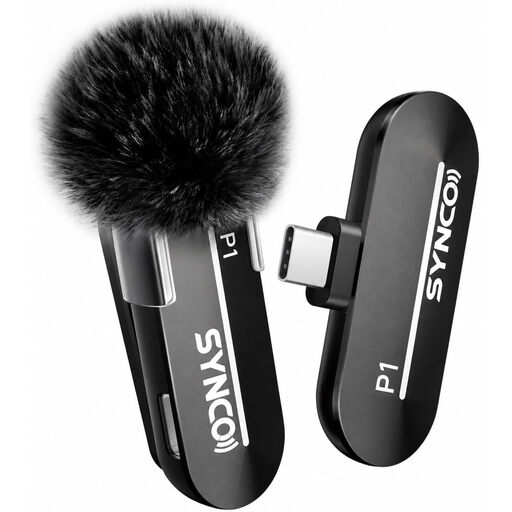
A portable voice-recording option if your recording device has a compatible USB-C connection.
The product description mentions audio monitoring and switchable noise reduction. Android devices need to support OTG.
 No image available
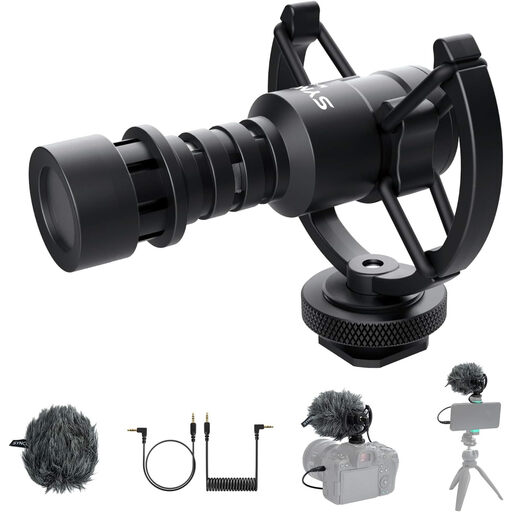
An option for interviews with a camera or smartphone if you want to point the microphone towards sound coming from in front.
The product description mentions a cardioid pattern, TRS and TRRS cables, and a windscreen. Its polar pattern doesn’t guarantee that fan noise will disappear.
 No image available
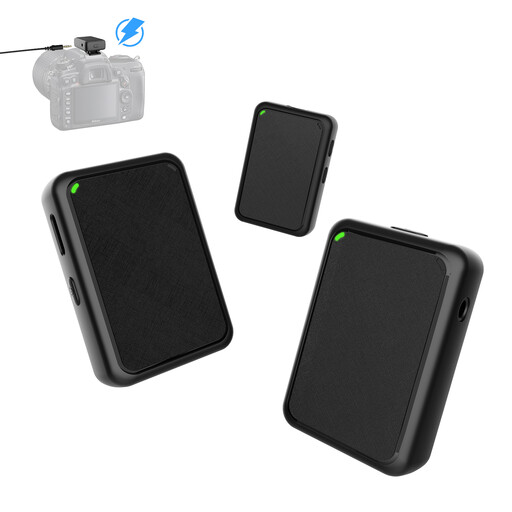
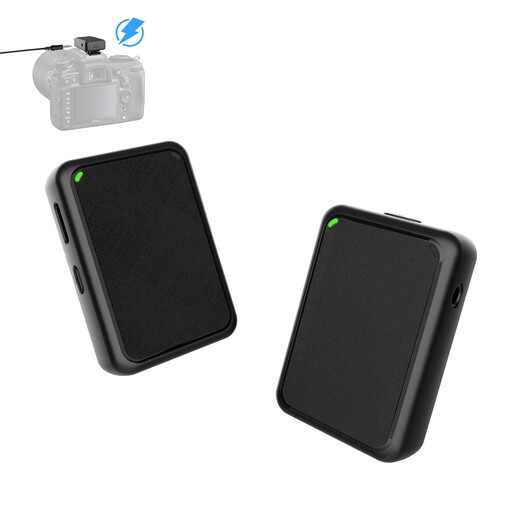
An option if you want to record two people at the same time, each with their own transmitter.
The product title lists two transmitters and one receiver. The product description mentions three noise-reduction modes and windscreens for both transmitters; for connecting to a camera, it lists a 3.5 mm cable.
 No image available
An option for an interview where only one person needs a microphone.
The product title lists one transmitter and one receiver. The product description mentions noise-reduction modes and a windscreen. According to the product title, only one transmitter is included, so it can’t mic up two people at the same time.
No. A cardioid microphone’s sensitivity varies depending on the direction the sound comes from. Hold it close to the speaker and make a test recording to check whether the fan is coming from a less sensitive direction. You should also take any direct draught across the capsule into account.
Connect your entire recording setup and listen to a test recording with a guest speaking and the fan running. An XLR microphone needs a recording device with a suitable input; with the RØDE Lavalier GO, check that you have a compatible TRS input and plug-in power.
Depending on the microphone and the equipment you already have, you may need a suitable adapter, a microphone input or a separate recorder. Before buying, check the whole signal chain from microphone to recording device.
Get the speakers’ permission before recording, and ask separately before sharing the recording. Section 201 of the German Criminal Code (StGB) covers the unauthorised recording of privately spoken words and certain uses of such recordings; whether a particular conversation is private depends on the circumstances. Processing personal data also requires a lawful basis. The Federal Commissioner for Data Protection and Freedom of Information explains that consent must meet the requirements of the GDPR.