The right option for each situation

Recitals from a fixed spot

If everyone takes their turn speaking from the same spot, clear recordings of each voice are the priority. Shure explains the importance of microphone distance and positioning, while Audio-Technica describes computer-based USB recording with the ATR2100x-USB.

Recitals involving movement

If the speaker is moving or needs to keep their hands free, a transmitter worn close to the body may be a suitable recording option. RØDE and DJI’s descriptions of their wireless sets highlight differences such as what’s included and the available connections.

Recording without a laptop

If you want to record directly at the recital venue, you can position a handheld recorder appropriately. Zoom’s documentation for the H1essential describes its built-in microphones and recording to a memory card.

What to look for when buying

Close-positioned USB handheld microphone

Suitable if: Speakers take turns at a fixed spot and a compatible computer is available for recording.

Bear in mind: The speaker needs to stay in position; at a greater distance, room echo may become more noticeable.

Wireless microphone worn close to the body

Suitable if: The speaker will be moving or needs to keep their hands free.

Bear in mind: The transmitter, receiver and recording device need to be compatible; a set with one transmitter won’t automatically cover two people speaking at the same time.

Standalone recorder

Suitable if: You want to record directly on the recorder without connecting a computer.

Bear in mind: You’ll need to prepare the storage, power supply and a suitable position for the microphone.

Need What to check before buying Who it matters most to
Clear voice recording from a fixed spot Check the microphone position and connection to the recording device; record a test from the actual recital spot. If I’m recording speakers one after another from the same spot, I want to position the microphone close by and check the signal path in advance. Around 50% of consumers prioritise a clear recording of one speaker at a fixed spot.
Microphone for use while moving Check the number of people speaking at the same time, the number of transmitters, and the receiver and device connections. If the speaker moves around or needs to keep their hands free, a recording option worn close to the body matters to me. About 30% of consumers prioritise freedom of movement.
Recording without a computer Check the memory card, power supply, available storage and playback of a test recording. If I don’t want to connect a computer at the recital venue, I want to be able to record and play back the file directly on the recorder. Around 20% of consumers prioritise standalone recording.

Common buying mistakes

  • Expecting a directional microphone to make up for distance

    Directionality won’t eliminate room echo or the effects of being a long way from the speaker. RØDE also points out these limitations of directional microphones.

    First decide where the microphone can be placed or attached, then test the recording from that position.

  • Overlooking the number of transmitters or the receiver connection

    A set with one transmitter won’t automatically record two people speaking at the same time. The receiver must also be compatible with the recording device you’re using.

    Count the number of people speaking at the same time, then check the number of transmitters, the receiver output and the device connection before buying.

  • Using a recorder without preparing the recording process

    Standalone recording requires you to prepare the storage and power supply. The recorder’s position is important too.

    Prepare the storage and power supply, make a short test recording and listen to it using the playback method you plan to use.

  • Treating internal recording and publication as the same thing

    The purpose of a recording and any later sharing of it need to be considered separately. Bavaria’s school data protection regulations and the guidance from North Rhine-Westphalia’s Ministry of Schools apply to their respective areas.

    Before recording and before any possible publication, check with the school which rules apply to the specific purpose in the relevant federal state.

Brands to consider

Audio-Technica

The ATR2100x-USB is an example of a dynamic handheld microphone for a fixed recital spot.

  • Audio-Technica documents computer-based USB recording and direct monitoring through the microphone for this model.
  • You’ll still need a compatible recording setup and a close speaking position; these details apply to the ATR2100x-USB.

RØDE

The Wireless ME is a wireless recording option worn close to the body, suitable when the speaker is moving.

  • According to the RØDE manual, the receiver has USB-C and 3.5 mm outputs; the Single and Dual sets differ in the number of transmitters.
  • Check device compatibility and exactly what’s included in the set. RØDE points out that directional microphones cannot overcome the effects of being a long way from the speaker.

Zoom

The H1essential is a handheld recorder for recording without a computer connected throughout.

  • Zoom documents built-in X/Y microphones and recording to a card; you can also record to a card while using it as a USB microphone.
  • A memory card, power supply and suitable positioning are all part of the recording process. 32-bit float won’t eliminate room echo.

DJI

The DJI Mic 2 with one transmitter and one receiver is an example of a wireless option for one speaker.

  • DJI’s FAQ describes the one-transmitter set and lists different types of recording devices.
  • This doesn’t confirm compatibility with every smartphone or that this set can record two voices speaking at the same time.

Joybuy products for recording

The following Joybuy products cover close voice recording from a fixed spot, wireless recording with a microphone worn close to the body while moving, and standalone recorder-based recording.
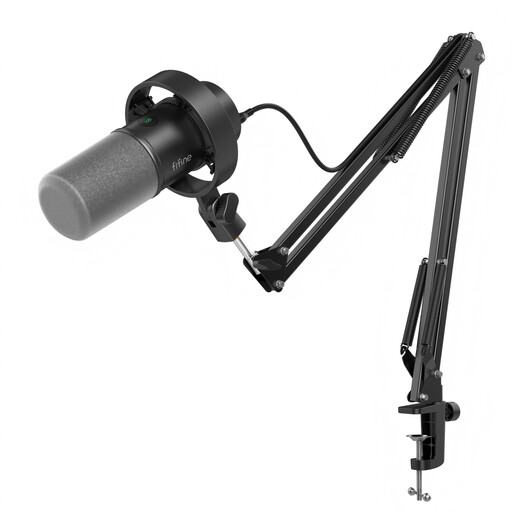
FIFINE K688CT USB/XLR microphone kit with boom arm

FIFINE K688CT USB/XLR microphone kit with boom arm

For a fixed speaking position close to the microphone, with recording on a computer; the recommended speaking distance is stated as 2 to 6 inches.

Dynamic USB/XLR microphone with boom arm, mute button, headphone socket and gain control. According to the product details, an XLR cable is not included.

View at Joybuy
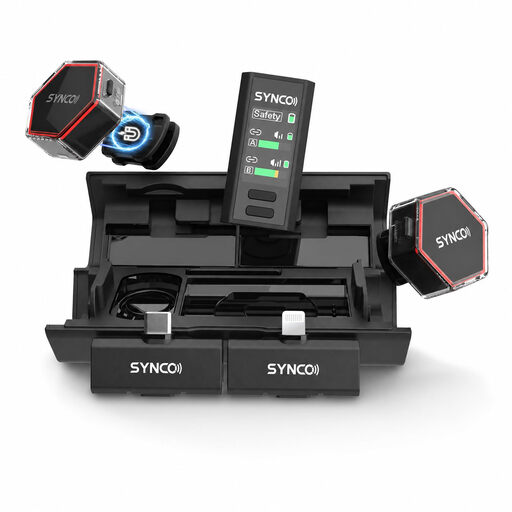
SYNCO G4 wireless lavalier microphone

SYNCO G4 wireless lavalier microphone

For a speaker who’s moving, when a microphone worn close to the body suits the recording setup.

The product description lists a clip attachment and receiver options for USB-C, Lightning and 3.5 mm camera connections. Check which receiver option is compatible with your recording device.

View at Joybuy
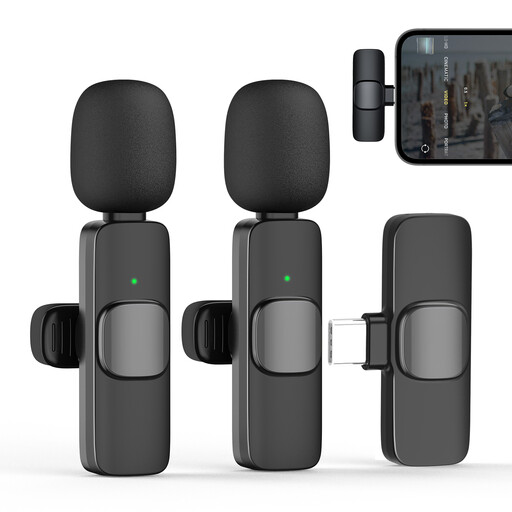
Moman CP1X(C) USB-C lavalier microphone

Moman CP1X(C) USB-C lavalier microphone

For a recital involving movement, if the recording device has a compatible USB-C connection.

Described as a lavalier microphone for USB-C devices; the product details also list several noise reduction modes. Check compatibility with the specific recording device.

View at Joybuy
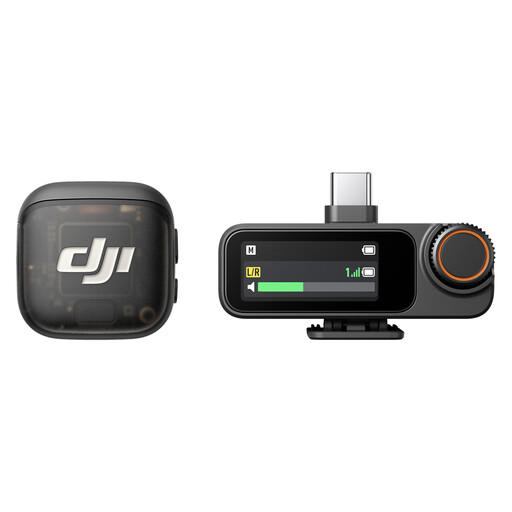
DJI Mic 3 wireless microphone set with one transmitter and one receiver

DJI Mic 3, 1 transmitter and 1 receiver

For a solo recital involving movement, if the set is compatible with the smartphone, camera or Android device you’re using.

According to the product name, the set includes one transmitter and one receiver. It won’t automatically cover several people speaking at the same time.

View at Joybuy
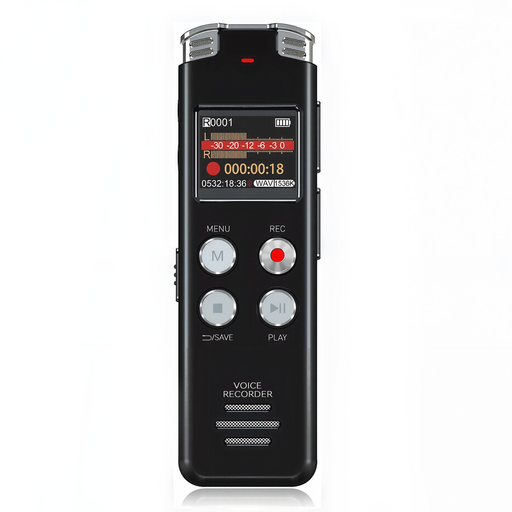
Rexsun L357 digital voice recorder with 128 GB

Rexsun L357 digital voice recorder, 128 GB

For recording without a computer connected; the product description lists classroom voice recording as one of its uses.

The details list recording with the REC button, on-device storage, MP3 and WAV formats, and USB-C for transferring files.

View at Joybuy

Frequently asked questions

Is a directional microphone at the other end of the classroom enough?

No, it isn’t a reliable substitute for positioning the microphone close to the speaker. RØDE also describes the limitations caused by distance and room echo, even with directional microphones; a test recording from the intended position can help you assess the sound.

What should I test before recording with a recorder?

Prepare the storage and power supply, position the recorder where you intend to use it and listen back to a short test recording. Zoom’s documentation for the H1essential lists recording to a card, power supply and playback as part of operating the device.

Do I need consent for every audio recording of a poetry recital during a lesson?

There isn’t a single answer that applies to every federal state and situation. Bavaria’s school data protection regulations generally treat audio recordings of personal data made by a school as requiring consent, and specify an exception for recordings necessary to carry out a statutory school duty. Check with the school which federal state’s rules apply, who is making the recording, its purpose and who is involved.

Can a recording featuring pupils’ voices be published on the school website?

Making a recording for internal use doesn’t automatically mean you have permission to publish it. North Rhine-Westphalia’s Ministry of Schools says that consent is required in particular for podcasts featuring recorded people on a school website; check the requirements for your specific situation with the school.

Who should I contact if a product I bought as a consumer is faulty?

Contact the seller. According to Your Europe, goods bought in the EU are generally covered by a legal guarantee of at least two years from receipt; this is separate from any additional manufacturer’s guarantee.