For a series of short presentations, a microphone positioned close to each speaker is a sensible starting point. A handheld mic passed from one speaker to the next works well if you have a compatible recording device; a wireless mic gives a solo presenter more freedom to move, while a handheld recorder can record without a computer permanently connected. Before buying, check the entire connection chain and where the microphone will be positioned. You should also clarify that you’re authorised to record and how the school will handle the files before recording begins.
Which recording setup is right for you?
Teachers with a succession of different speakers
If several people are recording short presentations one after another, it’s important to have a clear handover process. Nuremberg Institute of Technology’s Lehre@Ohm guidance notes that recording volume decreases as the distance from the microphone increases.
Recording presentations where speakers move around
If someone leaves their place while speaking, the microphone, receiver and recording device all need to work together. A lavalier mic is positioned for the person wearing it.
Recording without a computer permanently set up
If you want to record on location without a computer permanently connected, consider a standalone recorder. Zoom describes the H1essential as suitable for recording conversations with the device mounted on a stand.
What should you consider when choosing?
Handheld USB or XLR mic passed between speakers
Suitable when: People are speaking one after another in the same place and you have a compatible recording device.
Consider: Each speaker needs to take the microphone and speak close to it. USB and XLR require different inputs.
Wireless lavalier mic
Suitable when: One person needs to move around during their presentation and you don’t want a cable running to the recording device.
Consider: The receiver connection, power supply and number of microphones you need must all suit your recording setup.
Standalone handheld recorder
Suitable when: You want to record without a computer permanently connected and can position the recorder close enough to the speakers.
Consider: Having a standalone recording device won’t make up for poor positioning. Placement and a test recording are still important.
| What matters |
What to check before buying |
Who is this important to? |
| Clear individual presentations |
Microphone close to the speaker; connection to the recording device you already have. |
When several people speak one after another, I want to be able to pass the microphone around easily and record each voice from close by. Around 36% of consumers put clear individual presentations first. |
| Freedom to move |
Check the number of transmitters, receiver connection and power supply for the wireless set. |
If the presenter leaves their place, I want to record without a cable connecting them to the recording device. Around 29% of consumers prioritise freedom to move. |
| Recording without a computer on hand |
Plan where to position the device, how to monitor the recording and how files will be stored. |
If there’s no computer where I’m recording, I need a setup where the device records by itself. Around 21% of consumers prefer a recording setup that doesn’t rely on a computer being available. |
| Several voices in a conversation |
Check whether people will speak at the same time; test microphone positioning and playback. |
If a presentation turns into a conversation, I want to capture several voices appropriately. Around 14% of consumers say recording several voices in a conversation is their most important concern. |
Avoiding buying and recording mistakes
-
Confusing a microphone with a standalone recording device
A wired handheld mic won’t automatically save a recording. USB, XLR and a wireless receiver each need a compatible recording setup.
Before buying, trace the whole chain from the speaker’s voice to the saved file, and check that your existing device supports the microphone connection.
-
Expecting one lavalier mic to capture everyone in the room
A lavalier mic mainly picks up the person wearing it. If people are speaking at the same time, the microphone positions and number of mics need to suit the conversation.
Decide in advance whether presentations will take place one after another or several people will speak at once. Depending on your recording setup, you may need additional compatible microphones to capture extra voices.
Any additional microphones or transmitters must be compatible with your chosen recording device and the rest of the wireless set.
-
Assuming a recorder feature alone guarantees good sound
The Zoom H1essential’s 32-bit float feature describes the recording format, not the distance from the microphone or the acoustics of the classroom.
Test the planned position with a quiet voice and a normally spoken voice, then listen back to the recording.
-
Assuming that being able to record means you have permission
A microphone that’s ready to use doesn’t establish whether you’re authorised to record non-public speech or how to handle the files in line with data protection requirements. Section 201 of the German Criminal Code (StGB) prohibits unauthorised recording of such speech.
Before you start recording, clarify the purpose, legal basis and the school’s process for storing files. The specific data protection requirements depend on how the recording will be used.
Microphone brands to consider
Audio-Technica
The ATR2100x-USB is a handheld microphone with USB and XLR outputs for different recording setups.
- Audio-Technica lists direct monitoring through the microphone and connection cables included in the box.
- You’ll still need a suitable connected device to record. Check which input you plan to use beforehand.
RØDE
The Wireless ME is a wireless option for one person who wants to move around during their presentation.
- RØDE lists built-in microphones in both the transmitter and receiver, and connections to cameras, computers and smartphones.
- Check the specific connection to your recording device and how many microphones you need. The manufacturer’s stated range is no substitute for testing the setup in your classroom.
Zoom
The H1essential combines built-in microphones with a standalone recorder.
- Zoom lists built-in X/Y microphones, stand mounting for conversations and USB microphone mode.
- How well it captures quiet voices in a particular room also depends on its positioning. These features alone don’t tell you how it will perform in a specific space.
Shure
The SM58 is a wired handheld microphone option for a compatible XLR recording setup.
- Shure describes the model as having a dynamic cardioid capsule and an integrated pop filter.
- The microphone doesn’t record by itself. The manufacturer’s noise-reduction claims aren’t an independent classroom test.
Joybuy products for voice recording
The Joybuy products below include a standalone voice recorder as well as USB and wireless microphones for voice recording. Before buying, check that the connection and recording setup are compatible with the device you’re allowed to use in the classroom.
 No image available
Digital voice recorder, 64 GB, with transcription function
As a standalone voice recorder, this device could be an option for recording without a computer on hand. The product name specifies 64 GB of storage and a transcription function. Check that its storage and file handling suit your school’s requirements.
View at Joybuy
 No image available
USB gaming condenser microphone with RGB lighting, Type-C adapter, 7-piece set
If you’re planning to record via USB on a computer, this microphone could be an option for voice recording on a PC. The product name lists a condenser microphone, a Type-C adapter and a 7-piece set. Check that the included parts are compatible with your device.
View at Joybuy
 No image available
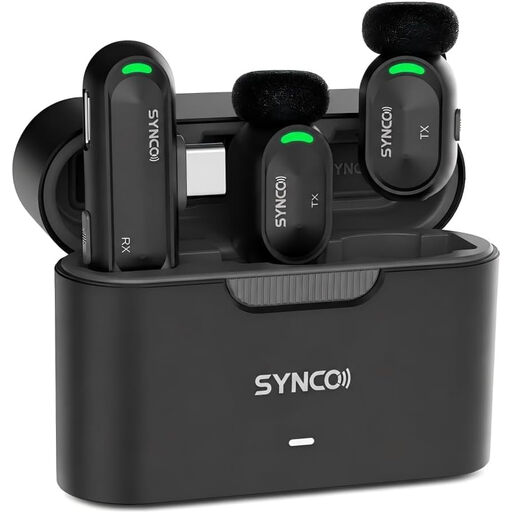
SYNCO SMIC AI wireless microphone for Android, USB-C
For someone who needs to move around, a wireless lavalier mic could make recording easier. The product name specifies USB-C and Android. Check compatibility with the specific recording device before choosing this set.
View at Joybuy
No image available
SYNCO SMIC AI wireless microphone for iPhone and Android, USB-C
A wireless lavalier mic could be a suitable option for a solo presentation where the speaker moves around. The product name specifies iPhone, Android and USB-C. Check the connection on your specific device and make sure it suits your planned recording setup.
View at Joybuy
 No image available
Yinkaer G10-P17 podcast microphone set with audio mixer
If you’re planning to include a microphone and audio mixer in your recording setup, this set could be an option for recording speech with a PC or mobile device. The product name lists a 3.5 mm condenser microphone. Check that the connection works with your device.
View at Joybuy
Frequently asked questions
Can I simply record presentations in the classroom?
No. Don’t start recording until you’ve established that you’re authorised to do so. Section 201 of the German Criminal Code (StGB) prohibits the unauthorised recording of another person’s non-public speech. For recordings containing personal data, the school must also check the relevant data protection basis and the specific purpose. You shouldn’t assume that consent has been given without first clarifying this.
How should I set up the microphone before the first presentation?
Connect the specific microphone to the recording device using the right connection, position it close to the speaker and listen back to a short test recording. With a wireless set, you’ll also need to connect the receiver and check the charge. With a recorder, check its position and how files will be stored.
What should I check about accessories and connections before buying?
Check whether your recording setup already includes a compatible cable, a recording device and a way to store files. Audio-Technica lists USB and XLR cables with the ATR2100x-USB; RØDE specifies that the Wireless ME has a rechargeable battery. Check what’s included and how the specific set you’re buying connects.
Can a teacher simply use their personal smartphone for this?
There’s no single answer that applies to every school in Germany. Medienberatung NRW describes strict conditions and the need for specific approval from the school management when processing learners’ data for work purposes on private devices. Check your school’s and federal state’s requirements before using a personal device for these recordings.


