Which option is right for you?

Singers in a reverberant classroom

If you can sing close to the microphone, pay attention to its direction and test the sound in the spot where you plan to use it. The polar pattern and distance can help you choose, but they won't completely eliminate reverberation or background noise.

Beginners using a school laptop

For a straightforward setup, first check which connections your computer has. A microphone with a USB output may connect directly; for an XLR-only model, you'll need a suitable recording setup.

Singers with a quiet recording spot

If you can set up the microphone and your singing position securely, a condenser microphone is another option for capturing subtle vocal nuances. Room acoustics will still make a noticeable difference.

What should you look for when buying?

Dynamic microphone with XLR

A good fit if: You sing close to the microphone, keeping a fairly consistent distance in an untreated room, and already have a suitable XLR input or audio interface.

Bear in mind: XLR alone won't let you record directly to a computer via USB; microphone position and when you record still matter.

Dynamic microphone with USB and XLR

A good fit if: You want to start by recording directly to a compatible computer and may also want to use an XLR signal path later.

Bear in mind: If you're using a handheld microphone, check that the desktop stand can reach the height you need for singing.

Cardioid condenser microphone

A good fit if: You have a quiet recording spot and want to capture subtle vocal nuances. Depending on the model, you can choose between USB and XLR or an XLR-only connection.

Bear in mind: Room acoustics and microphone direction still matter. For XLR use, the LEWITT LCT 240 PRO needs an interface or preamp with 48 V phantom power.

Buying priority What to look for Who is it important to?
Bring the voice to the fore Check the polar pattern, secure mounting and microphone direction; listen to a test recording from the planned spot. If I'm singing in a reverberant classroom, I want to control the distance from the microphone and assess the sound in the room. Around 36% of consumers put voice focus first in this situation.
Simple connection Check that the USB or XLR output matches the recording device's connections; for XLR, also check the cable and whether phantom power is needed. If I'm recording with a school laptop, I want to know in advance whether I can connect my microphone directly or need an interface. Around 29% of consumers prioritise a straightforward recording setup.
Subtle vocal nuances Consider a quiet recording spot, the active side of the microphone and a stable position; check the pop filter and mounting too. If the recording spot is quiet, I want to capture the nuances of a solo voice and hear how much of the room is picked up too. Around 21% of consumers make this their priority.
Setup in different rooms Check whether a stand and carrying case are included, and plan a secure place for the microphone and cable. If I'm taking the microphone between classrooms, a portable setup matters more to me than a permanent position. Around 14% of consumers prioritise portability above all else.

Avoid common buying mistakes

  • Assuming one type of microphone will automatically solve classroom reverberation

    Whether a dynamic or condenser microphone is right for you also depends on the surroundings and how far you are from the microphone. No microphone will remove reverberation from a room on its own.

    Start by finding the quietest spot you can and testing your actual singing position there. Listen to a test recording before settling on a type of microphone.

    Finding a quieter time to record and making test recordings may mean allowing extra time for setup.

  • Assuming an XLR microphone connects directly to your computer

    An XLR-only microphone needs a suitable recording setup to record to a computer. For XLR use, the LEWITT LCT 240 PRO also needs an interface or preamp with 48 V phantom power.

    Check the connections and what's included with the exact model against your recording device. If needed, allow for a suitable interface or cable.

    Depending on the model and your existing setup, you may also need an interface, cable or preamp.

  • Not pointing the active side of the microphone towards the voice

    On the side-address RØDE NT1 5th Generation, a gold dot marks the front, according to RØDE. If the microphone is facing the wrong way, you may not be singing into it as intended.

    Point the marked front towards the voice and check the sound with a test recording.

  • Assuming permission to record also means permission to publish

    For publications on school websites in North Rhine-Westphalia, the state's Ministry of Schools and Education specifically highlights the need for consent when podcasts or videos feature pupils or other people from the school community.

    Before planning to publish a recording, check its intended use with the school responsible. Having a recording does not, in itself, mean you have permission to publish it.

A guide to suitable microphone brands

Shure

The SM58 is a dynamic XLR vocal microphone for close-up solo recordings with a suitable recording setup.

  • Shure describes the SM58 as having a cardioid pattern, an integrated pop filter and a stand adaptor.
  • Shure's recommendation of at least 60 dB of gain refers to the described use of the SM7B and should not be applied automatically to the SM58.

RØDE

The NT1 5th Generation is a cardioid condenser microphone with USB and XLR connections.

  • RØDE lists both connections and includes cables, a shock mount and a pop filter with this model.
  • For side-address use, the marked front should face the voice. Its features won't remove reverberation from a room.

Audio-Technica

The ATR2100x-USB combines a dynamic handheld microphone with USB and XLR outputs.

  • Audio-Technica lists USB and XLR cables and a desktop stand in the box, and describes a direct headphone connection.
  • Check that the desktop stand reaches the height you need for your singing position.

LEWITT

The LCT 240 PRO is a cardioid XLR condenser microphone for vocals, to be used with a suitable recording setup.

  • According to LEWITT, the model needs an interface or preamp with 48 V phantom power for XLR use.
  • LEWITT recommends a distance of 15–30 cm and a pop filter for vocals; this setup advice is no guarantee of a room free from reverberation.

Behringer

The XM8500 is a dynamic XLR handheld microphone for vocals.

  • Behringer lists a cardioid pattern, integrated pop filter, stand adaptor and carrying case.
  • For recording to a computer, the signal path needs to be compatible with the XLR connection.

Microphones and recording options at Joybuy

The options below range from dynamic USB/XLR microphones to USB and portable USB-C voice microphones. Before buying, check that the microphone style and connection suit your solo voice, recording device and planned spot in the classroom.

FIFINE K688CT USB/XLR microphone kit

FIFINE K688CT USB/XLR microphone kit

An option if you're looking for a dynamic vocal microphone with USB and XLR connections and a boom arm.

A USB cable, boom arm and headphone jack are listed; an XLR cable is not included, according to the box contents. The desk clamp is designed for desks less than 2 inches thick. According to the description, the microphone controls work only in USB mode.

View at Joybuy

Razer Seiren V3 Mini White USB microphone

Razer Seiren V3 Mini White USB microphone

A compact desktop option if you'd rather use a USB microphone with an adjustable stand than a handheld model.

The description lists USB-C, a supercardioid pattern, built-in shock absorption, an adjustable stand and an included cable. Check that the connection is compatible with your recording device.

View at Joybuy
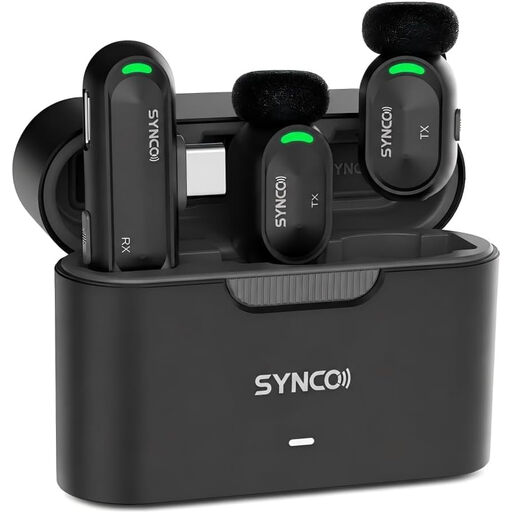
SYNCO SMIC AI wireless clip-on microphone for Android USB-C

SYNCO SMIC AI Wireless for Android USB-C

This portable clip-on option may suit you if you want to record specifically with a compatible Android device.

The model is described as a wireless USB-C microphone for Android. Android devices need OTG to be enabled; check that your device is compatible before buying.

View at Joybuy

SYNCO P1XT wireless USB-C microphone

SYNCO P1XT wireless USB-C microphone

A portable voice recording option if your device has a compatible USB-C connection.

The model is described as a wireless USB-C microphone. Android devices need OTG to be enabled; check device compatibility in advance.

View at Joybuy

Frequently asked questions

Can I record with an XLR-only microphone directly through my school laptop's USB port?

No. You'll need a suitable signal path, such as an audio interface. Models with their own USB output, such as the ATR2100x-USB or NT1 5th Generation, offer a direct digital connection to a computer as an alternative. Check the connections on your specific device.

How should I position the microphone for a solo recording?

Point the active side of the microphone towards the singer and listen to a short recording made in the actual spot. For vocals, LEWITT recommends a distance of 15–30 cm and a pop filter for the LCT 240 PRO; on the side-address NT1 5th Generation, a gold dot marks the front, according to RØDE.

What accessories should I check alongside the microphone?

Check whether a stand, cable, headphones and, where necessary, an audio interface are included with the exact model. The LEWITT LCT 240 PRO needs 48 V phantom power via XLR; Shure recommends at least 60 dB of gain for the SM7B.

Can I publish a school recording that contains identifiable voices?

For publications on school websites in North Rhine-Westphalia, the state's Ministry of Schools and Education specifically highlights the need for consent when podcasts or videos feature pupils or other people from the school community. This is neither blanket permission to make a recording nor a definitive statement for every federal state or purpose. Before recording or sharing anything, check with the school who is responsible and what requirements apply in your particular case.